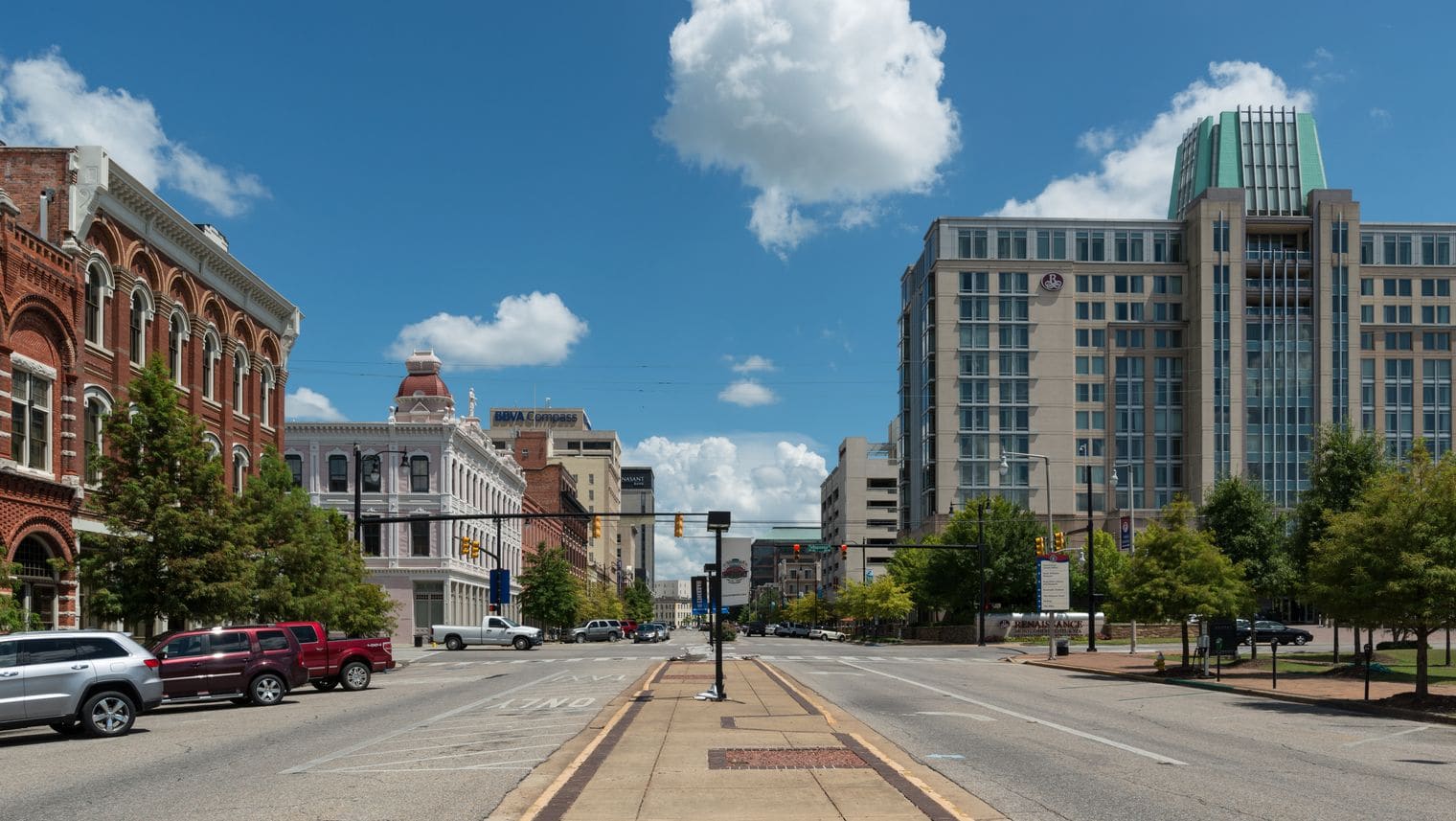
Alabama’s capital since 1846 and a defining stage of the Civil Rights Movement, Montgomery sits on the Alabama River in the heart of the state. Nicknamed the “Cradle of the Confederacy” for its brief 1861 role as the first Confederate capital, it is best known today for civil-rights landmarks like the Dexter Avenue church, the Rosa Parks Museum, and the Legacy Museum. Beyond the history, visitors find a well-regarded zoo, riverfront entertainment, and outdoor thrills at Montgomery Whitewater.
Fun Facts About Montgomery, Alabama
Montgomery was incorporated in 1819, formed by the merger of two river towns and named for Revolutionary War general Richard Montgomery.
It became the state capital in 1846 and, briefly in 1861, the first capital of the Confederacy, earning the nickname the “Cradle of the Confederacy.”
The city was the birthplace of the Montgomery Bus Boycott, sparked by Rosa Parks in 1955 and led from the Dexter Avenue church by a young Dr. Martin Luther King Jr.
In 1886, Montgomery became one of the first U.S. cities to operate a citywide electric streetcar system, the "Lightning Route."
The 1965 Selma-to-Montgomery voting-rights march ended at the Alabama State Capitol steps, where King addressed some 25,000 people.
With about 200,000 residents, Montgomery is Alabama’s second-largest city and a hub of civil-rights heritage tourism.
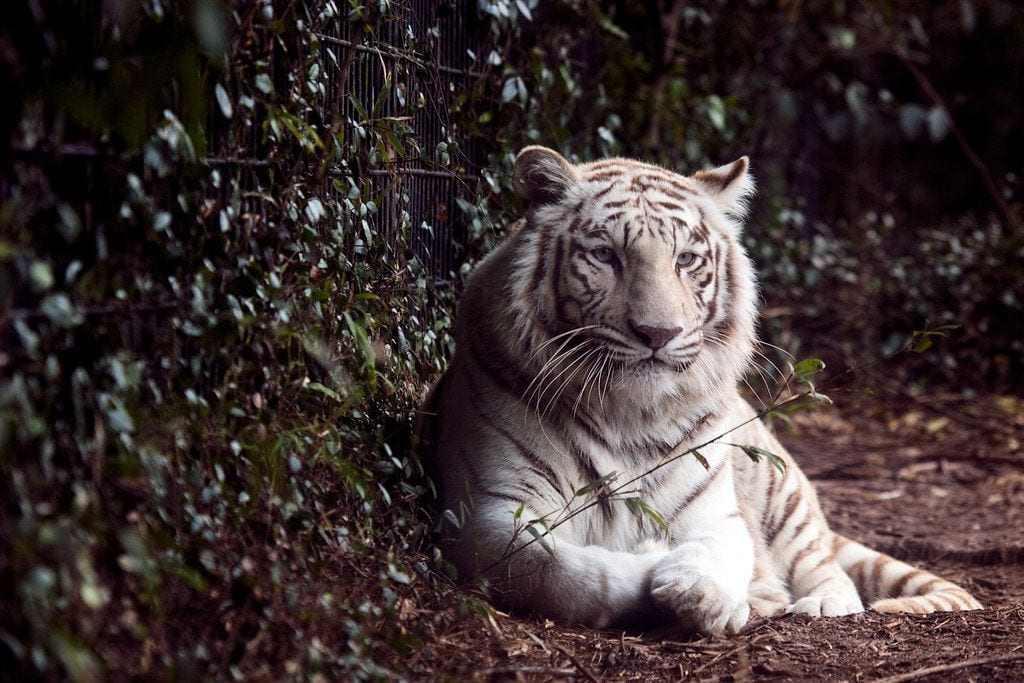
Spanning roughly 40 acres in the northern part of the city, the Montgomery Zoo & Mann Wildlife Learning Museum is a zoological park home to 750 animals across 140 species. Alongside the exhibits, the zoo runs hands-on animal encounters where you can feed and pet giraffes, stingrays, elephants and even tigers up close.
The adjoining Mann Wildlife Learning Museum turns the visit into something tactile, with animal displays set in recreations of their natural habitats. Here you can actually touch the fossils and real furs, getting a feel for each creature rather than only seeing it behind glass. Together the two make a full day of wildlife discovery.
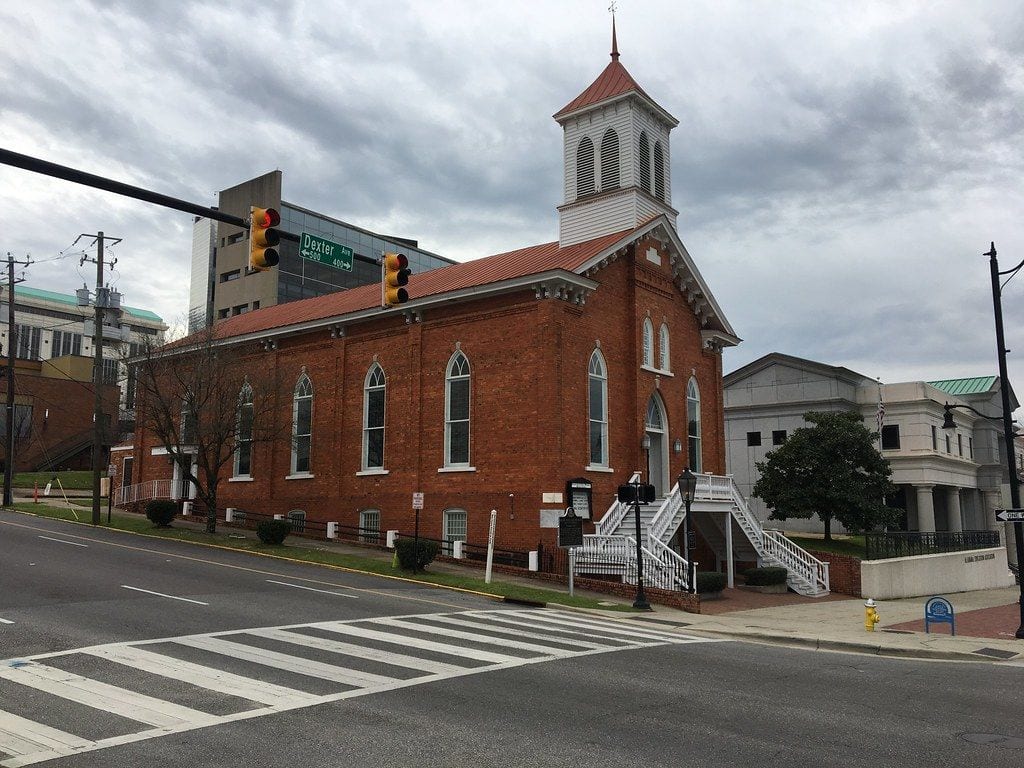
The Dexter Avenue King Memorial Baptist Church holds pivotal historical importance in Montgomery. Dr. Martin Luther King Jr. served here as pastor beginning in 1955, and the church was later renamed in his honor. It sits on UNESCO’s tentative list of World Heritage Sites, a recognition that reflects its lasting significance to the city and beyond.
The church was designated a National Historic Landmark in 1974 and added to the National Register of Historic Places in 1982, layering decades of official recognition onto its already storied past. Located just beside the Alabama State Capitol, it stands within easy reach of the heart of downtown and earns a place on any Montgomery itinerary.
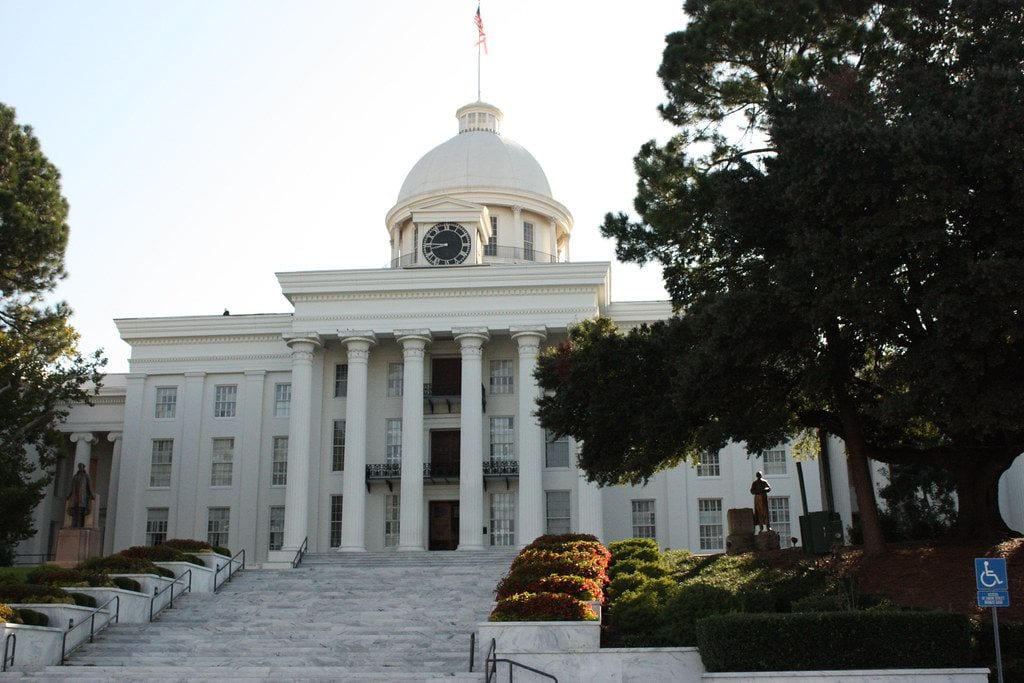
Perched on Goat Hill, the Alabama State Capitol is hard to miss in Montgomery. It is listed on the National Register of Historic Places as the First Confederate Capitol and was declared a National Historic Landmark in 1960. This building is actually the fourth to serve as the state capital, following earlier seats in Montgomery, Cahaba, and Tuscaloosa.
A working museum of state politics and history, the Capitol offers guided in-house tours that walk you through its layered past. The on-site Goat Hill Museum Store rounds out a visit, stocking souvenirs and gifts such as keychains, mugs, and shirts. It remains a fitting starting point for anyone exploring Montgomery’s dense concentration of political and civil-rights history.
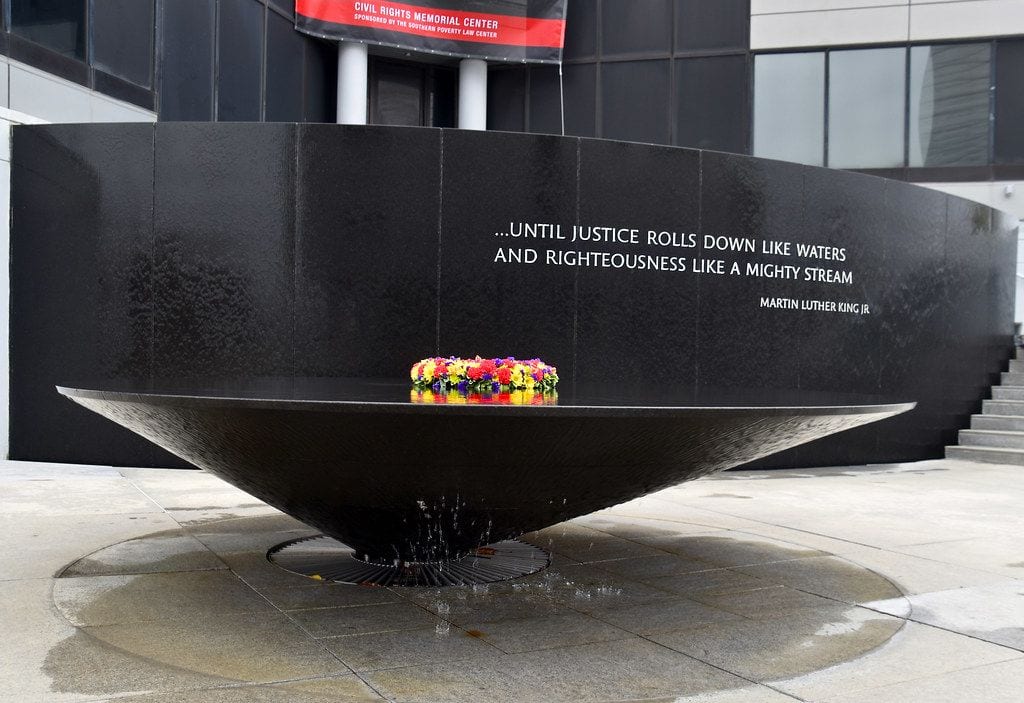
Created by American sculptor Maya Lin and built in 1981, the Civil Rights Memorial honors the 40 martyrs of the Civil Rights Movement killed between 1954 and 1968. Their names are engraved on a granite fountain, alongside a quote by Dr. Martin Luther King Jr. inscribed on the Wall of Tolerance.
The memorial’s abstract design draws on the movement’s goal of legally ending racial segregation. Beyond the fountain itself, the adjoining memorial center hosts exhibits and educational activities and features a theatre, giving visitors deeper context on the people and events the monument commemorates.
Established by Montgomery’s Equal Justice Initiative in 2018, The Legacy Museum tells the story "From Enslavement to Mass Incarceration." It stands on the site of a former warehouse where thousands of enslaved black people were imprisoned and tortured, grounding its subject in the very place where that history unfolded.
Spanning 11,000 square feet, the museum commemorates enslaved black people through exhibits featuring artists including Jacob Lawrence and Elizabeth Catlett. Virtual interactive technology deepens the experience, letting visitors sense the conditions endured by those who were imprisoned here and better grasp the weight of the story being told.
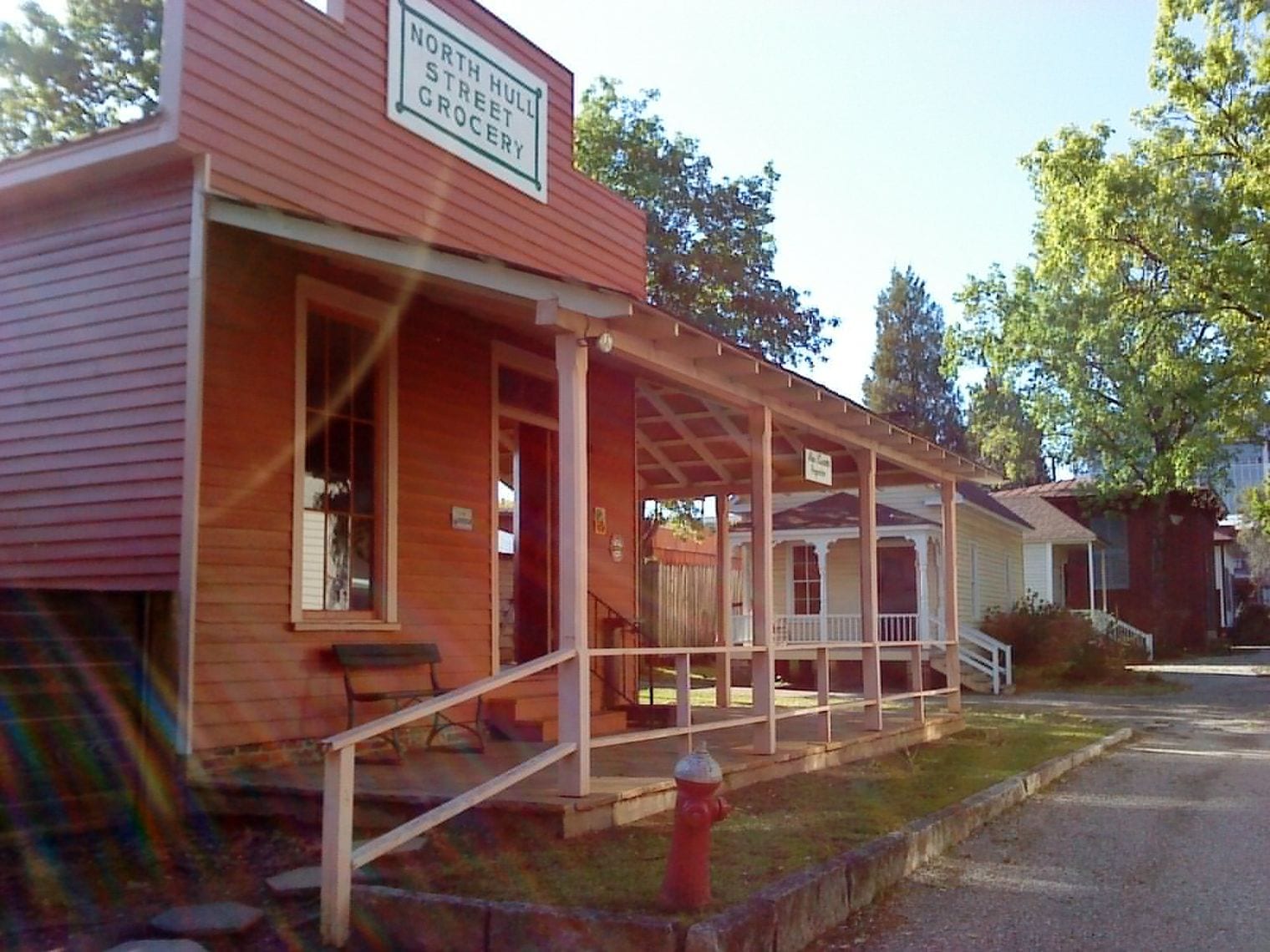
Spread across six blocks of downtown Montgomery, Old Alabama Town is a collection of restored 19th- and 20th-century structures that capture the architecture and daily life of the region’s varied social classes. The buildings range from small rural houses to elegant townhouses, together tracing the lives of the people who helped develop Central Alabama.
Group tours guide visitors through several themed experiences, including living in the 19th century, living in the 20th century, and the Ordeman-Mitchell-Shaw townhouse complex, each offering its own window into the past. No food is sold on-site apart from water, so it is worth carrying a snack along for the visit.
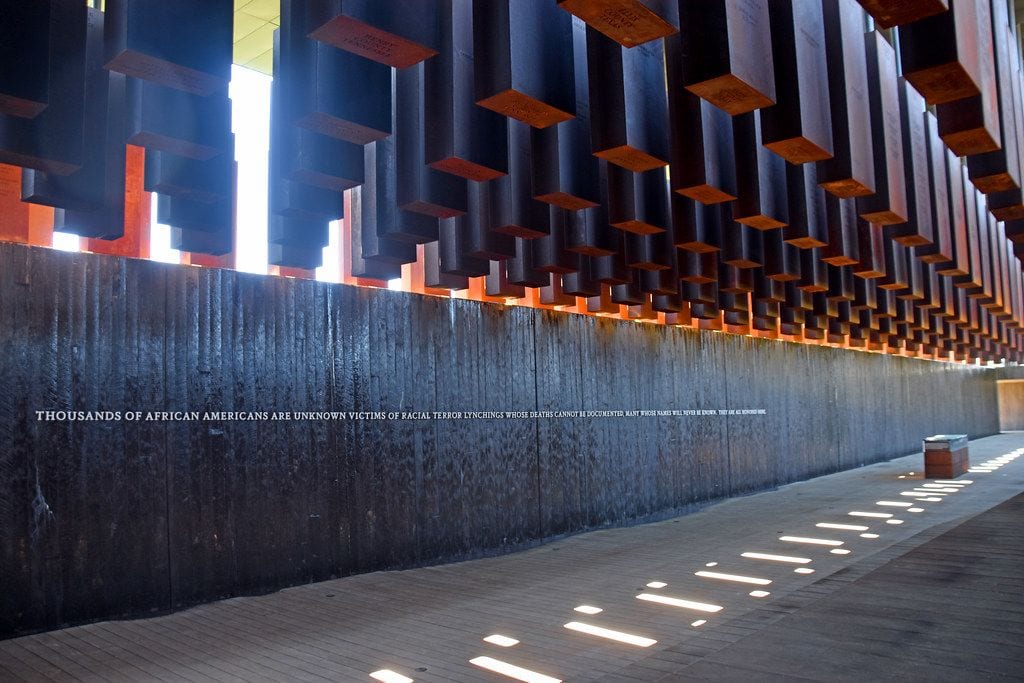
Also known as the National Lynching Memorial, The National Memorial for Peace and Justice commemorates Black victims of racial terror lynchings. It documents the roughly 4,400 African American men, women and children who were shot, burned alive, hanged and drowned between 1877 and 1950, the peak decades of racial terror lynchings.
At the heart of the memorial stand 805 coffin-shaped steel rectangles, each inscribed with the location of a lynching and the names of those killed there. The site has drawn wider attention through performances by artists including Usher and Stevie Wonder, bringing more visitors to Montgomery to reflect on this history.
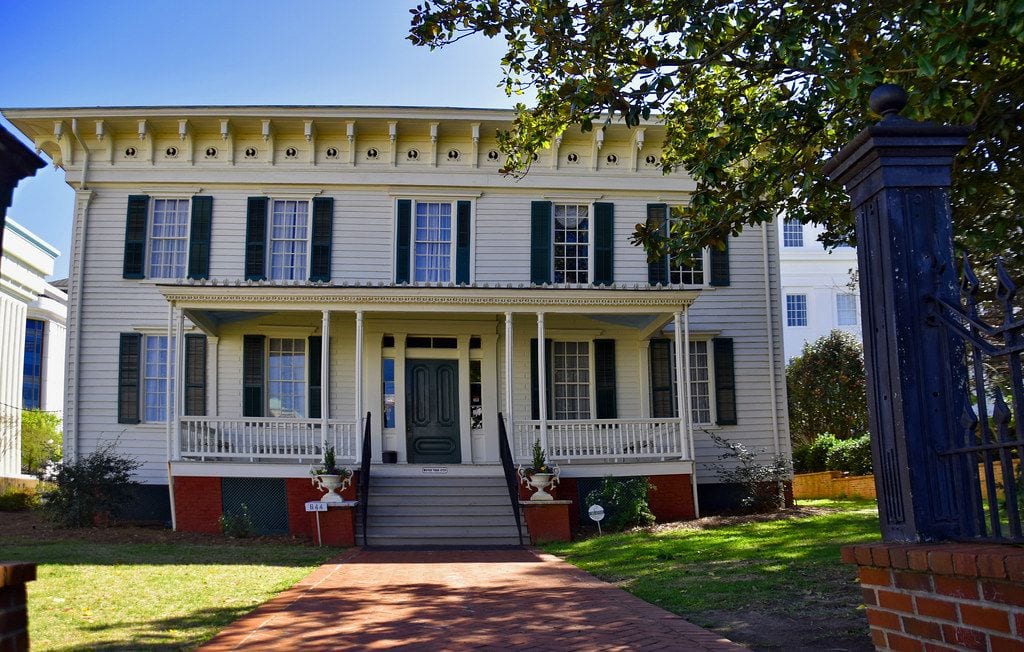
When Montgomery served as the capital of the Confederate States of America, the First White House of the Confederacy was the residence of Confederate President Jefferson Davis. Built in 1825 by William Sayre, the house holds deep political and historical significance for the city.
The building has been listed on the National Register of Historic Places since 1974 and on the Alabama Register of Landmarks and Heritage since 2012. Inside, it displays Italian furniture and period pieces from 1835. Visitors can explore the home through both guided and self-guided tours, offering a close look at this preserved chapter of Montgomery’s past.
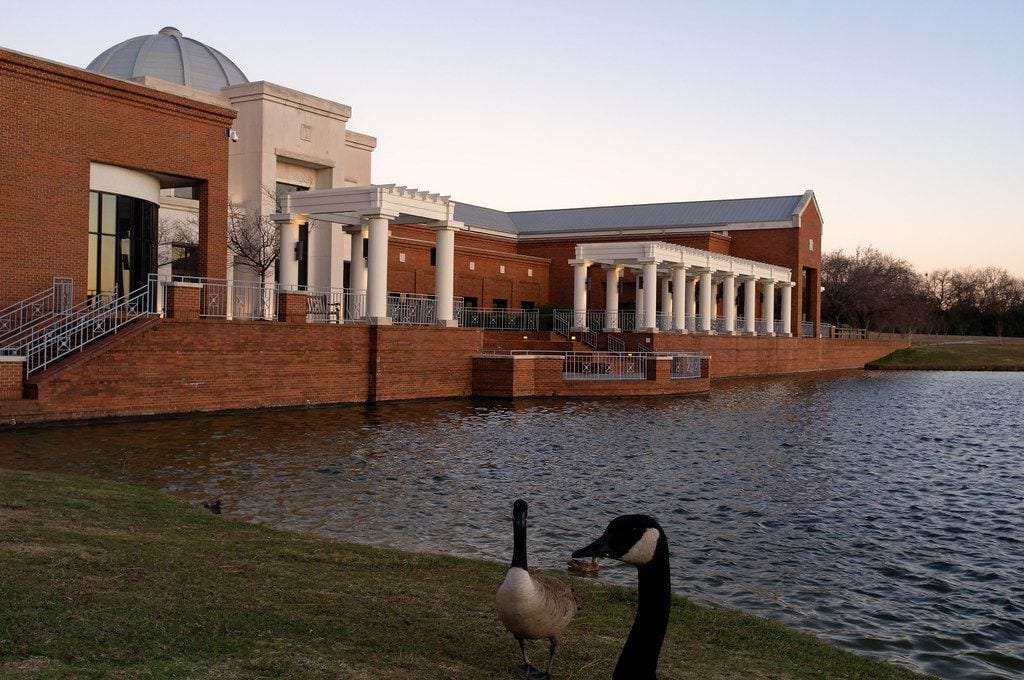
Founded in 1930 to promote and exhibit art among the people of Montgomery, the Montgomery Museum of Fine Arts holds a permanent collection of paintings and sculptures from the 19th and 20th centuries. Alongside these mainstays, rotating exhibits move through the galleries, giving repeat visitors something fresh to explore each time they return.
The museum’s café overlooks Newell Lake and Blount Cultural Park, pairing pleasant scenery with a good meal. A museum store rounds out the visit, stocking gifts and souvenirs tied to the collection along with an assortment of art-related items to take home.
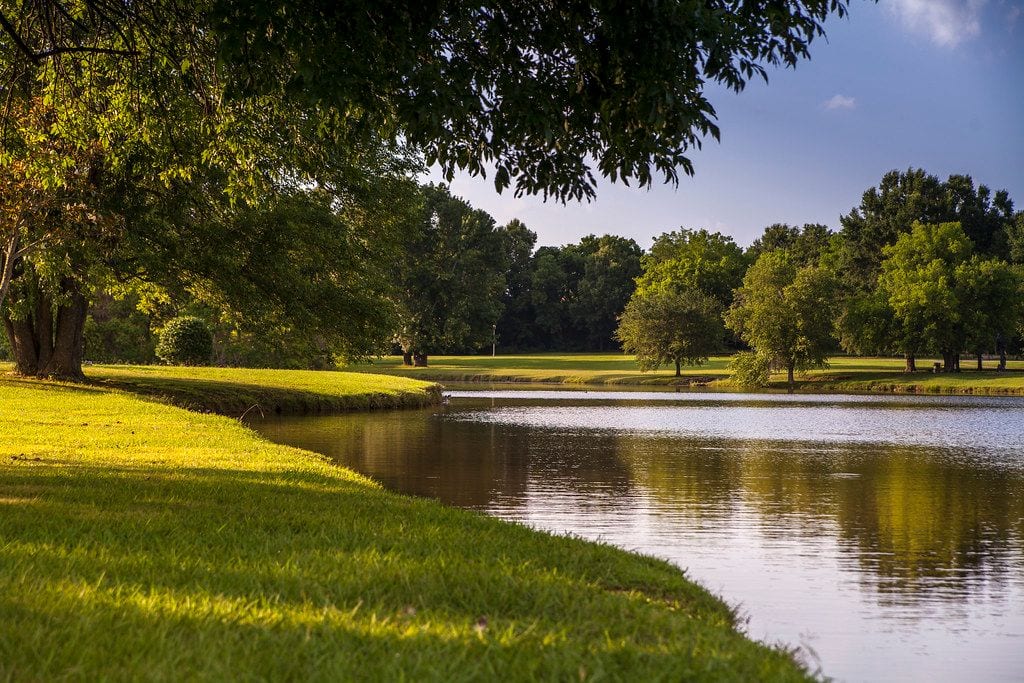
Known as the cultural center of Montgomery, Wynton M. Blount Cultural Park spreads across 175 acres of animal-friendly walking trails, ponds, and even a natural amphitheatre. The Montgomery Museum of Fine Arts sits within the grounds, and its central location draws both tourists and locals throughout the year.
The park is also home to the Alabama Shakespeare Festival, a state-of-the-art regional theatre presenting a series of productions each year. Dogs must stay leashed across most of the grounds, but the Hannah Daye Ridling Bark Park lets you turn them loose to roam freely.
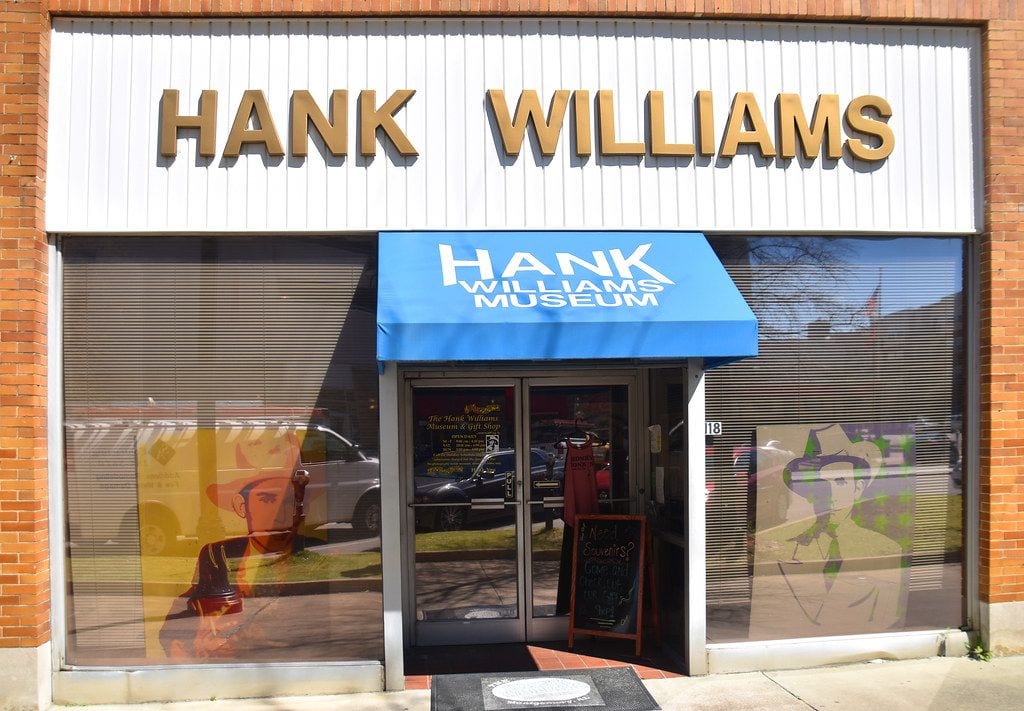
The Hank Williams Museum honors the legendary country singer whose music helped revolutionize the genre. Inside, you’ll find a vast collection of Hank’s personal artifacts, from memorabilia and his own instruments to the iconic stage clothing displayed throughout the galleries.
A highlight is the 1952 Cadillac in which Hank died. For country music devotees, walking these rooms offers an intimate look at the life and legacy of one of the most famous voices the genre ever produced, making it an essential stop on any visit to Montgomery.
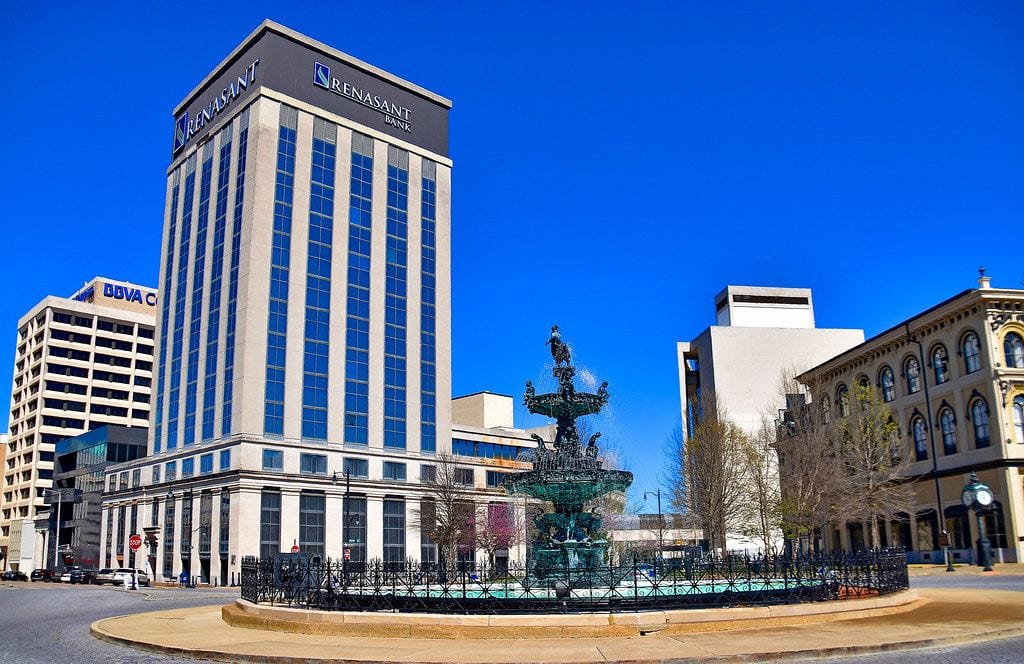
In downtown Montgomery, the Court Square Fountain - Artesian Basin was built in 1885 atop an artesian well once used by native Alabamians. The crowning statue draws on Greek mythology, representing Hebe, the Greek goddess of eternal youth. Littering or interfering with the fountain basin carries heavy fines.
The statues and fountain were originally cast iron, later swapped for aluminum replicas in 1984. Directly across sits the famous bus stop where Rosa Parks refused to give up her seat, an act that helped spark the Civil Rights Movement. The site pairs civic sculpture with a defining moment in American history.
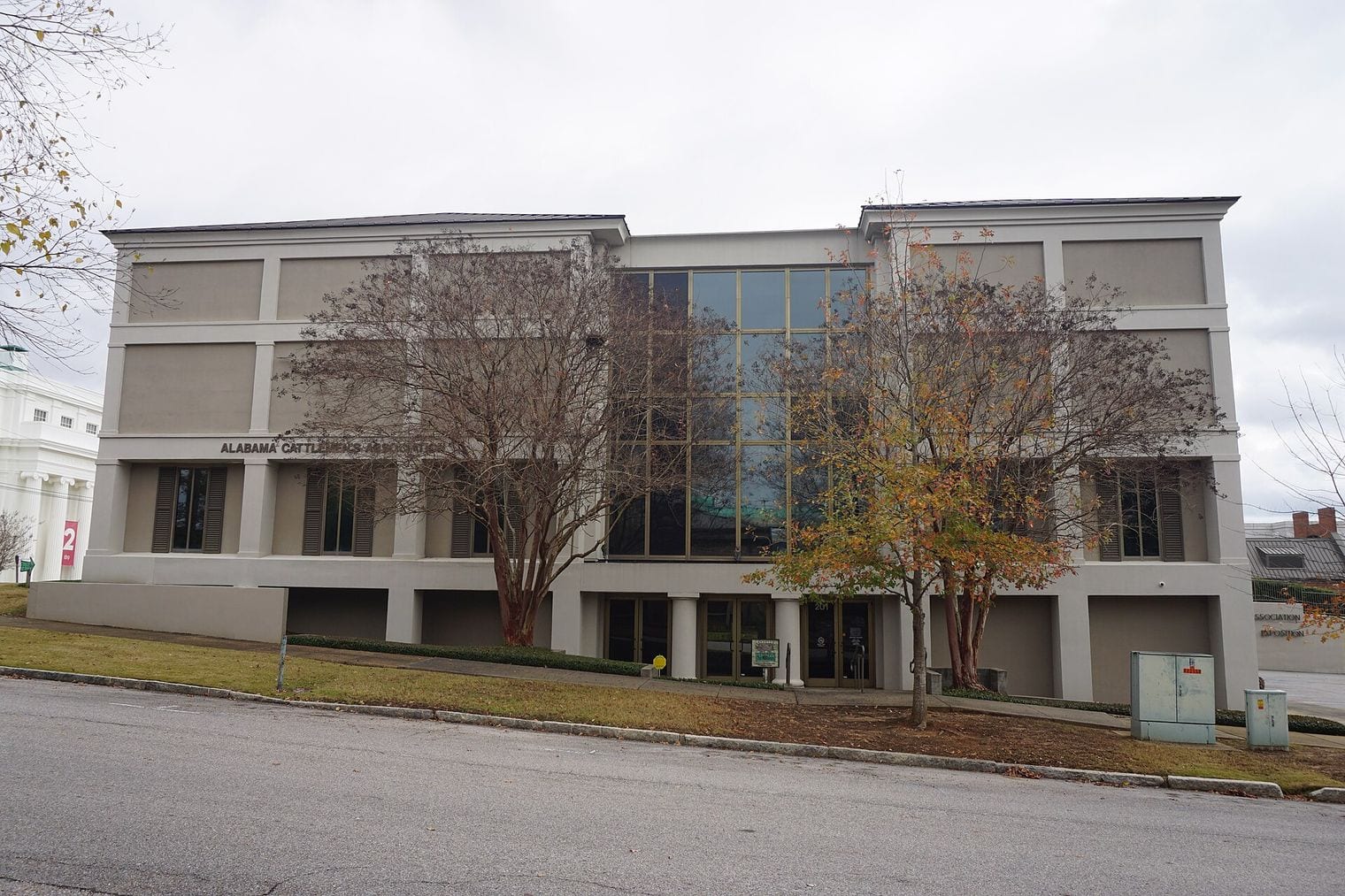
The MOOseum opened in 1995 and has drawn children and adults alike to explore the history of the beef cattle industry in Montgomery. This interactive museum builds its tour around the life-cycle of beef, tracing it from the pasture to your plate and showing the byproducts made along the way and how each one gets used.
A resident cowboy tour guide screens a movie on the history of the cattle industry in Alabama, adding local context to the exhibits. Visitors can pose for a photo with the displays before browsing the MOOseum General Store for souvenirs, making it an easy stop that pairs hands-on learning with a bit of fun.
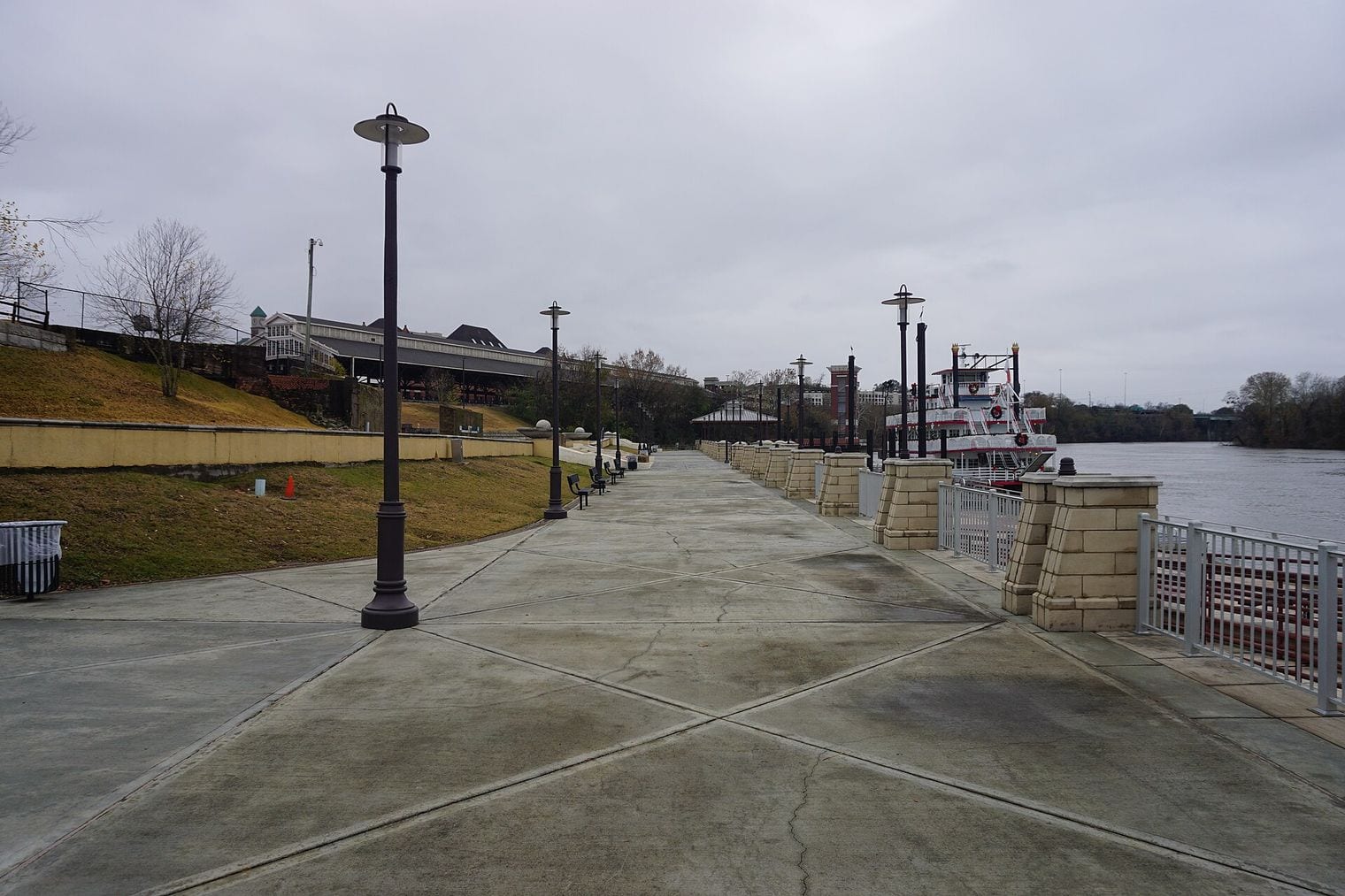
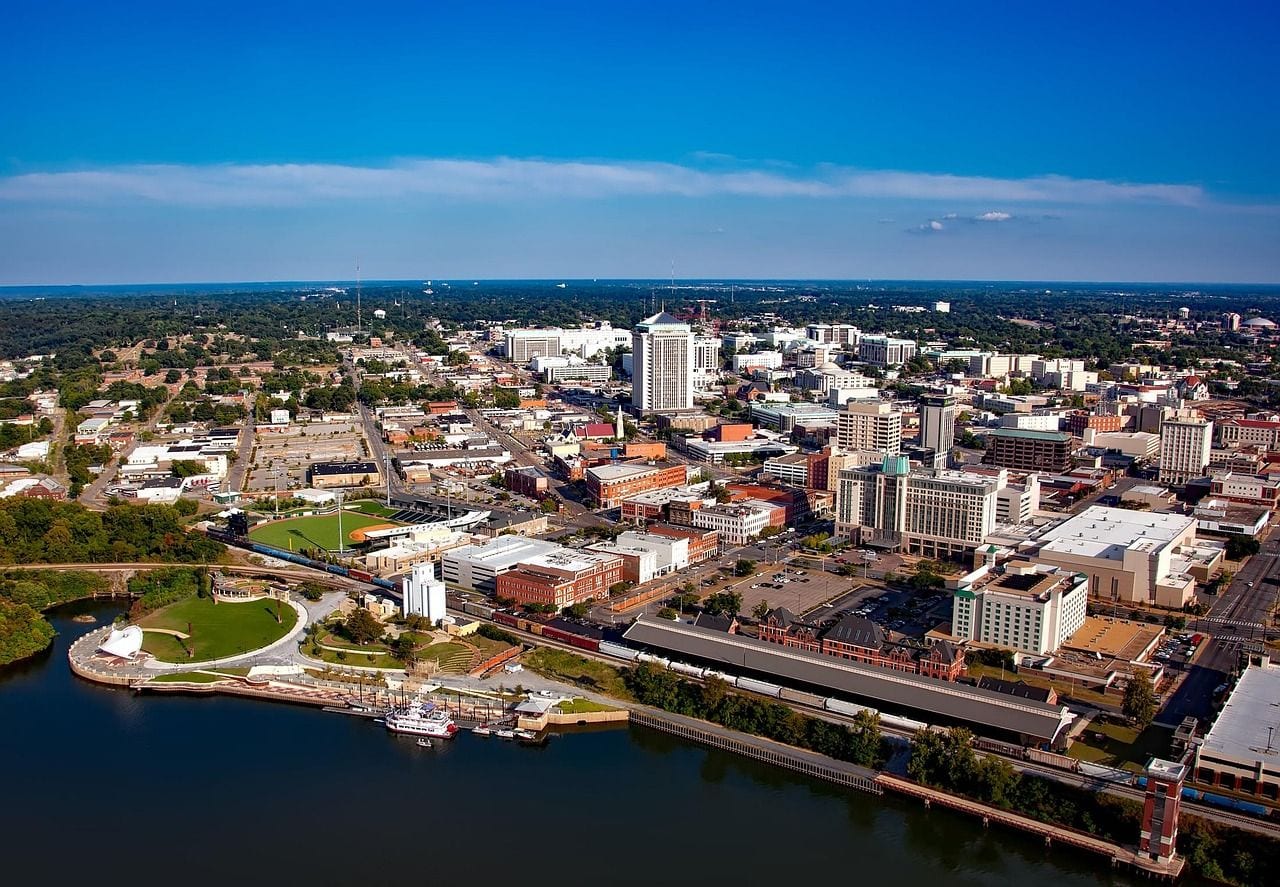
Riverfront Park is Montgomery’s leisure counterpoint to the city’s history and politics. Its Riverwalk Stadium and Riverwalk Amphitheater anchor the entertainment scene, hosting sports games, theatrical performances, and concerts. The riverside setting gathers these venues in one place, giving visitors a lively destination along the water when they want a break from downtown sightseeing.
Families gravitate to the Splashpad, where fountains rise straight from the ground for cooling summer play. The river itself draws people out onto the water, with boating and riverboat cruises aboard the Harriott II. Between the stadium, amphitheater, splash fountains, and boat rides, the park pairs entertainment and outdoor recreation in a single stretch of waterfront.
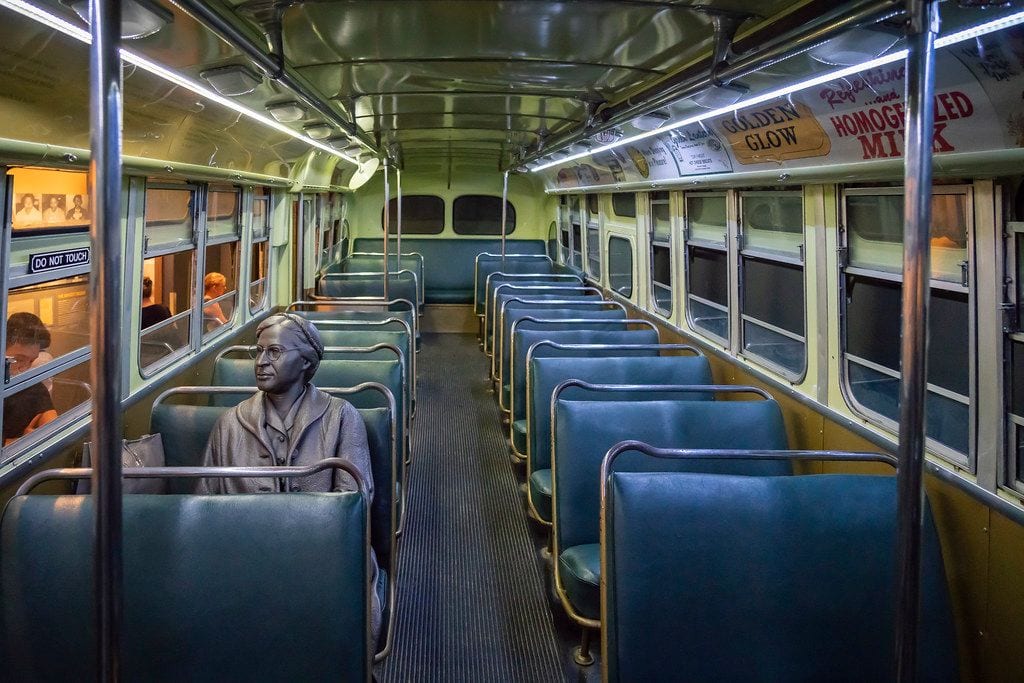
The Rosa Parks Museum is the only US museum dedicated to Rosa Parks, built at the site where she was arrested in 1955 for refusing to give up her bus seat at the driver’s command. That arrest sparked the 1955 Montgomery Bus Boycott, a pivotal moment in the early Civil Rights Movement.
Located on the Satellite Campus of Troy University, the museum holds artifacts and exhibits from the 1955 Bus Boycott. A virtual interaction setup lets visitors experience a reenactment of what happened on the bus, viewed from the perspective of someone standing outside it.
The Alabama Safari Park offers a drive-thru experience that lets you sightsee hundreds of animals in their natural habitat from the comfort of your own car. It packs a lot into a short visit, giving you an up-close look at the wildlife as you make your way slowly along the route by vehicle.
For extra fun, you can feed giraffes in a special activity area and pet goats and pigs in the petting area. The Budgie Adventure Aviary is a walk-in bird enclosure where several different species fly freely, and you can even feed them as they perch on your body during the visit.
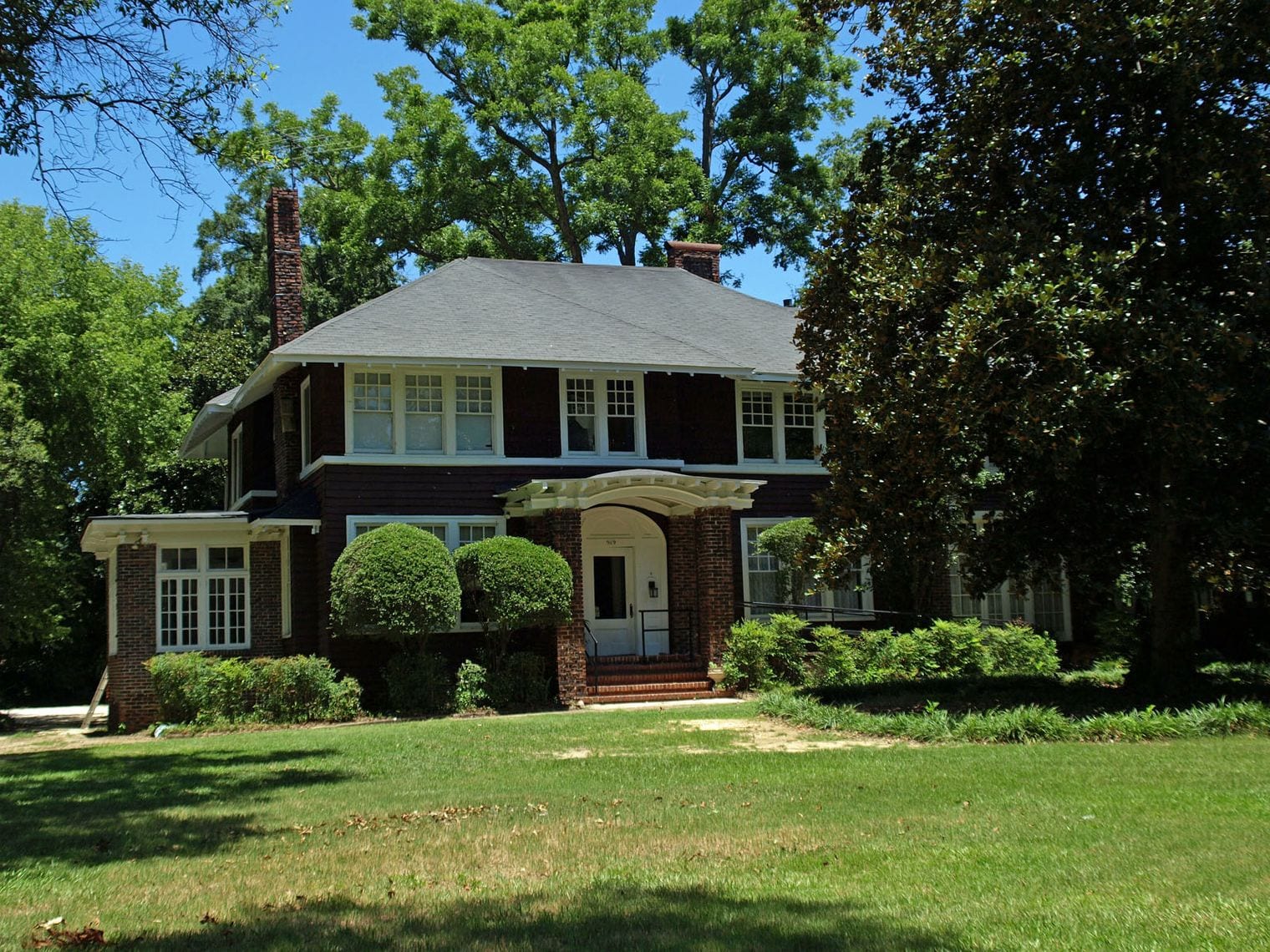
The Scott and Zelda Fitzgerald Museum honors the restless lives of writer Scott Fitzgerald and his wife Zelda, who moved from city to city while producing books and art. This was the last home the Fitzgeralds shared as a family, before Zelda relocated to Baltimore following the death of her father.
The house was built in 1909 and faced demolition in 1986, but donations halted the wrecking crews and allowed it to be converted into the museum you see today. The on-site shop stocks books and novels written by the Fitzgeralds, along with a range of other souvenirs to take home.
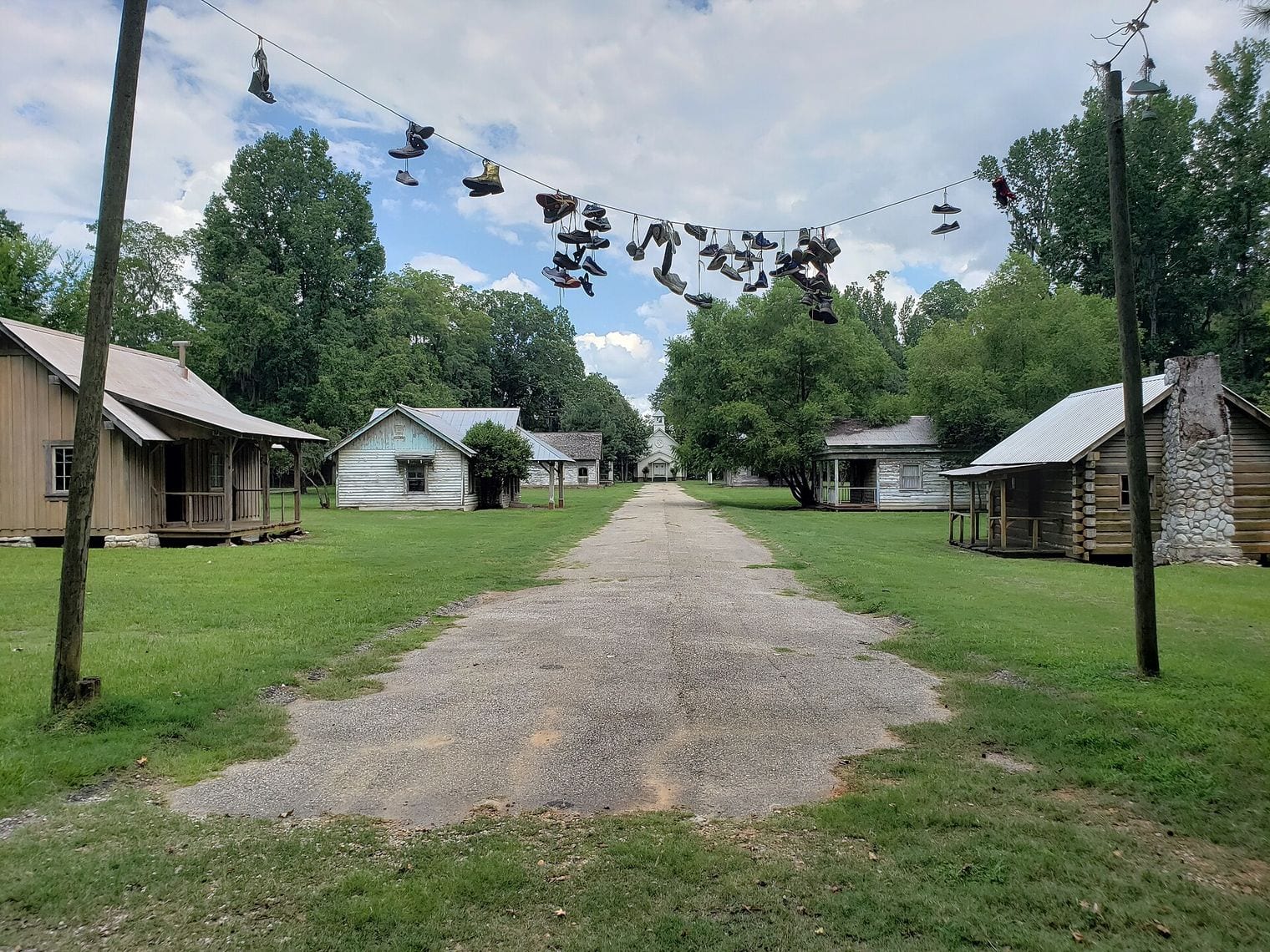
Just a short drive out of Montgomery, the Town of Spectre is a movie set built for the production of the film Big Fish. The iconic rope still stretches between the trees with shoes hanging from it, and the house built right in front of the lake amplifies all the nostalgia the movie left behind.
Baby goats roam the island here, and you can pet them and spend time with them, making the spot a favorite for animal lovers. Do call ahead and check before heading out on rainy days, since the island closes due to flooding when there has been too much rain.
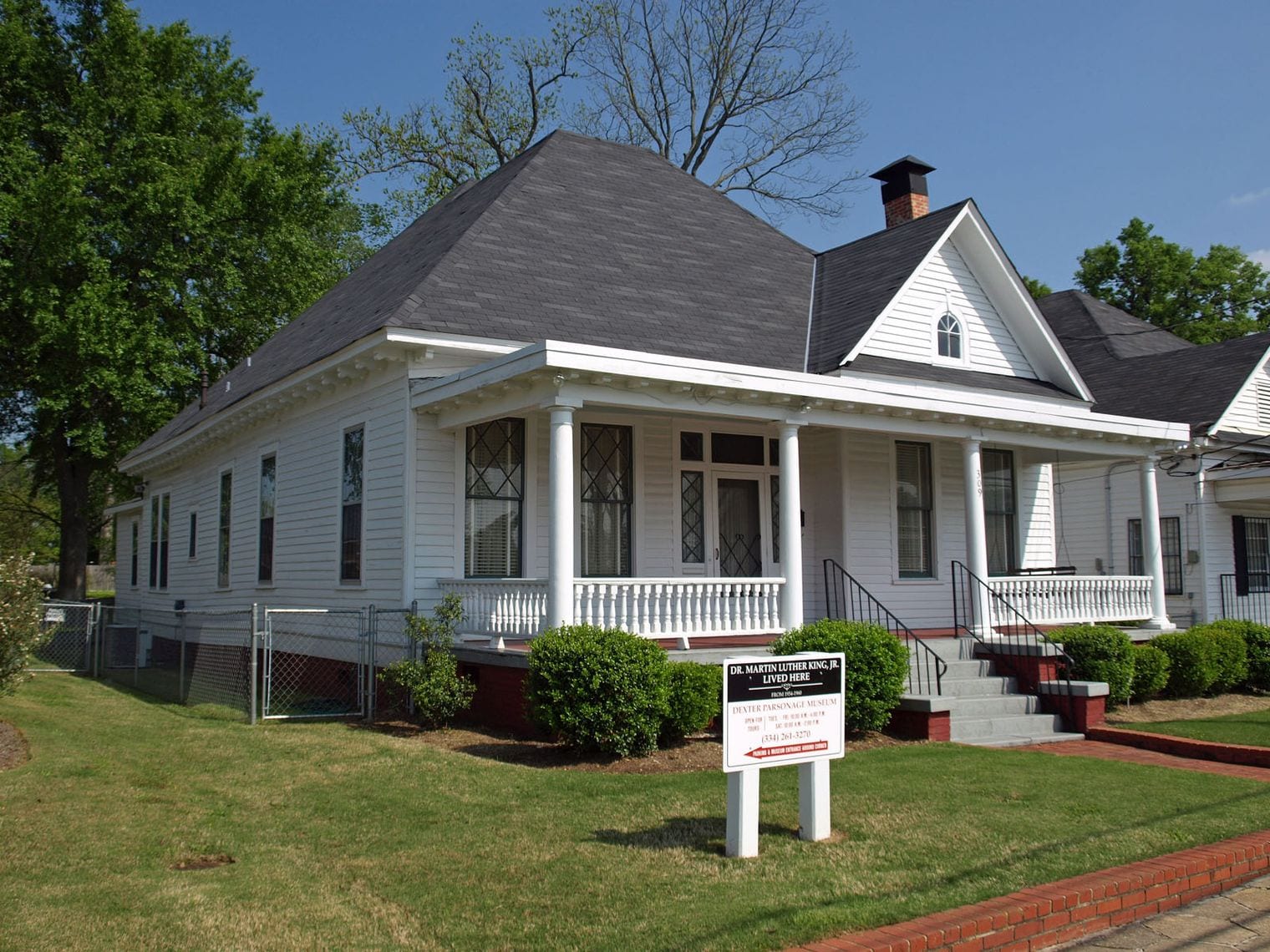
The Dexter Parsonage Museum was the home of Dr. Martin Luther King Jr. and his family from 1954 to 1960, during his years as pastor of the nearby church. Stepping inside offers a close look at the private life of the King family and the household from which so much of the early civil rights movement was led.
During the struggle for civil rights, the parsonage was bombed several times, though King and his family came through unharmed. Today the site is preserved as a museum, with guided tours led by experienced guides who trace King’s life, his years in Montgomery, and his lasting contribution to the fight for civil rights.
Pratt Park was voted America’s Favorite Summer Park in 2012, and it makes a fine warm-weather stop in Montgomery. The grounds center on an outdoor recreational area built around aquatic activities, with a public pool and a pond that anchor the space and draw families out on bright, sunny afternoons.
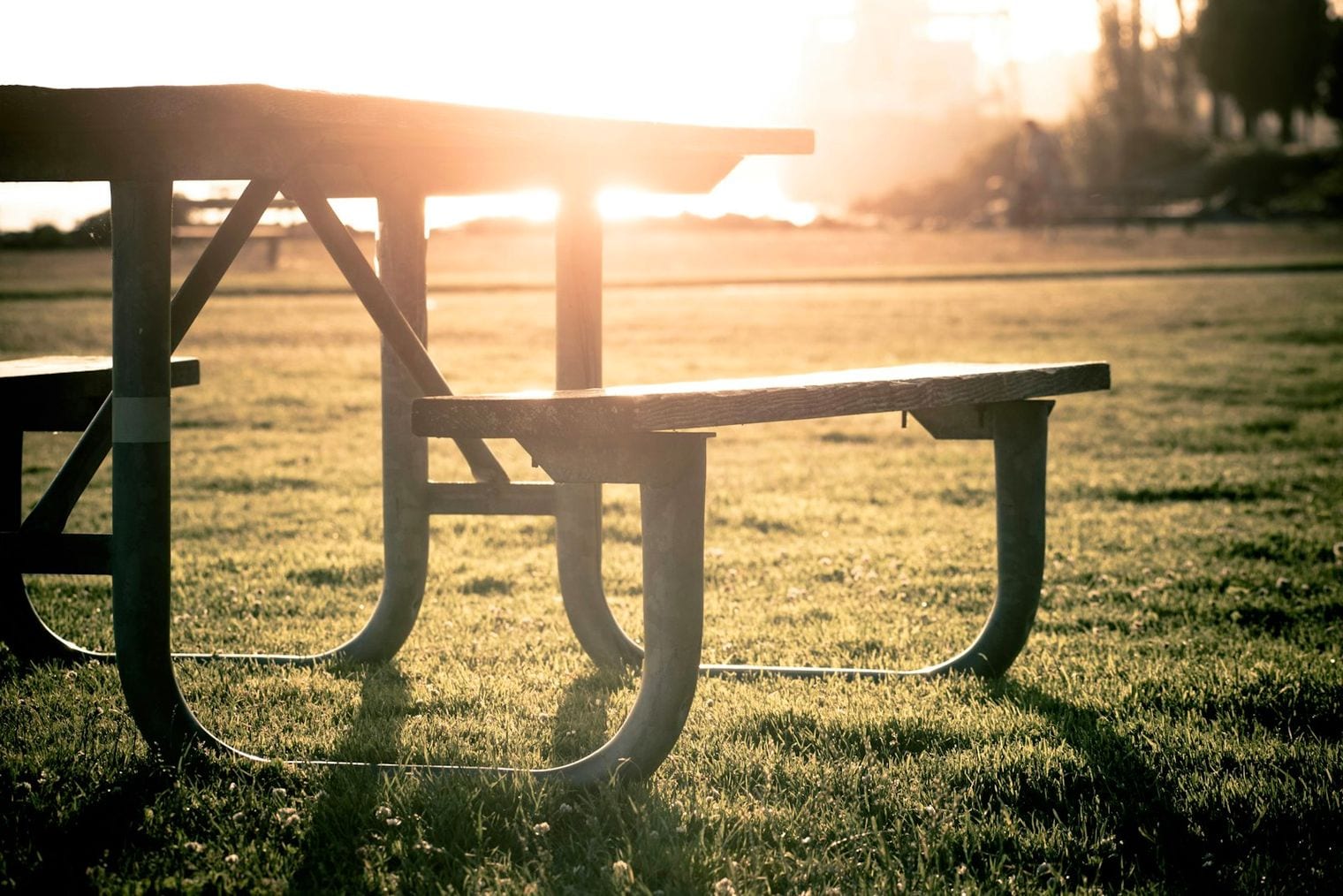
Younger visitors get their own kids’ splash pad and a playground, while a picnic and BBQ area suits family outings and cookouts. A few miles of walking trails wind throughout the park, giving you room to stretch out and explore the grounds on foot. Dogs are welcome too, provided they stay on a leash.
Montgomery Whitewater is Alabama’s premier outdoor adventure destination, an artificial whitewater river built at 1100 Maxwell Blvd. Its Olympic-standard course pairs a 1,600-foot competition channel with a longer 2,200-foot adventure channel, sending manufactured rapids through the heart of the park for paddlers and rafters of every skill level.
Beyond the water, the site packs in whitewater rafting, tubing, kayaking, and stand-up paddleboarding, alongside dry-land pursuits like mountain biking, bouldering, and a ropes course. After working through the channels and trails, visitors can refuel at the on-site restaurant, making it a full day of activity in one place.
Trade sightseeing for shopping at Eastdale Mall, where anchor stores like JCPenney and Belk sit alongside a wide range of brands. The variety makes it an easy stop for anyone looking to browse, compare, and pick up something new without hopping between scattered storefronts across town.
A food court rounds out the visit with dining options spanning steaks, burgers, and tacos, so nobody leaves hungry. The real standout is the Ice Palace, a ground-floor ice rink with a twist: alongside conventional skating, it runs bumper cars right on the ice. It is an unusual pairing that keeps the whole group entertained.
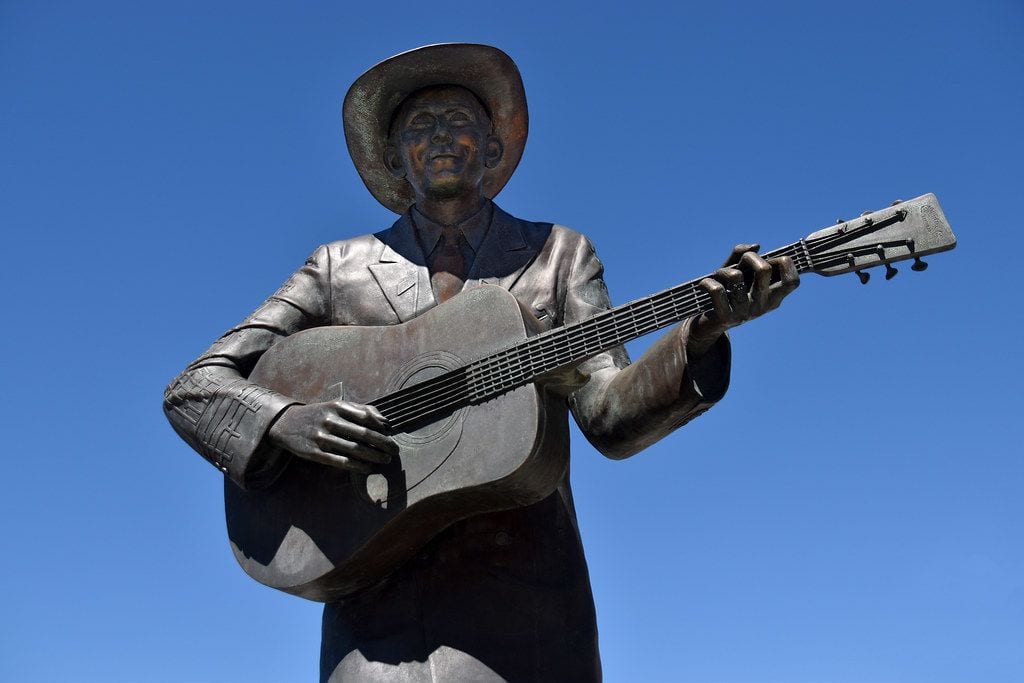
Country music legend Hank Williams earned his own tribute in the heart of Montgomery. The Hank Williams Statue was erected in 1991 to honor his role in promoting and revolutionizing country music in his era. Cast in bronze, it depicts the star in one of his extravagant, decorated suits, guitar in hand and fingers resting on the chords.
The monument was positioned to face the site of Hank’s funeral, now Montgomery’s City Hall. It was later moved to a spot near the river, where it stands in clearer view for the many visitors who come to pay their respects to one of the genre’s defining voices.
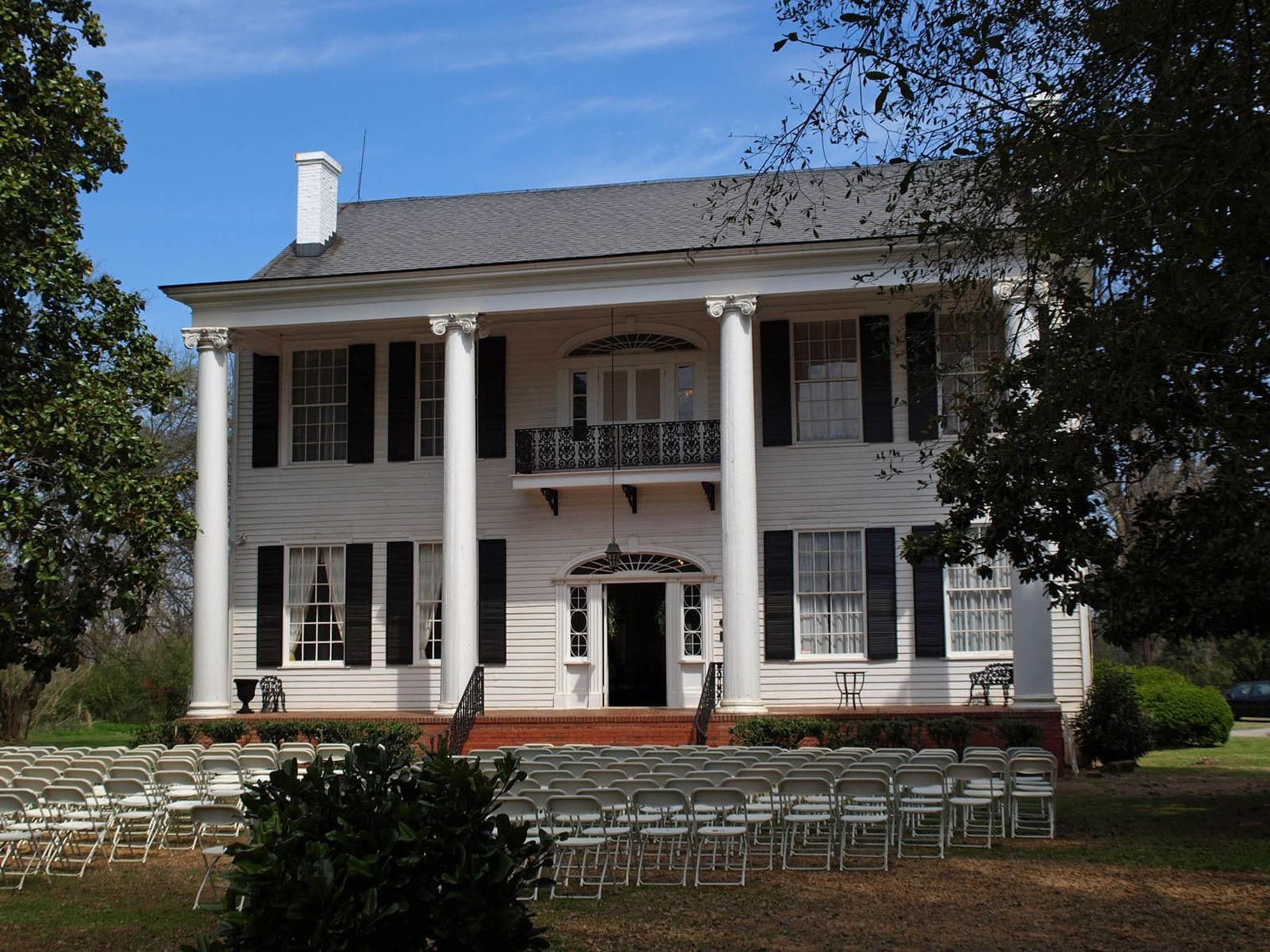
Previously known as the Montgomery-Janes-Whittaker House, Buena Vista Mansion is a historic Federal plantation house in Autauga County. Built in 1844 by William Montgomery, it spreads across four acres and was added to the National Register of Historic Places in 1974, operating as a historic house museum ever since its listing.
The mansion showcases exquisite design features inside and out, most notably a spiral mahogany staircase that ascends from the ground floor all the way to the third. Visitors can explore the property on a self-guided tour, and the grounds also serve as a setting for private gatherings such as parties and weddings.
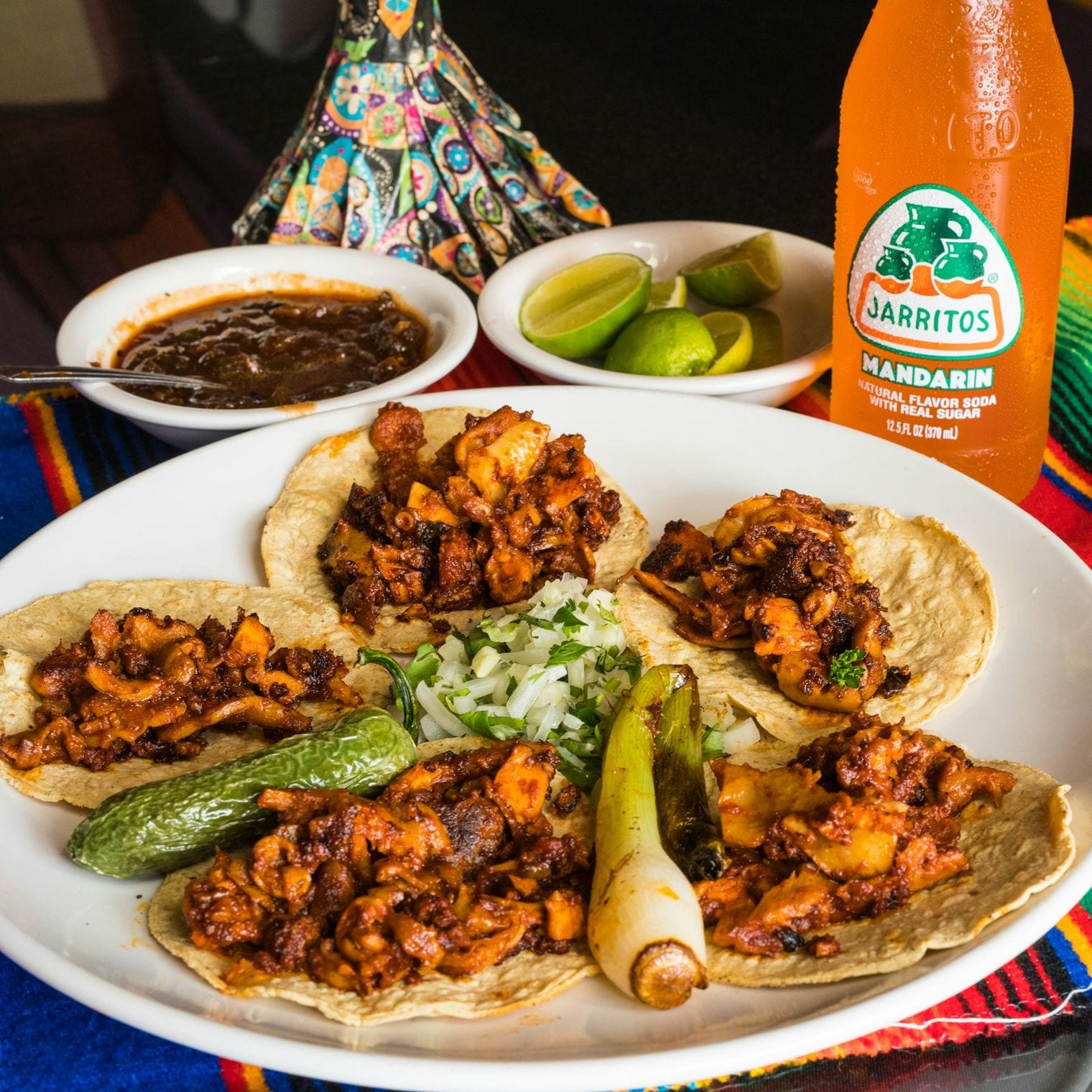
Sol Restaurante Mexicano & Taqueria has served Montgomery for more than 15 years, and the kitchen knows its craft. Specializing in tex-mex alongside signature Mexican dishes, it pairs a tantalizing menu with a hospitable in-house staff. The Fajitas, Nachos, and Huevos Benito rank among the most frequently ordered plates, making them a reliable place to start.
The food here tends to run a little on the spicier side, so it helps to order according to your own spice preference. Do that, and your taste buds are in for a treat every visit. Between the flavorful cooking and the welcoming service, this taqueria has earned its long-standing place on Montgomery’s dining scene.
Getting to Montgomery
Montgomery sits at the crossroads of two interstates, which makes arriving by car straightforward from almost any direction. Interstate 65 runs north-south through the city, linking it with Birmingham and the rest of central Alabama to the north and the Gulf Coast to the south, while Interstate 85 begins here and angles northeast toward the Georgia state line. Several US highways also feed into town, including the route running west toward Selma and the highways that carry traffic along the eastern edge of the city, so drivers have plenty of approaches to choose from.
The city has its own regional airport just southwest of downtown, handling a modest schedule of connecting flights. Many visitors, however, fly into one of the larger hub airports and drive in: the big Atlanta hub is roughly two and a half hours east, and Birmingham’s airport is about an hour and a half to the north, both offering far more routes and often cheaper fares. There is no passenger rail service to Montgomery, but long-distance intercity buses do stop at the downtown intermodal center, which is a useful budget option if you would rather not rent a car.
Getting Around Montgomery
The compact downtown and riverfront core are pleasant to explore on foot, and most of the marquee historic sites, museums, and civil rights landmarks cluster within a walkable stretch of a few blocks, so you can leave the car parked for a half-day of sightseeing. Beyond that central district, though, Montgomery spreads out in the low-density Southern pattern, and a car is genuinely the easiest way to reach the zoo, the outlying neighbourhoods, and anything near the interstate loops.
Public transit exists but runs infrequently and is aimed more at commuters than sightseers, so most visitors rely on a rental car or rideshare, both of which are readily available. Cycling works well along the flatter riverfront and downtown streets. Parking is rarely a headache here: downtown has garages and metered kerbside spaces, and most attractions and lodging outside the centre offer free surface lots.
Where to Stay in Montgomery
For first-time visitors, basing yourself downtown or along the riverfront puts you within walking distance of the church, the memorial sites, the state capitol, and the district’s museums, plus the evening restaurants and bars, so it is the natural choice if you want to do most of your sightseeing on foot. The historic residential districts just outside the core trade a little walkability for quieter, tree-lined streets and a more neighbourhood feel while still keeping you close to the centre.
If your trip is more about convenience and easy driving, the commercial corridors out by the interstate interchanges and the east-side retail districts offer the widest spread of chain lodging, simple highway access, and free parking, which suits road-trippers and anyone continuing on the next day. Travellers with ties to the university towns to the east sometimes prefer to stay nearer the campus areas out that way, though most visitors focused on Montgomery’s own attractions will be happiest closer to the historic centre.
Where to Eat in Montgomery
Montgomery eats like the heart of the Deep South, and the signature plates lean into that: slow-smoked barbecue, especially pork and ribs served with a tangy white sauce that is an Alabama trademark, alongside fried chicken, catfish, and the classic meat-and-three lunch of a main with sides like collard greens, black-eyed peas, mac and cheese, and cornbread. Soul food and country cooking are everywhere, and you will also find shrimp and grits and other Gulf-influenced seafood thanks to the coast a few hours south.
The downtown and riverfront districts hold the densest cluster of sit-down restaurants and casual spots, and the entertainment blocks near the centre are the easiest place to graze from barbecue to Southern comfort food to a growing number of international kitchens. Out along the east-side commercial corridors you will find the broadest everyday variety, while smaller neighbourhood cafes and long-standing lunch counters scattered around town are where to hunt down the most authentic home-style plates.
One Day in Montgomery
Montgomery unfolds most naturally from east to west, opening among the quiet culture parks on the city’s edge before sinking into the dense civil-rights and history core downtown and finishing by the river. Keep the walking for the center, where nearly everything sits within a few blocks, and let the morning ease you in from the calmer eastern side.
Morning: Begin on the eastern edge at the Montgomery Museum of Fine Arts, whose galleries and reflecting pool make an unhurried start, then wander the adjoining greens of Wynton M. Blount Cultural Park next door. From there, drive back toward the center and pause in midtown at The Scott and Zelda Fitzgerald Museum, a modest bungalow that once housed the writer and his wife and sets a literary note before the day turns weightier.
Evening: Wind down at Riverfront Park, where the Alabama River bends past the old depot and the light softens over the water. If a second day beckons, save a morning for the drive south to Alabama Safari Park, a drive-through wildlife preserve well outside town that deserves unhurried hours of its own.
Free Things to Do in Montgomery
Much of Montgomery’s most powerful history costs nothing to see. The Civil Rights Memorial plaza by the Southern Poverty Law Center is free to visit, as are the exterior and grounds of the Dexter Avenue King Memorial Baptist Church and the Alabama State Capitol, where the Selma march ended. Downtown’s Court Square Fountain and the nearby bus stop where Rosa Parks made her stand are open to all, and the bronze Hank Williams Statue costs nothing to admire.
The outdoors are just as budget-friendly. Riverfront Park offers free walking along the Alabama River with its stadium and amphitheater, Blount Cultural Park spreads 175 acres of trails and ponds around the art museum, and the free-to-enter grounds of Old Alabama Town and Riverwalk let you soak up the city on foot. Add the summer splash pads at Pratt Park, and a full day in Montgomery can cost very little.
Day Trips from Montgomery
Montgomery makes a handy base for exploring central and eastern Alabama. Auburn, the lively college town, sits about an hour east along the interstate and pairs a walkable campus and game-day energy with easy dining. On the way there, the national forest and historic sites clustered around the town of Tuskegee are roughly forty minutes east and reward a stop for woodland trails and civil-rights-era history.
For a longer haul, Huntsville lies to the north, a little under three hours up the interstate, with its space and science attractions making it worth an overnight rather than a same-day round trip. Closer to home, the small river town just north of Montgomery is an easy half-hour drive for scenic waterways, walking trails, and a compact historic centre, an ideal short outing when you only have a spare afternoon.
FAQ: Visiting Montgomery
What is Montgomery, Alabama known for?
Montgomery is best known as a cornerstone of the American Civil Rights Movement, home to the Montgomery Bus Boycott, the Dexter Avenue church where Dr. King preached, the Rosa Parks Museum, and the Equal Justice Initiative’s Legacy Museum and National Memorial for Peace and Justice. As Alabama’s capital and the first capital of the Confederacy, it is also rich in political and antebellum history.
How many days do you need in Montgomery?
Two to three days is ideal. That gives you time for the major civil-rights sites — the Legacy Museum, the National Memorial, the Rosa Parks Museum, and the Dexter Avenue church — plus lighter stops like the Montgomery Zoo, Riverfront Park, and Montgomery Whitewater.
What are the top civil rights sites in Montgomery?
The essentials are the Dexter Avenue King Memorial Baptist Church, the Rosa Parks Museum at the site of her 1955 arrest, the Dexter Parsonage where the King family lived, the Civil Rights Memorial, and the Equal Justice Initiative’s Legacy Museum and National Memorial for Peace and Justice, the nation’s first memorial to lynching victims.
Is Montgomery good for families?
Yes. Families enjoy the Montgomery Zoo and Mann Wildlife Learning Museum, the drive-through Alabama Safari Park, the hands-on MOOseum, splash pads at Pratt Park, and the rafting, tubing, and ropes course at Montgomery Whitewater, alongside the city’s museums.
When is the best time to visit Montgomery?
Spring and fall bring the most comfortable weather, ideal for walking tours of the historic downtown and time outdoors along the river. Summers are hot and humid, better suited to indoor museums and the water play at Montgomery Whitewater and Pratt Park, while winters are mild.
How far is Montgomery from Birmingham?
Montgomery lies roughly 90 miles south of Birmingham along I-65, about a 90-minute drive. It is also about 50 miles east of Selma, making it a natural anchor for exploring Alabama’s civil-rights history across the region. Just over an hour east, the college town of Auburn makes an easy day trip.
Is Montgomery worth visiting?
Absolutely. Few American cities pack as much pivotal history into a walkable downtown, and Montgomery’s civil-rights landmarks are among the most moving in the country. Paired with its zoo, riverfront, and the new Montgomery Whitewater, it rewards a visit for history lovers and families alike.