Grand Island takes its name from La Grande Isle, the long wooded island in the Platte River that French fur traders were marking on maps by the early 1800s. The first permanent settlers — thirty-five German-speaking immigrants who left Davenport, Iowa in 1857 — staked the townsite betting on a transcontinental railroad that had not yet been built, and the rail yards and factories that followed proved them right.
The bet still pays off for visitors: the Nebraska State Fair has called the city home since 2010, Fonner Park has run Thoroughbred racing since 1954, and every spring hundreds of thousands of sandhill cranes crowd the Platte just south of town. This list of 25 things to do in Grand Island covers all of it, along with the best side trips to Hastings, Aurora, and the crane country in between. Sitting near the geographic heart of the state, Grand Island also makes a natural base for a wider Nebraska road trip, with Omaha an easy run east on Interstate 80.
Fun Facts About Grand Island, Nebraska
Grand Island takes its name from La Grande Isle, the long wooded island in the Platte River that French fur traders were mapping by the early 1800s.
The city was founded in 1857 by thirty-five German-speaking immigrants from Davenport, Iowa, who staked the townsite betting on a transcontinental railroad that had not yet been built.
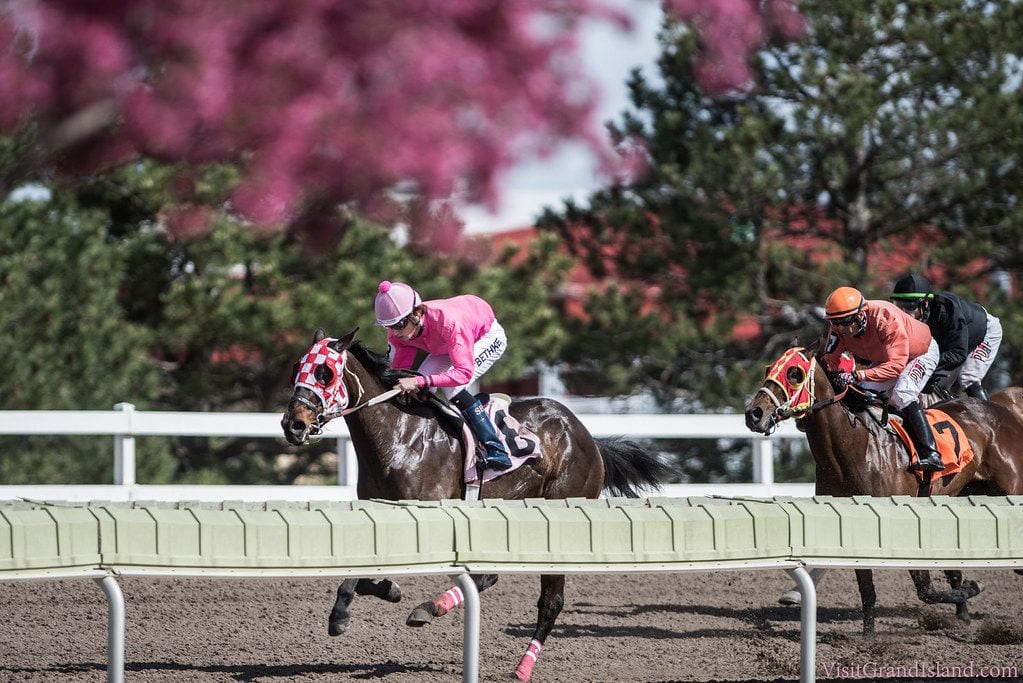
Fonner Park has run Thoroughbred racing since 1954, and became the flagship of Nebraska horse racing after Omaha's Ak-Sar-Ben track closed in 1995.
Grand Island has been the permanent home of the Nebraska State Fair since 2010, when the fair moved west from Lincoln.
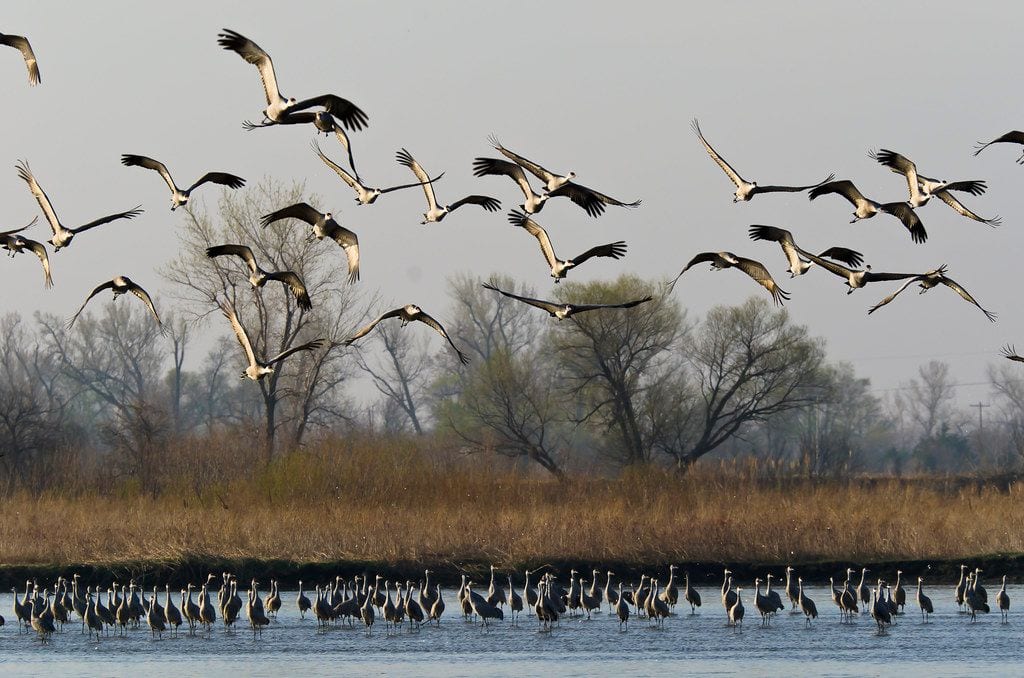
Every spring the Platte just south of town hosts hundreds of thousands of migrating sandhill cranes, one of North America's great wildlife spectacles.
Racing at Fonner Park began in April 1954 on the five-eighths-mile dirt oval that still defines the place, and when Omaha’s Ak-Sar-Ben track shut down in 1995, Fonner became the flagship of Nebraska horse racing. Live Thoroughbred meets run each late winter and spring, with simulcast wagering carrying the calendar the rest of the year.
The grounds, named for former landowner August L. Fonner, double as Grand Island’s event campus: the Nebraska State Fair and the Hall County Fair both set up here, Eihusen Arena hosts concerts and tournaments, and the Raising Nebraska building turns the state’s agriculture into interactive exhibits.
Stuhr Museum of the Prairie Pioneer spreads over a 200-acre campus dedicated to the settlers who broke the central Nebraska plains in the late 1800s. Its centerpiece, the gleaming Stuhr Building, was designed by Edward Durell Stone — the architect of the U.S. Embassy in New Delhi — and holds galleries of pioneer tools, photographs, and Plains Indian artifacts.
Exhibits trace early settlement and the farming history of the Platte Valley, with enough hands-on material to keep children moving. The same grounds contain Railroad Town, the museum’s 1890s living-history village, which is distinctive enough to earn its own entry further down this list.
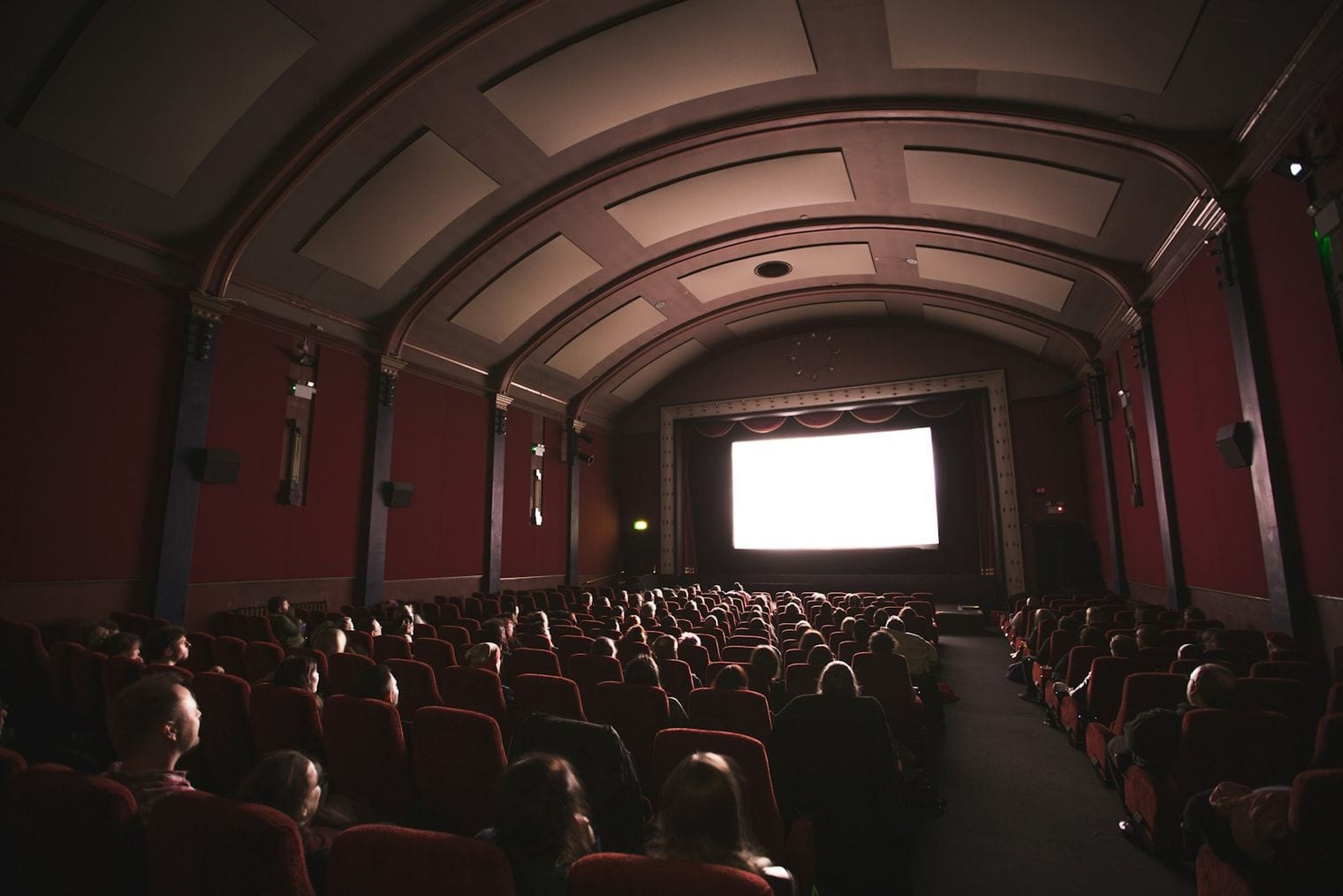
Over in Hastings, Rivoli 3 keeps first-run movies playing on West Second Street under the family-owned Fridley Theatres banner. The main auditorium is the draw — a restored room that preserves the scale and ornament of an early twentieth-century cinema, backed by two smaller modern screens.
Comfortable seats and plenty of legroom make it an easy evening, and seasonal kids’ series and balcony nights lean into the Rivoli 3’s old-theater character rather than fighting it. It caps a Hastings day built around the Hastings Museum and The Lark neatly.
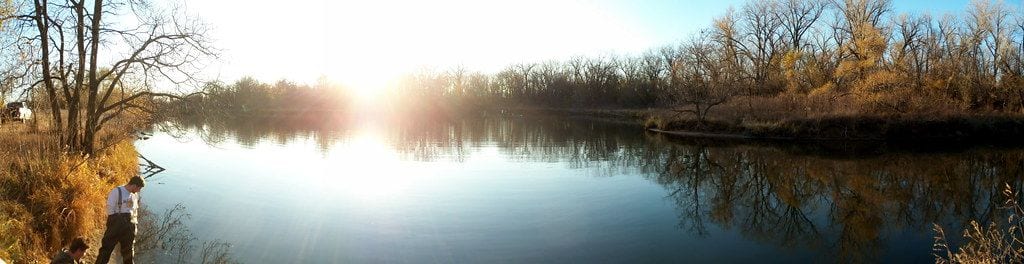
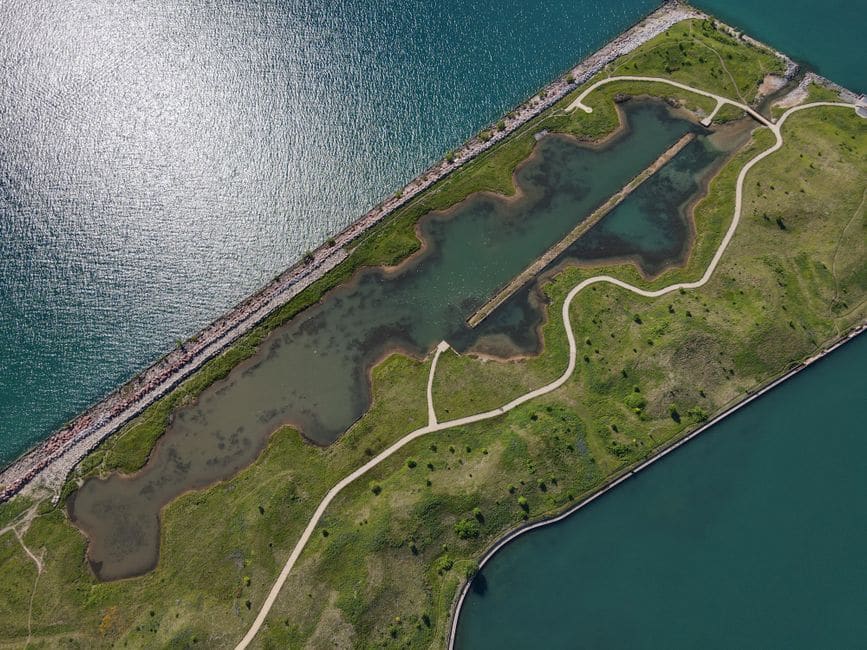
The Platte River stretches more than 300 miles across Nebraska on its way to the Missouri, and the braided channels and bare sandbars south of Grand Island are its signature stretch. Those shallow roosts are precisely why hundreds of thousands of sandhill cranes funnel through this valley every spring.
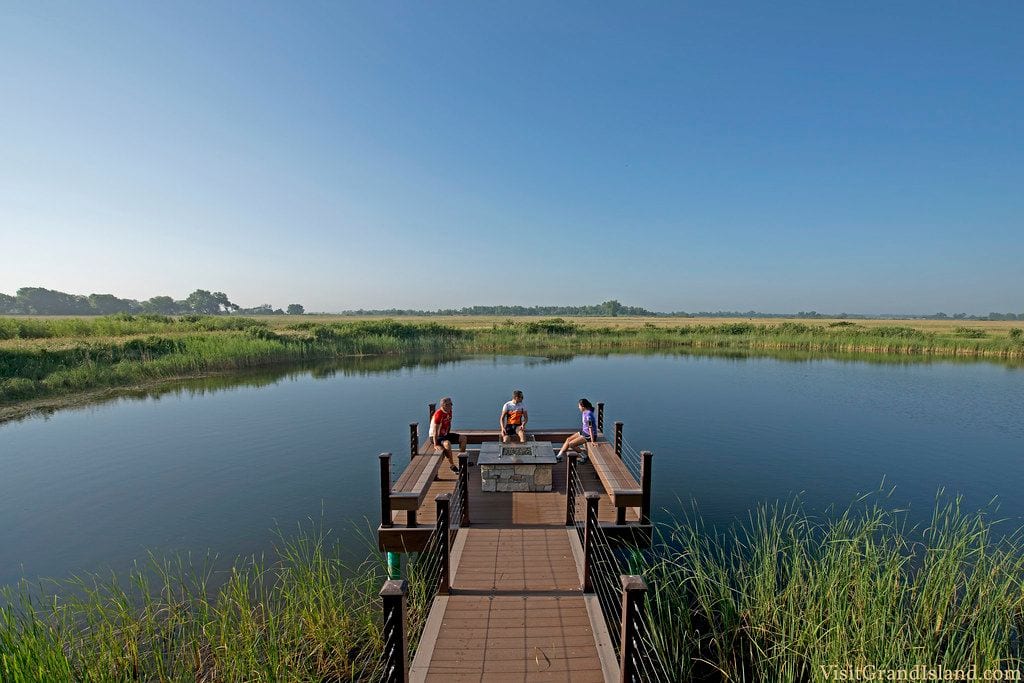
The rest of the year the Platte River is central Nebraska’s workhorse waterway — locals fish it, tube it, and camp along its wooded margins at places like Mormon Island. Respect it, too: flows shift fast, flood debris moves with real force, and undertows are part of the deal.
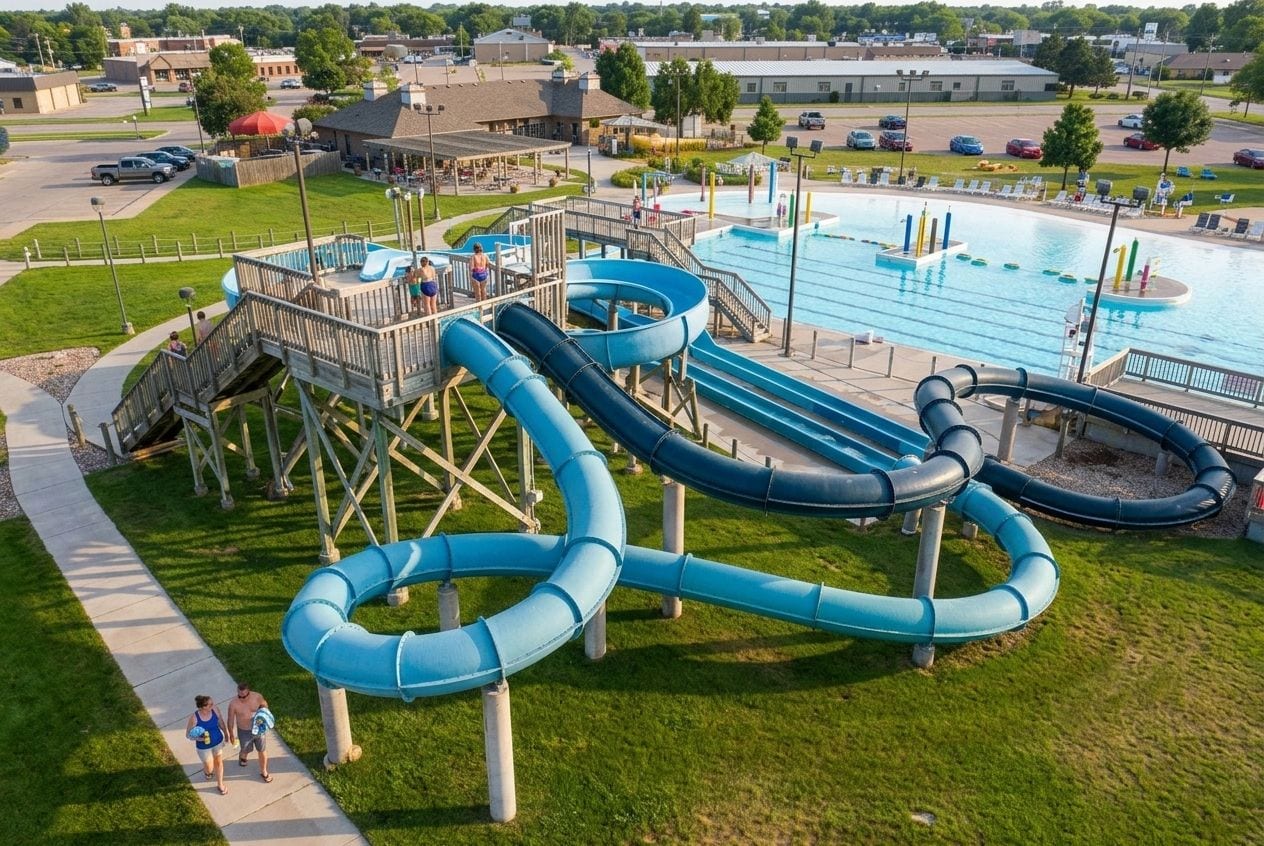
Island Oasis Water Park is the city-run summer anchor on Fonner Park Road, built around a 350,000-gallon wave pool and a 750-foot lazy river. Two six-story speed slides handle the thrill seekers, while zero-depth entry, spray fountains, and an otter-themed kids’ slide cover the youngest swimmers.
The six-acre grounds are set up for whole days rather than quick dips, with sand volleyball, shaded picnic tables, and concessions on site and lifeguards posted throughout. Sitting beside the Fonner Park fairgrounds, it pairs easily with summer events across the street.
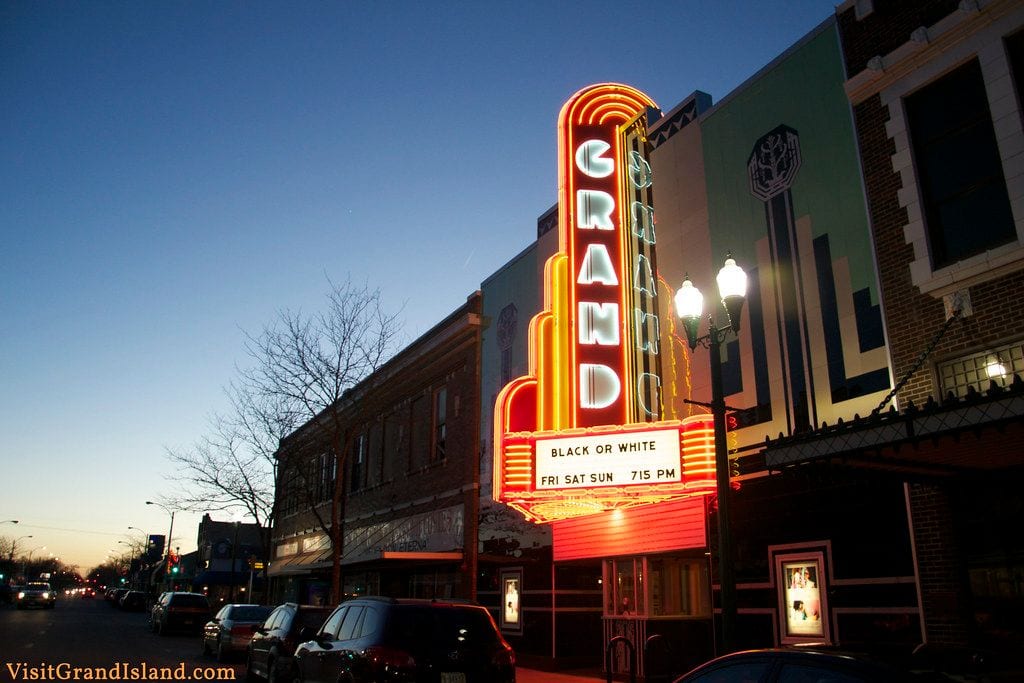
The Grand Theater opened downtown on May 7, 1937, an Art Deco movie palace raised on the site of a predecessor lost to fire the winter before. Its 487-seat auditorium premiered with Janet Gaynor in A Star Is Born and still runs films beneath the original detailing.
The nonprofit Grand Foundation saved the building, and volunteers handle everything from the projection booth to the popcorn machine. Modern digital projection and sound were fitted into the vintage room, which makes the Grand Theater that rare thing: a working cinema that is also a local historical landmark.
This spot belonged for years to the mall multiplex — most recently AMC Classic Grand Island 7 — which closed and was demolished along with most of Conestoga Mall during the site’s redevelopment. B&B Theatres Grand Island 7 took its place at the rebuilt Conestoga Marketplace in 2025, with seven screens and heated electric recliners throughout.
It is built as an entertainment block rather than a bare cinema: B-Roll Bowling adds ten lanes, the Outtakes arcade covers 7,000 square feet of games, indoor pickleball courts fill the back, and Sterling’s serves as the in-house restaurant and bar. Movie nights in Grand Island route through here now.
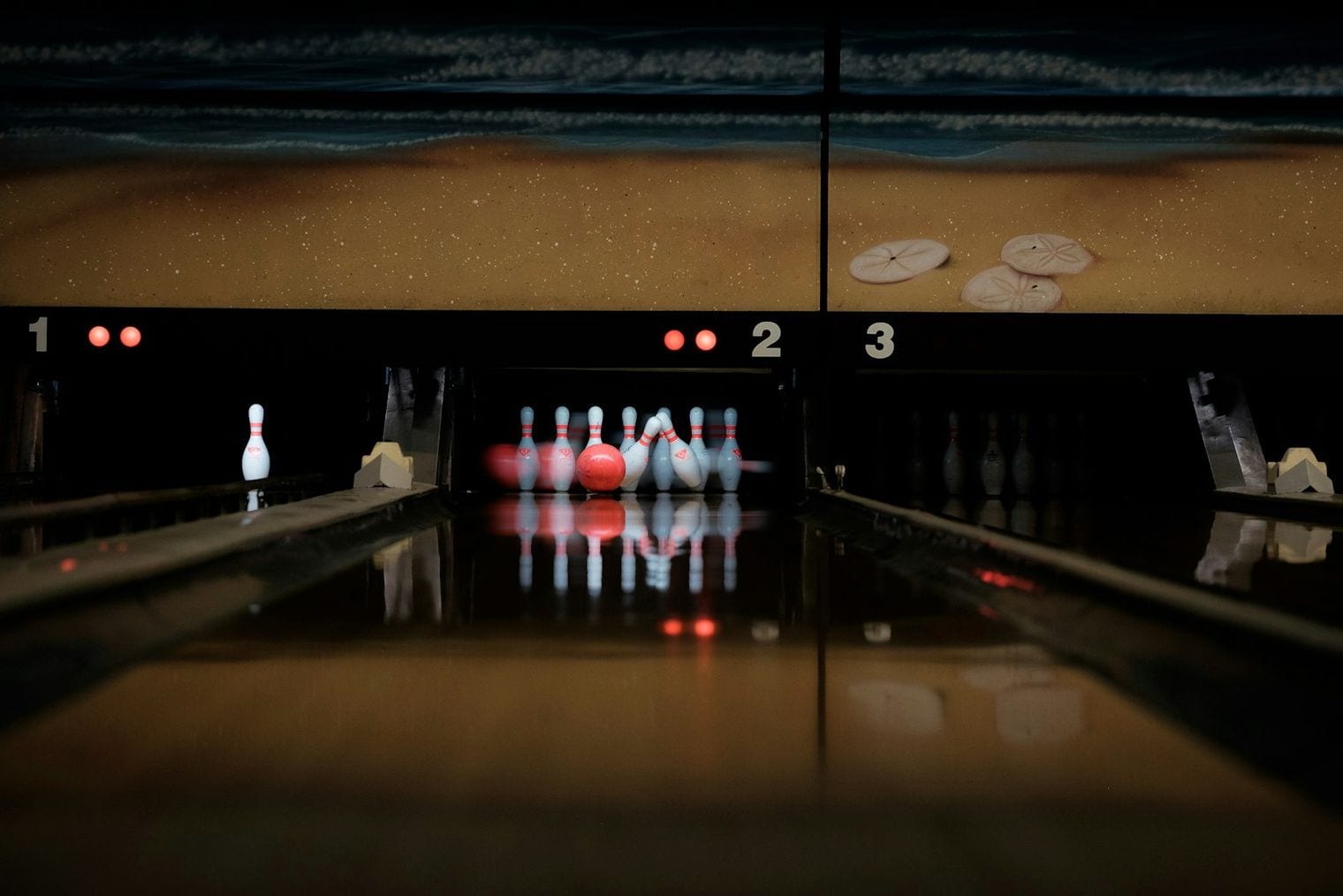
Westside Bowling Lanes on Kaufman Avenue is Grand Island’s league house, running men’s, mixed, and youth leagues alongside open bowling, with a pro shop and snack bar on site. Lanes and scoring machines are kept in solid shape, and the rental shoes hold up better than the bowling-alley average.
It earns its family reputation on rainy afternoons: besides the lanes there is an arcade room and a separate toddler area stocked with climbing toys and blocks, so kids too small to bowl still have somewhere to burn energy while the rest of the family plays.
Heartland Public Shooting Park, on Husker Highway near Alda just west of Grand Island, bills itself as one of the largest and most complete public shooting facilities in the Midwest — nine ranges spanning trap, Olympic bunker trap, five-stand, skeet, sporting clays, rifle, rimfire, handgun, and archery.
Built as a city facility and now managed by Grand Island’s own Hornady Manufacturing, the park has hosted the National 4-H Shooting Sports Championships and keeps a steady calendar of shotgun, rifle, pistol, and black-powder competitions. The terrain looks flat and simple from the lot; the clay courses are anything but.
Rowe Sanctuary protects roughly 3,000 acres of Platte River channel and wet meadow near Gibbon, and its Iain Nicolson Audubon Center is the region’s base camp for sandhill crane viewing. Through March and early April, guided trips lead to riverside blinds at dawn and dusk, when thousands of cranes lift off or settle in at once.
Blind mornings are cold, so dress in layers — the payoff is watching the roost at close range without disturbing a single bird. Outside migration season, Rowe Sanctuary’s trails and visitor center still make a worthwhile stop, and the gift shop covers the Nebraska souvenir question.
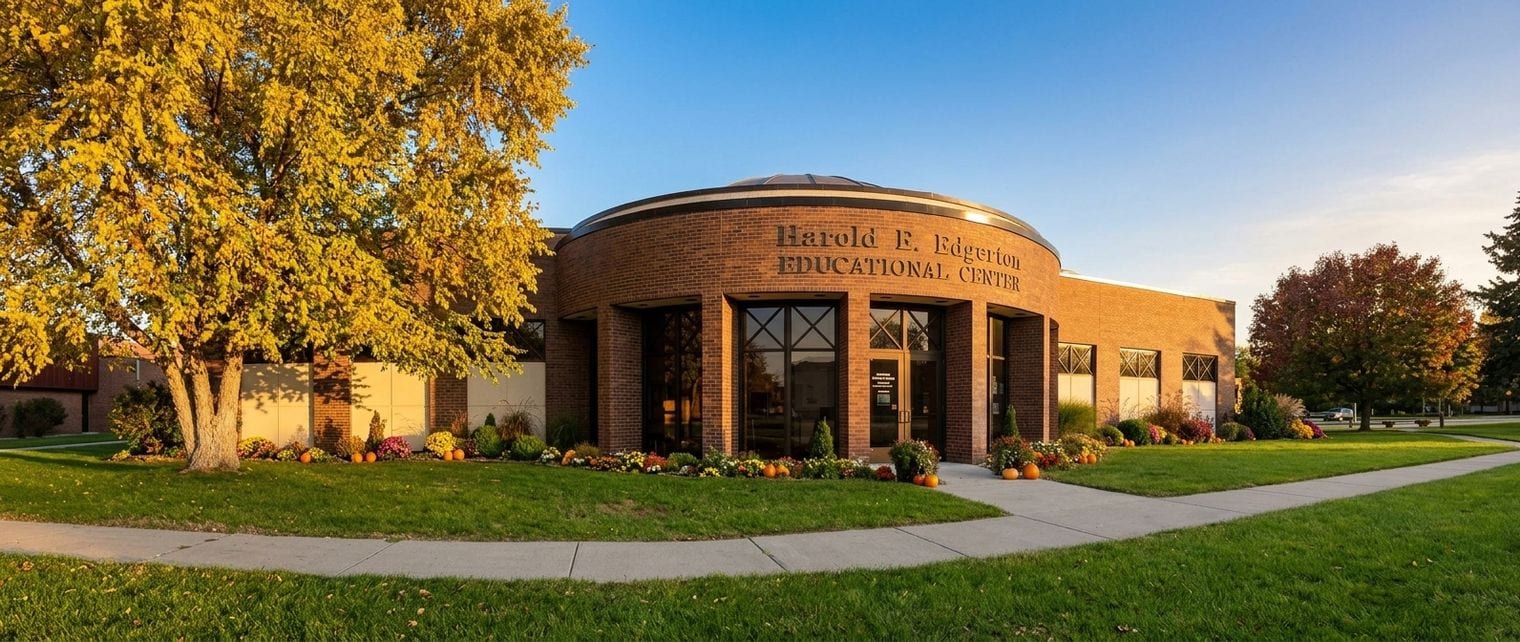
Edgerton Explorit Center in Aurora, less than half an hour from Grand Island, celebrates hometown scientist Harold “Doc” Edgerton, the MIT engineer who invented the electronic strobe flash and helped develop side-scan sonar. Dedicated in 1995, the center wraps his legacy in a thoroughly hands-on science museum.
Strobe Alley shows Edgerton’s famous stop-motion photographs — the milk-drop coronet, the bullet piercing an apple — beside his laboratory equipment, while the exhibit floor runs from flight simulators to circuits and noisemakers. Staff-led demonstrations pull kids into experiments with motion and static electricity.
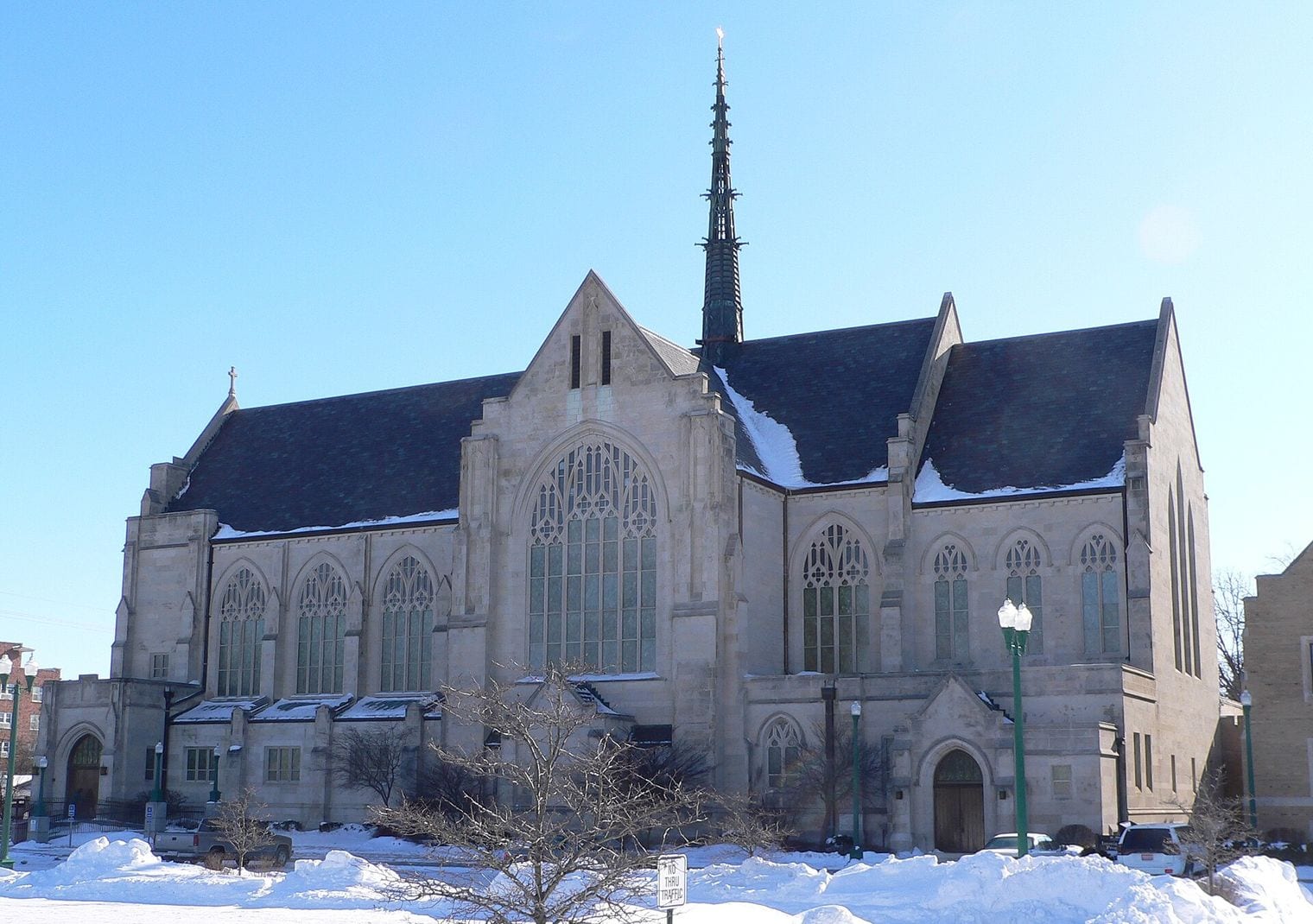
Completed in 1928 and listed on the National Register of Historic Places, St. Mary’s Cathedral is among Nebraska’s finest Gothic Revival buildings, modeled on Paris’s Sainte-Chapelle. Fan vaulting spans a nave that rises seventy-five feet above a white Italian-marble altar crowned by a thirty-one-foot baldachin.
St. Mary’s has been the seat of the Catholic Diocese of Grand Island since the diocese moved its center here in 1917, and visitors are welcome outside services. The stained glass rewards a slow walk around the nave, and the parish’s meal programs and small thrift store keep the building woven into neighborhood life.
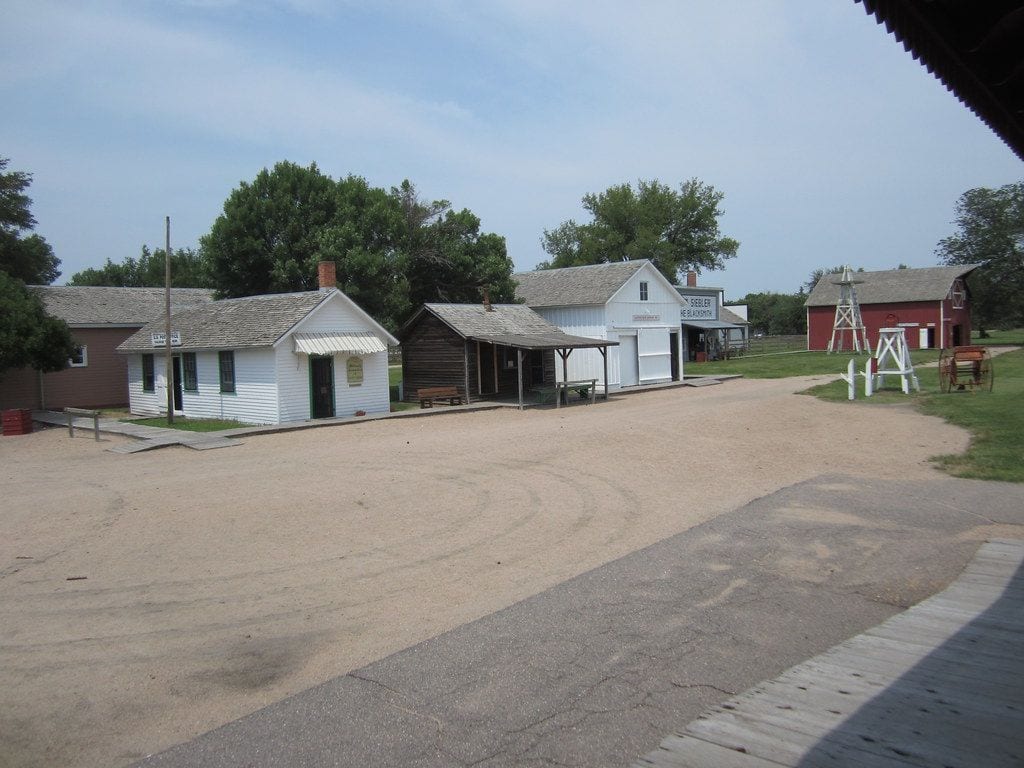
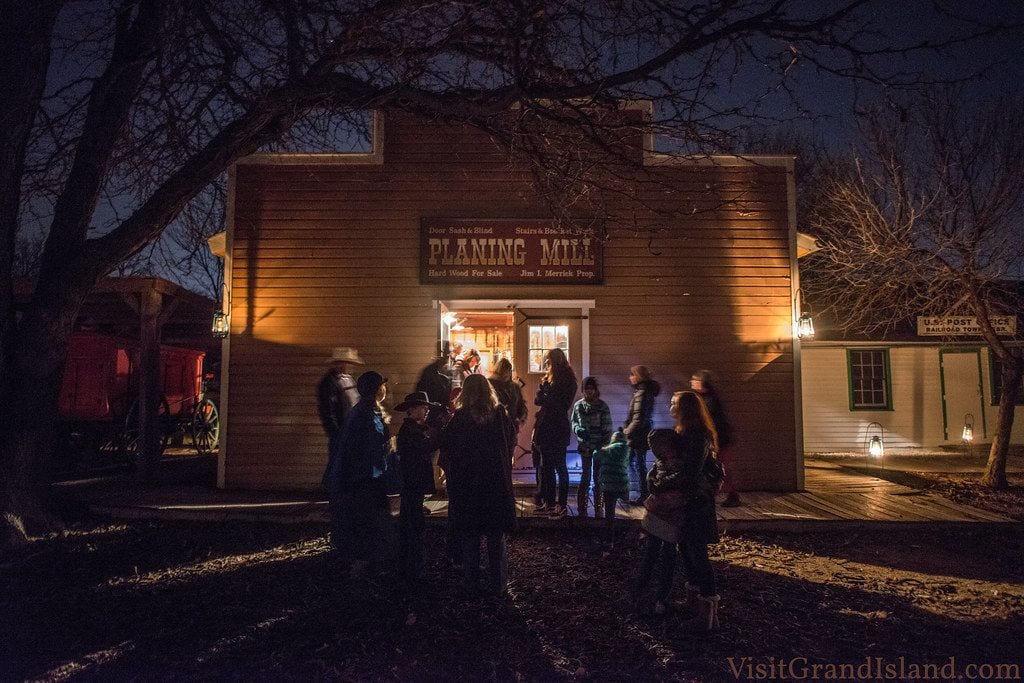
Railroad Town is the Stuhr Museum’s living-history centerpiece: more than 60 period structures, originals moved in from across the region, arranged into an 1890s prairie town and staffed in season by costumed interpreters who cook, farm, and keep shop as if the trains had just arrived. Among the houses stands the cottage where actor Henry Fonda was born.
Blacksmithing, tinsmithing, woodworking, and millinery all get worked in front of you, and the bank, post office, newspaper office, and general store are open to wander. Finish the loop with a bottle of sarsaparilla from the cafe — Railroad Town trades in immersion, not wall text.
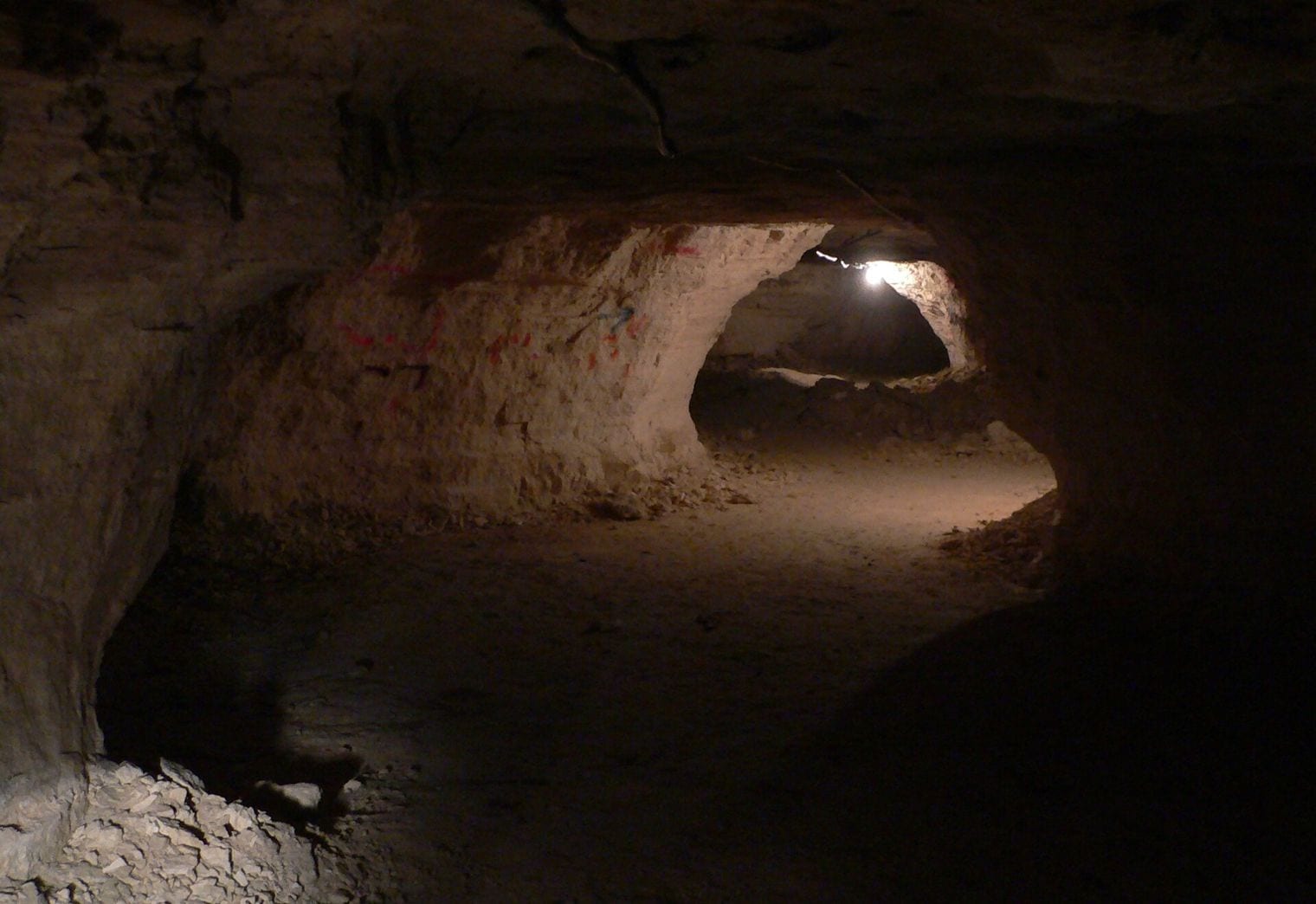
Near Scotia in the North Loup Valley, Happy Jack Chalk Mine is billed as the only publicly accessible mine of its kind in the country. Miners began cutting the soft white rock — actually diatomite, the bed of a lake six to ten million years old — in 1877, honeycombing more than 6,000 feet of rooms into the hillside.
Tours follow wide, flat-floored passages that stay cool but never cold, with the deeper workings closed off. Above the entrance, the path up Happy Jack’s Peak — named for Jack Swearengen, the scout who once lived in a dugout below — ends at a lookout over the valley that is worth the climb on its own.
The Crane Trust Nature & Visitor Center near Wood River fronts nearly 10,000 acres of protected Platte River habitat, with close to ten miles of trails threading the wet meadows and prairie behind it. In crane season the trust runs guided blind tours, including overnight photography blinds on the river’s south channel.
Climb the 35-foot observation tower for a look across Shoemaker Island, where a genetically pure bison herd grazes restored grassland. Inside, exhibits and an art gallery explain why this reach of the Platte matters: it is one of the last great staging grounds of the sandhill crane migration.
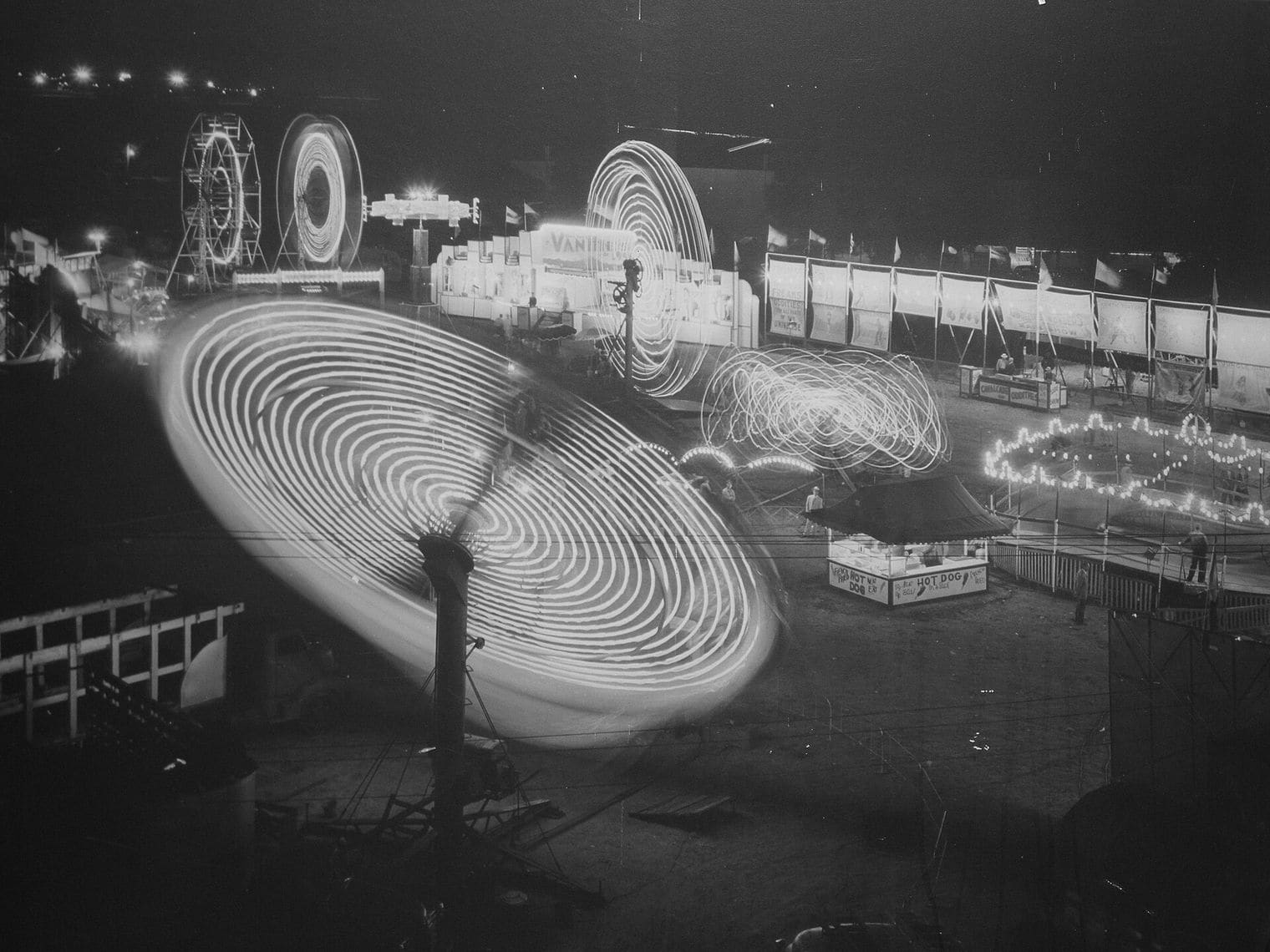
First held in 1868, the Nebraska State Fair spent more than a century in Lincoln before moving to Grand Island’s Fonner Park campus in 2010, a relocation backed by $42 million in new buildings raised in roughly thirteen months. Its late-summer run wraps around Labor Day weekend.
The fair mixes carnival rides, concert headliners, and food rows with what remains its backbone: agriculture. Livestock shows fill the purpose-built barns, 4-H and FFA exhibitors compete across the grounds, and events like tractor pulls keep the Nebraska State Fair tied to the farms that built the state.
The Plainsman Museum in Aurora covers six acres of Platte Valley settlement history, from an indoor boardwalk of period storefronts and military memorabilia to an agricultural building filled with antique cars and machinery.
Outside, a working blacksmith shop, a prairie schoolhouse, and the home of Civil War general Delevan Bates round out the grounds. The Plainsman Museum sits in the same town as the Edgerton Explorit Center, so Aurora makes a rewarding half-day side trip from Grand Island.
Hornady Manufacturing has made bullets in Grand Island since 1949, when Joyce Hornady set up shop in rented space downtown; the company remains family-owned and has grown into one of the world’s leading producers of ammunition and reloading equipment.
Factory tours show the scale of it: precision presses — including massive older machines rebuilt in-house — turning out bullets from .17 up to .50 caliber, with every batch test-fired in the internal range before it ships. Hornady’s name also hangs on the public shooting park west of town, which it manages.
The Hastings Museum stacks three floors with natural-history dioramas, pioneer and weapons collections, and the J.M. McDonald Planetarium, added in 1960. Its signature gallery is Kool-Aid: Discover the Dream — Edwin Perkins invented the drink in Hastings in 1927, and the exhibit follows it from mail-order powder to pop-culture icon.
A giant-screen theater rounds out the building, and a small children’s area covers the youngest visitors. Of all the reasons to point the car toward Hastings from Grand Island, the Hastings Museum is the most complete — count on it swallowing an afternoon.
Mormon Island State Recreation Area sits right where Interstate 80 meets the Grand Island exit, named for the winter stopover used by Mormon emigrants moving west along the Platte. Sandpit lakes, a swimming beach, and shaded campsites make it the city’s closest full-service slice of outdoors.
Anglers pick between several small lakes and the river channel behind the campground, and the wooded loops suit dog walks and casual rides. In spring the surrounding braids of the Platte put roosting sandhill cranes practically next door to your tent.
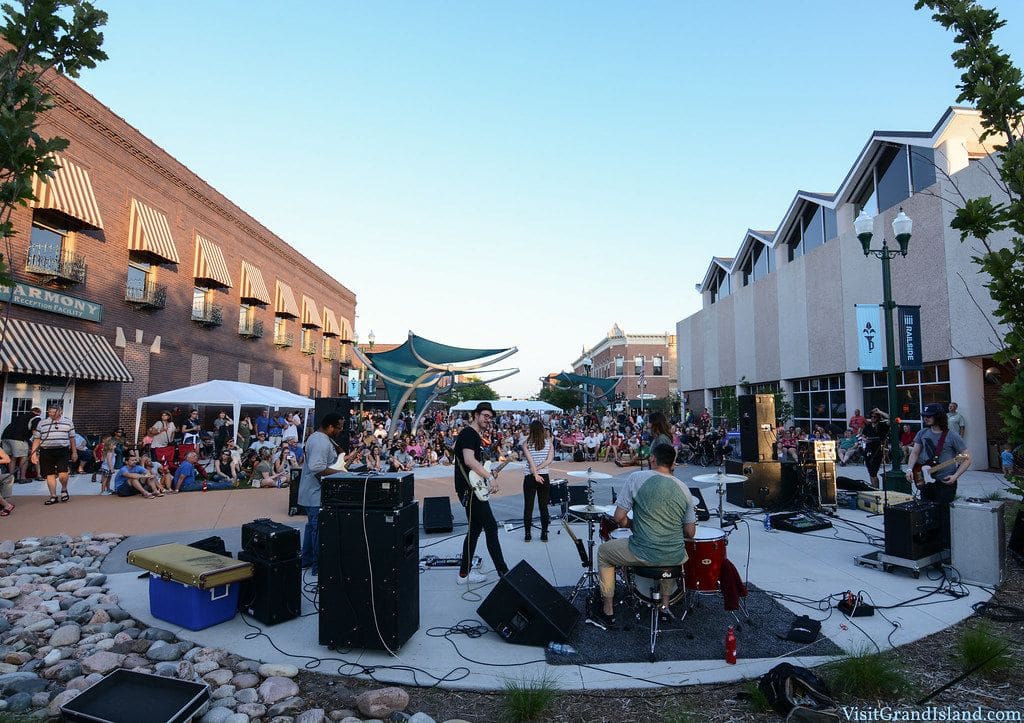
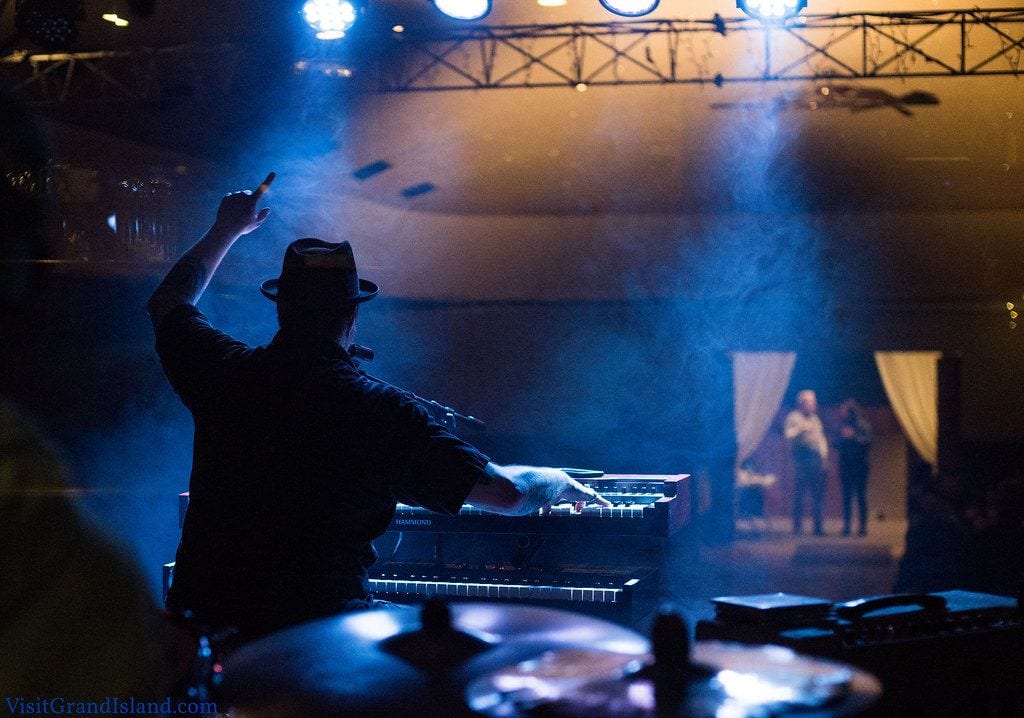
The Lark fills a handsomely renovated building in downtown Hastings with live music — touring acts, regional songwriters, and local bands’ debuts — for crowds of roughly 100 to 150 people.
That scale is the whole point: close enough to see the fretwork, small enough that a show feels like a gathering. Between concerts The Lark books weddings, receptions, and reunions, and its block puts Hastings’ downtown bars and restaurants within an easy stroll.
Hastings also hosts the Nebraska Bigfoot Crossroads of America Museum, opened in 2018 by Harriett McFeely — proclaimed the state’s official “Nebraska Bigfoot Lady” by gubernatorial proclamation in 2020. Footprint casts, sighting maps, and decades of collected evidence pack its rooms.
McFeely walks visitors through the collection herself, and her running commentary is half the attraction: believer or skeptic, you get an unfiltered tour of Sasquatch lore from the person who also organizes Nebraska’s annual Bigfoot conference. Few stops in this corner of the state are stranger or more sincere.
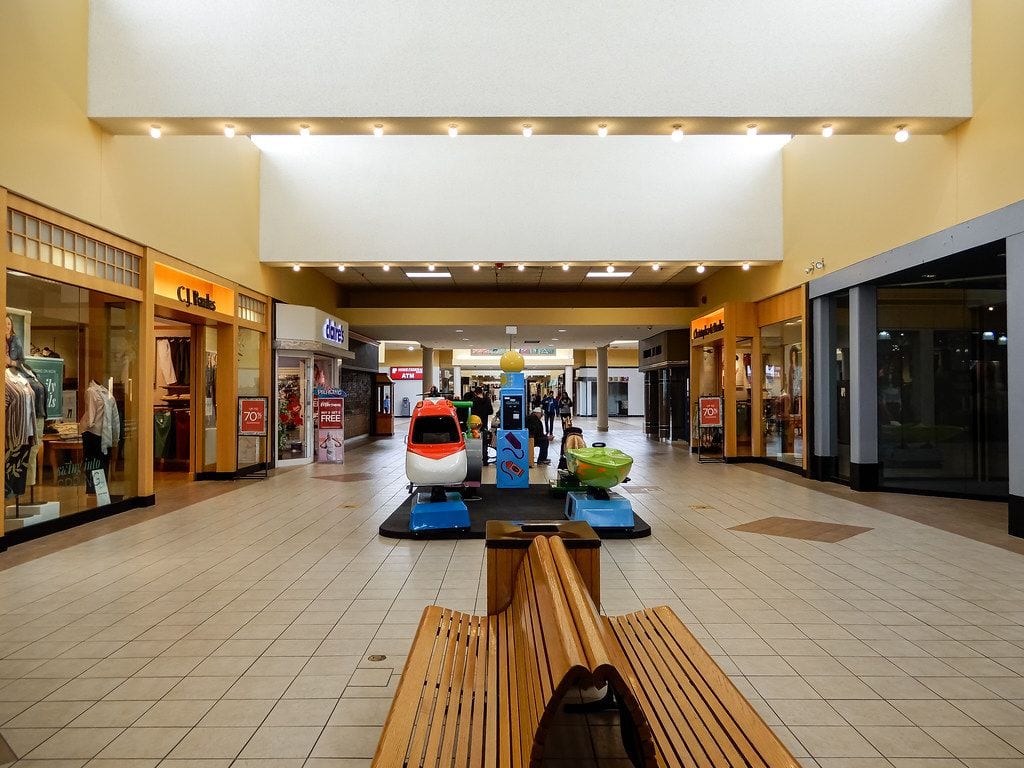
Conestoga Mall anchored Grand Island retail from 1974 until its 2023 sale, after which most of the enclosed mall was demolished and rebuilt as Conestoga Marketplace, an open-air shopping district on the same U.S. Highway 281 site; the last interior corridor closed in 2024.
The rebuilt district pairs a new Target with the retained Best Buy and rows of outward-facing storefronts and restaurants. Its entertainment wing — the B&B Theatres complex with bowling, arcade, and pickleball covered earlier in this list — gives Conestoga Marketplace an evening pulse the old mall never had.
The Children’s Museum of Central Nebraska gives Grand Island’s youngest visitors an open-plan floor of role-play spaces: a kid-scale pizzeria, grocery store, doctor’s office, and dress-up corner, plus a dedicated infant area for the smallest ones.
Everything is built to be handled — the museum’s whole philosophy is hands-on play as the engine of early learning. For families riding out a cold snap or a rainy travel day, the Children’s Museum of Central Nebraska reliably absorbs a couple of high-energy hours.
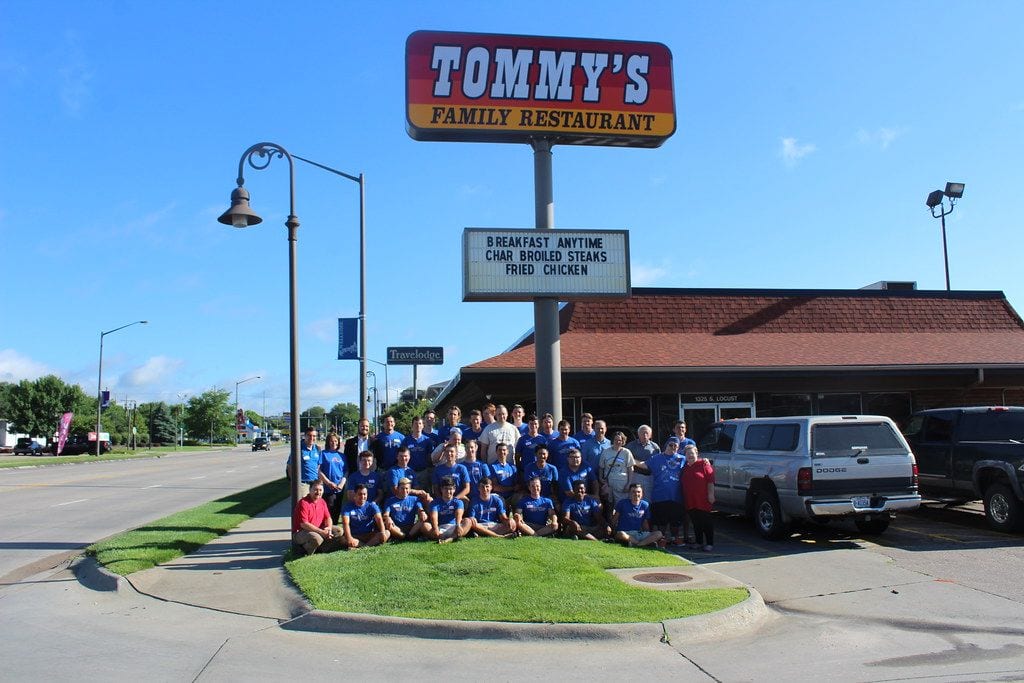
Tommy’s Restaurant is the classic family diner of Grand Island’s South Locust strip, an old-school room where the menu runs from breakfast plates to fried chicken and steaks, with daily specials and waitstaff who treat regulars and first-timers the same.
Portions are generous, the pace is quick, and the blueberry pie has a following of its own. Between the racetrack, the fairgrounds, and the museum circuit, Tommy’s Restaurant is where Grand Island actually sits down to eat.
Getting to Grand Island
Grand Island sits at one of the great road crossings of the central plains, so most visitors simply drive in. Interstate 80 runs just south of the city and is the main artery from the east or west, with exits feeding straight into town; from there US Highway 281 carries traffic north and south, while US 30 and US 34 tie the city into the surrounding grid of prairie highways. Coming from the state’s eastern cities is an easy, mostly flat run west along the interstate, and the approach across the Platte River valley is part of the appeal.
The city has its own small commercial field, the Central Nebraska Regional Airport, just a few minutes from the centre, though schedules are limited. Many travellers instead fly into the larger hub airports serving the state capital, about an hour and three-quarters east, or the bigger metro to the northeast, roughly two hours away, and drive the rest on I-80. There is no Amtrak stop in town, but the transcontinental line stops at a smaller city a short drive south, and a long-distance bus line calls at Grand Island for those travelling without a car.
Getting Around Grand Island
Grand Island is a spread-out, car-first prairie city, and having your own vehicle makes the whole region far easier to see. The historic downtown core is compact and pleasant to explore on foot, with walkable blocks of shops and eateries, but the museums, the water park, the racetrack and the river corridors are scattered across town and out into the countryside, so you will want to drive between them. Rideshare operates in the city but can be patchy, and there is no dense transit network aimed at visitors.
The upside of a small city is that driving is stress-free: roads are wide, traffic is light by big-city standards, and parking is easy and usually free, whether downtown, at the fairgrounds, or at the trailheads and viewing areas along the Platte. Cycling is comfortable on quieter residential streets and on the trails near the river, though the distances between attractions mean bikes suit local outings rather than getting across town.
Where to Stay in Grand Island
For a first visit, basing yourself in or near the historic downtown district puts you within walking distance of the older commercial streets, cafes and the restored theatre district, and keeps you central for day trips in any direction. Travellers who value quick highway access tend to prefer the cluster of lodging near the Interstate 80 interchange and the US 281 commercial strip on the south and west edges of town, which is handy for an overnight stop, for reaching the fairgrounds and racetrack, and for early starts out to the river.
If your trip is built around the spring crane migration or the river itself, staying on the southern side of the city shortens the pre-dawn drive to the Platte’s viewing decks. Quieter residential neighbourhoods away from the main arterials offer a calmer base for longer stays, while the areas around the fair and event grounds are the most convenient when a big gathering is in town.
Where to Eat in Grand Island
Grand Island eats like the heart of cattle-and-corn country, and the signature experience is a proper Nebraska beef dinner: a hand-cut steak or a slow-smoked plate of barbecue, usually with corn on the cob and other farm-country sides. The historic downtown district holds the densest, most walkable run of independent kitchens, coffee houses and casual spots, while the commercial strips along the main highways line up the familiar family diners and grills.
The city’s meatpacking history brought a strong Latino community, and one of the best-value meals in town is authentic Mexican food, from taquerias to hearty plates of carne asada. Look too for German-Russian plains cooking that arrived with the early settlers, especially the pillowy meat-and-cabbage bun known as the runza, a regional Nebraska staple, along with kolaches and other bakery treats. Diners, pie counters and small-batch breweries round out a comfortable, unpretentious food scene.
One Day in Grand Island
Grand Island rewards a day built around the open prairie in the morning and the walkable downtown after dark, with the Platte River threading it all together.
Morning: Start where the city keeps its history out in the open air, at the Stuhr Museum of the Prairie Pioneer. Give yourself the early hours here while the light is soft and the crowds are thin — the real draw is Railroad Town at Stuhr Museum, a full reconstructed 1890s settlement of relocated homes, a depot & a working blacksmith where costumed interpreters make the pioneer story feel lived-in rather than displayed. It’s a lot of walking on grass and gravel, so it belongs first, before the sun climbs.
Afternoon: Drop south to the water. Mormon Island State Recreation Area sits right on the channels of the Platte River, an easy spot to stretch out, picnic or wet a line on the same braided sandbars the cranes are famous for. Loop back north into town and pick your speed: cool off with the slides at Island Oasis Water Park, or wander the grandstand and paddock at neighboring Fonner Park, the century-old racing grounds that anchor this corner of the city. When you need to refuel, Tommy’s Restaurant is a short hop away and squarely the kind of unpretentious family table that suits a day like this.
Evening: Ease into downtown as the day winds down. Step inside St. Mary’s Cathedral for its quiet, soaring nave — a genuinely striking piece of architecture in the heart of the city — then cap the night at the restored Grand Theater, a downtown marquee that’s the natural place to end on a screen and a seat. If you have a second day, drive an hour west to Rowe Sanctuary on the Platte, one of the great wildlife spectacles of the Great Plains and a full outing in its own right.
Day Trips from Grand Island
Grand Island’s biggest natural draw is right on its doorstep: the Platte River corridor stretching west toward Kearney, where each spring hundreds of thousands of sandhill cranes gather in one of the continent’s great wildlife spectacles, with the Rowe Sanctuary and the Crane Trust just minutes from the city. The braided river, prairie preserves and quiet state recreation areas make for an easy half-day loop into the countryside in almost any direction.
For a change of pace, the state capital lies about an hour and three-quarters east along Interstate 80, an easy day trip for its university campus, museums and capitol; the larger metropolitan area beyond it is roughly two hours away and worth a longer outing for its zoo, riverfront and big-city dining. Heading further southeast, Kansas’s capital is a longer drive best kept for an overnight, but it links Grand Island into the wider road-trip circuit of the plains.
FAQ: Visiting Grand Island
What is Grand Island best known for?
Grand Island is best known for the spring sandhill crane migration on the Platte River, for the Stuhr Museum of the Prairie Pioneer and its Railroad Town living-history village, for live Thoroughbred racing at Fonner Park, and for hosting the Nebraska State Fair, which moved here from Lincoln in 2010.
Is Grand Island worth visiting?
Yes — especially from late February to early April, when hundreds of thousands of sandhill cranes roost on the Platte River and blind tours run at Rowe Sanctuary and the Crane Trust. Add the Stuhr Museum, a Hornady Manufacturing factory tour, and the 1937 Grand Theater, and a weekend fills quickly.
How many days do you need in Grand Island?
Two days covers the core: the Stuhr Museum and Railroad Town, Fonner Park, St. Mary’s Cathedral, and an evening film at the Grand Theater. Add a third day in crane season for Rowe Sanctuary, or for side trips to the Hastings Museum and the Edgerton Explorit Center in Aurora.
What can you do in Grand Island for free?
St. Mary’s Cathedral, with its Sainte-Chapelle-inspired fan vaulting, is free to visit, and public stretches of the Platte River cost nothing to explore. During spring migration you can also watch sandhill cranes for free from rural bridges and public viewing sites along the river south of Grand Island.
When is the best time to visit Grand Island?
Late February through early April is the signature season, when the sandhill crane migration peaks and Rowe Sanctuary and the Crane Trust run guided blind tours. Late summer is the other high point: the Nebraska State Fair takes over the Fonner Park campus around Labor Day.