Washington, D.C. was created for one job: to be the seat of American government. Founded in 1790 on land along the Potomac River, the capital grew into a city where the two-mile National Mall runs from the United States Capitol to the Lincoln Memorial, flanked by Smithsonian museums whose galleries hold everything from the 1903 Wright Flyer to the Hope Diamond – and where the Library of Congress, the largest library in the world, sits a block from the Capitol dome.
The list below covers the marble icons, but Washington rewards wandering past them. Eat a chili half-smoke at Ben’s Chili Bowl on U Street, browse the 1873 Eastern Market hall on Capitol Hill, count Fabergé eggs at Hillwood, or watch the rowing crews from Georgetown Waterfront Park. Between the memorials sits a real city – markets, gardens, theaters – and this guide works both sides of it. It also makes a natural base for a wider District of Columbia and Mid-Atlantic trip, with a working harbour city like Baltimore an easy hour up the road.
Fun Facts About Washington, District of Columbia
Washington was created by the Residence Act of 1790 as a purpose-built capital on the Potomac; French engineer Pierre L’Enfant laid out its signature grid of wide diagonal boulevards radiating from public circles and squares.
Thanks to the Height of Buildings Act, the city has almost no true skyscrapers — the low, horizontal skyline that keeps the Capitol and the Washington Monument dominant is written into law, not habit.
The district was originally a 10-mile diamond straddling the Potomac; the Virginia portion was returned to that state in the 1840s, which is why modern D.C. looks like a square with a bite taken out of it.
Washington is a federal district, not part of any state; its residents could not even vote for president until the 23rd Amendment granted that right in 1961.
The Smithsonian Institution, headquartered here, is the world’s largest museum and research complex — and most of its National Mall museums and the National Zoo are free to enter.
D.C.’s Metro rail system is one of the busiest in the country, threading the monuments, museums and neighborhoods together and making a car largely unnecessary for visitors.
Map of Things to Do in Washington, District of Columbia
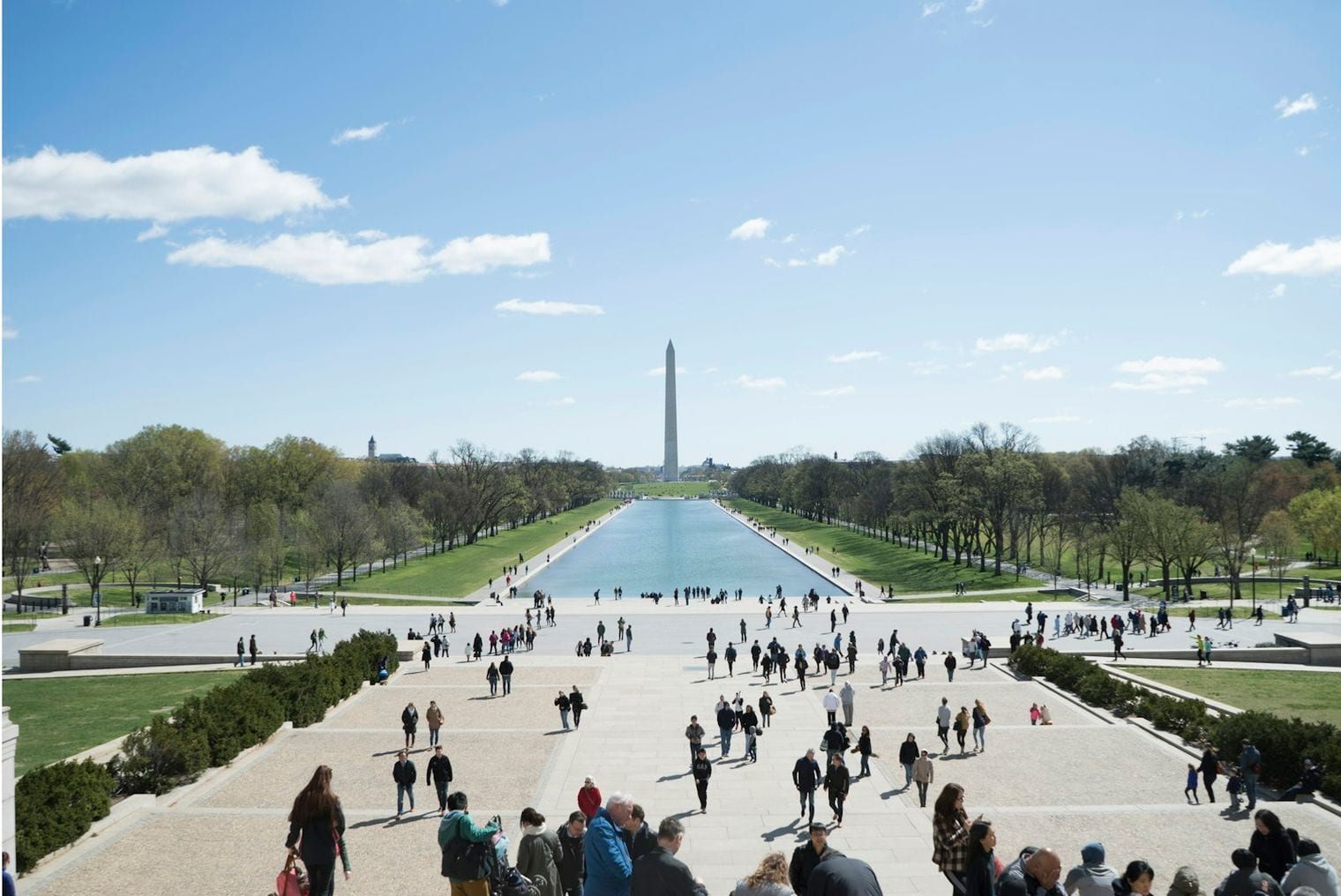
The National Mall is the axis the whole city hangs on: a landscaped park roughly two miles long and a third of a mile wide, running from the U.S. Capitol past the Washington Monument to the Lincoln Memorial. Nicknamed America’s front yard, the National Mall draws about 24 million visitors a year, more than any other U.S. national park site.
Most Smithsonian museums line its gravel walks, and the spaces between them are working parkland – softball and volleyball fields, picnic lawns, food trucks, and the carousel beside the Smithsonian Castle. Walk the full length once at street level, then come back after dark, when the memorials are lit and the crowds thin out.
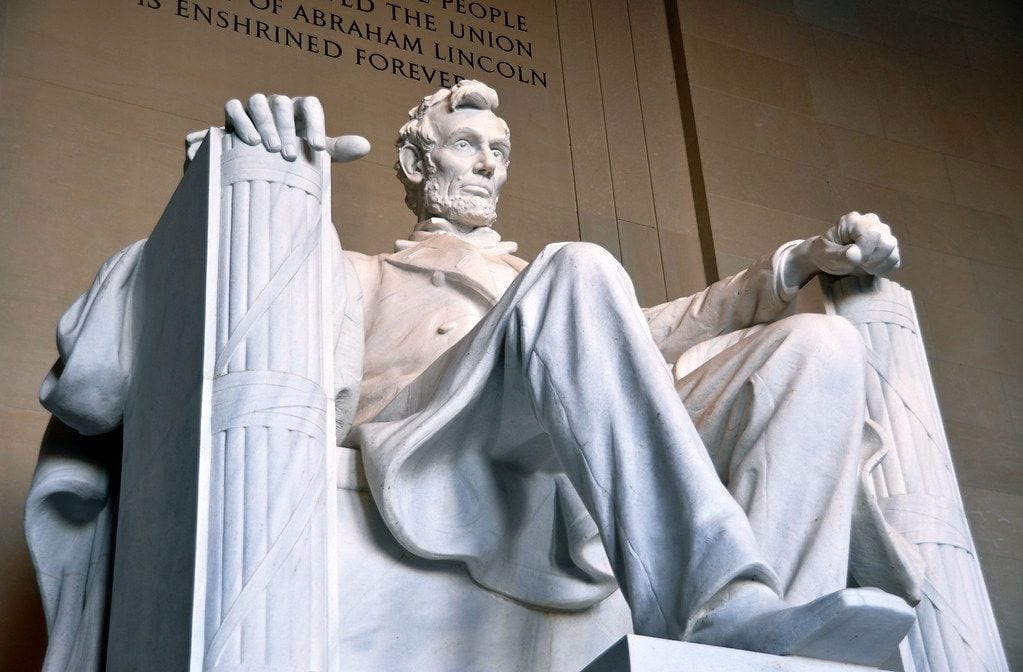
At the western end of the Mall, the Lincoln Memorial honors the 16th president with a Greek temple ringed by 36 Colorado-marble columns, one for each state in the Union at the time of Lincoln’s death. Inside, Daniel Chester French’s 19-foot seated Lincoln gazes down the Reflecting Pool toward the Washington Monument, with the Gettysburg Address and Second Inaugural carved into the flanking chambers.
The steps themselves are part of the history: Marian Anderson sang here in 1939, and Martin Luther King, Jr. delivered his I Have a Dream speech from this spot in 1963, a moment marked by an inscription on the landing. Sharp-eyed visitors hunt for the carver’s slip in the Second Inaugural, where an E was cut instead of an F and later patched. The Lincoln Memorial is at its best in the evening, when the chamber glows and the crowds ease.
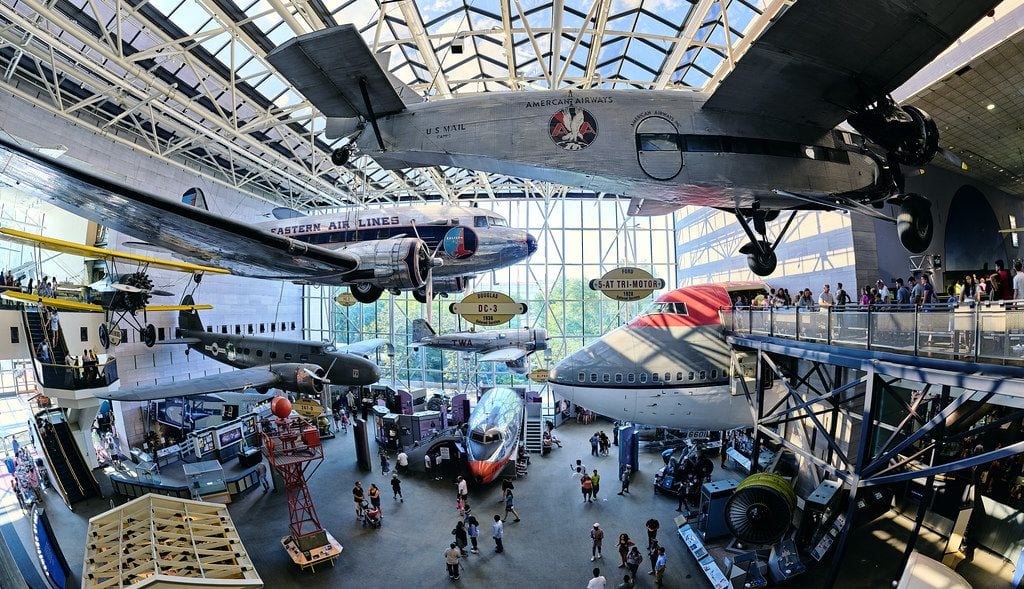
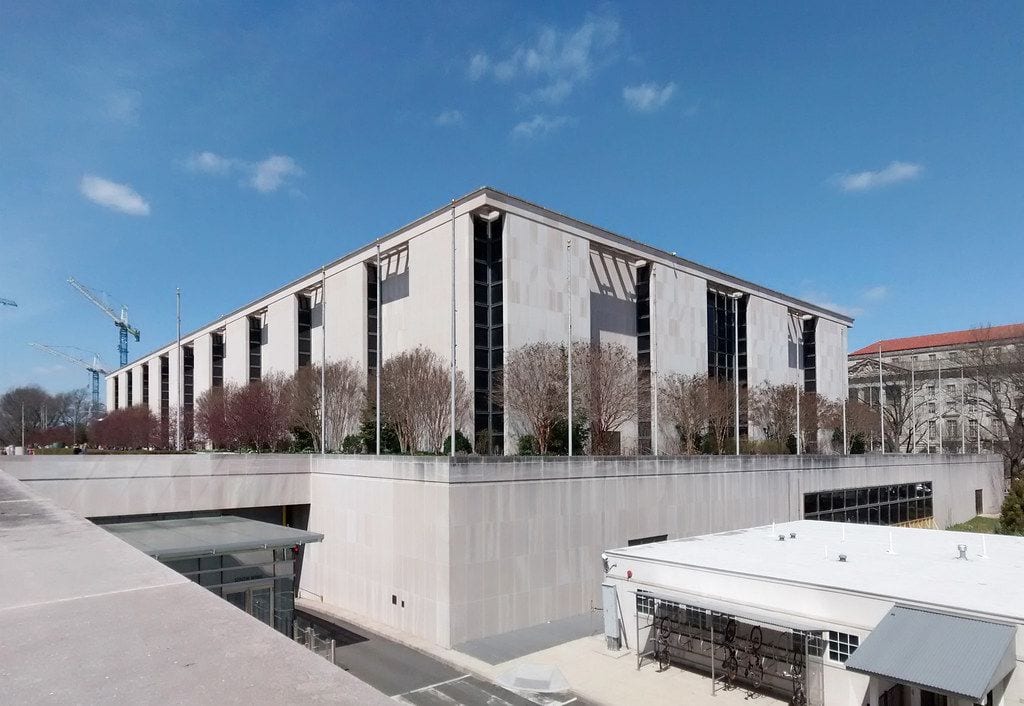
Established in 1946, with its building on the Mall opened for the 1976 bicentennial, The National Air and Space Museum holds the machines that actually made aviation history – the 1903 Wright Flyer, Charles Lindbergh’s Spirit of St. Louis, the Bell X-1 that first broke the sound barrier, and John Glenn’s Friendship 7 capsule.
The galleries walk through rocketry, planetary science, and spaceflight, an IMAX theater runs large-format films, and the studio model of the Starship Enterprise from the original Star Trek series sits among the pop-culture treasures. Aircraft too big for the Mall – a space shuttle, a Concorde, an SR-71 Blackbird – wait at the museum’s companion Steven F. Udvar-Hazy Center in Virginia.
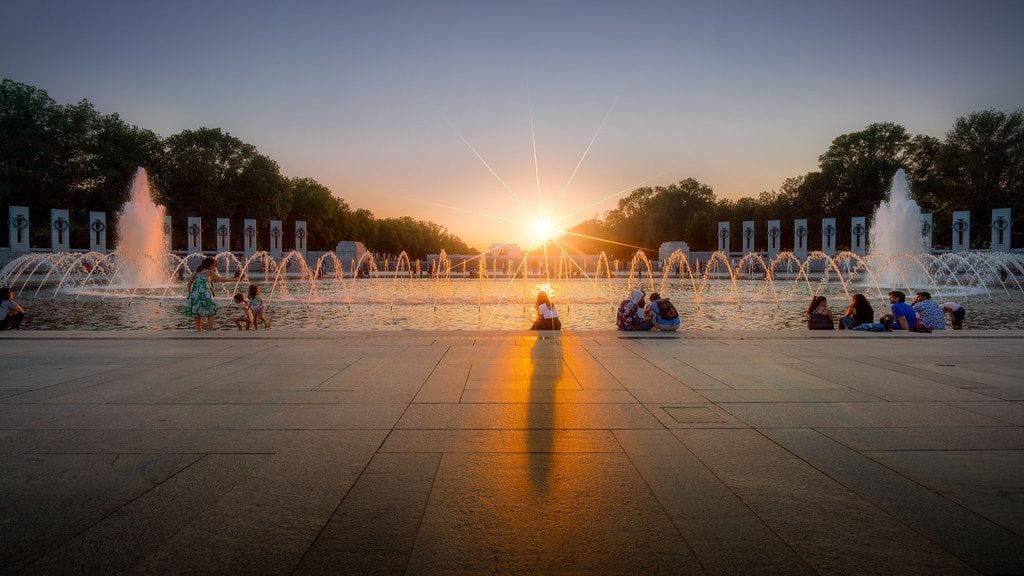
The World War II Memorial spreads across 7.4 acres between the Washington Monument and the Reflecting Pool. Opened in 2004, the memorial honors the 16 million Americans who served during the war. Fifty-six granite pillars, one for each state and territory of the era, circle the restored Rainbow Pool and its fountains, joined by two 43-foot arches marking the Atlantic and Pacific theaters.
Bronze bas-relief panels along the entrance walk trace the war years from enlistment to homecoming, and the Freedom Wall carries 4,048 gold stars, each standing for one hundred American dead. Park rangers give talks on the symbolism, and the lit arches and fountains make this one of the most affecting stops on the Mall after sunset.
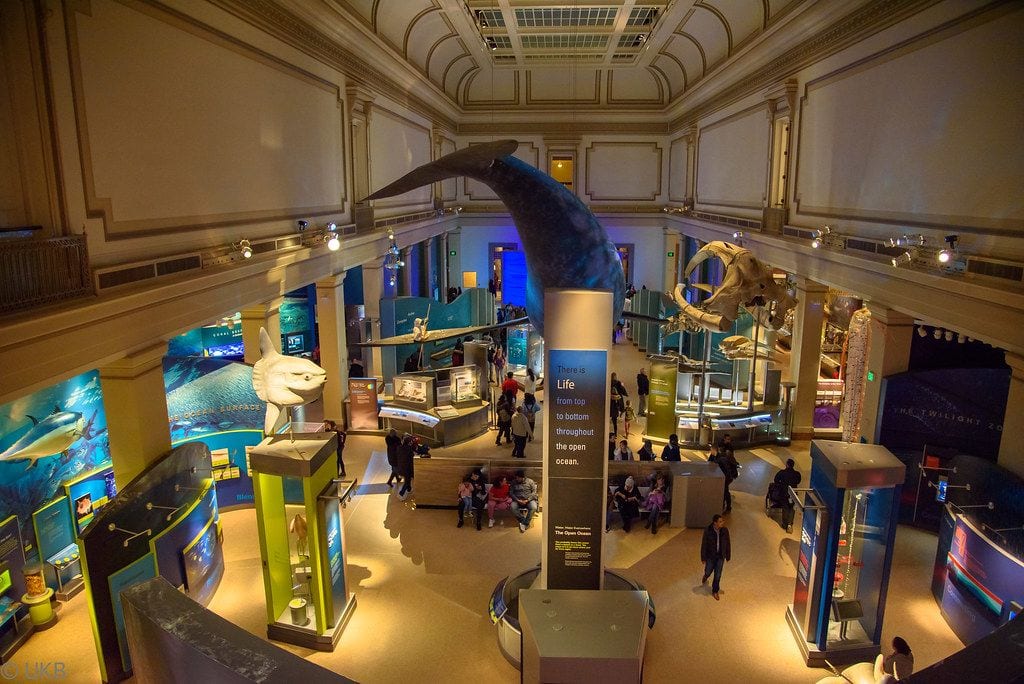
Opened in 1910 as one of the first purpose-built Smithsonian museums, the National Museum of Natural History now covers 1.5 million square feet and holds a collection of more than 145 million specimens and artifacts. The 45.52-carat Hope Diamond sits upstairs in the geology halls, and the African bush elephant mounted in the rotunda has been the museum’s unofficial greeter for decades.
The fossil hall builds up to the Nation’s T. rex, one of the most complete Tyrannosaurus skeletons ever found, while Ocean Hall hangs a life-size model of a North Atlantic right whale overhead. Kids gravitate to the live Butterfly Pavilion and the Q?rius lab, where drawers of real bones, minerals, and insects are meant to be handled. The National Museum of Natural History rewards repeat visits – nobody clears it in a day.
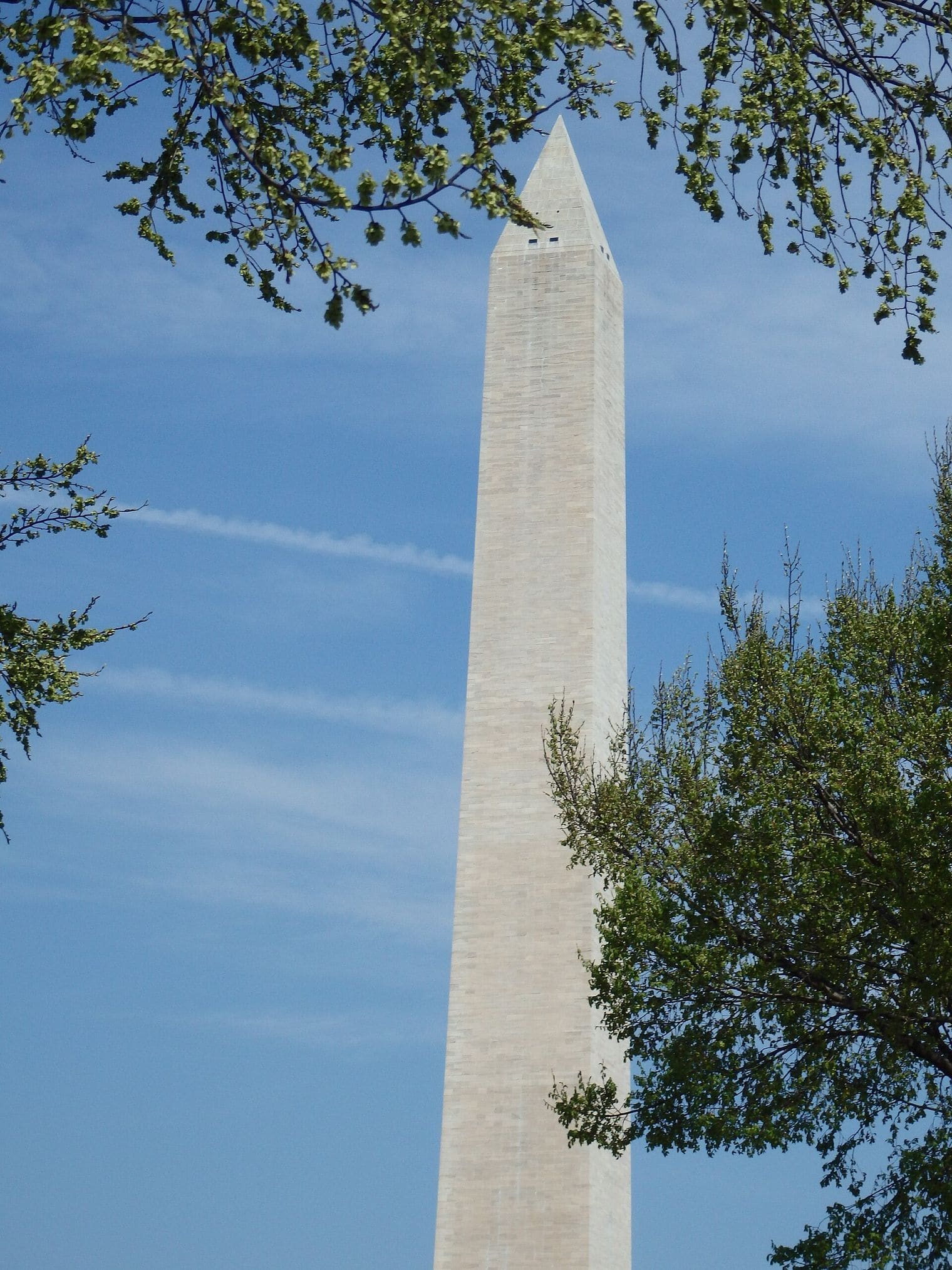
The Washington Monument is the city’s fixed point: a 555-foot marble obelisk honoring George Washington that remains the tallest stone structure and tallest obelisk in the world. Construction began in 1848, stalled for a quarter century through funding troubles and the Civil War, and finished in 1884 – look a third of the way up and you can see the marble change shade where the work resumed.
An elevator climbs to the observation level near the top, where windows frame the White House, the Capitol, the Lincoln Memorial, and Arlington National Cemetery across the river – the only public vantage in central Washington from that height. Timed entry passes for the Washington Monument go quickly in busy seasons, so book yours early in the planning.
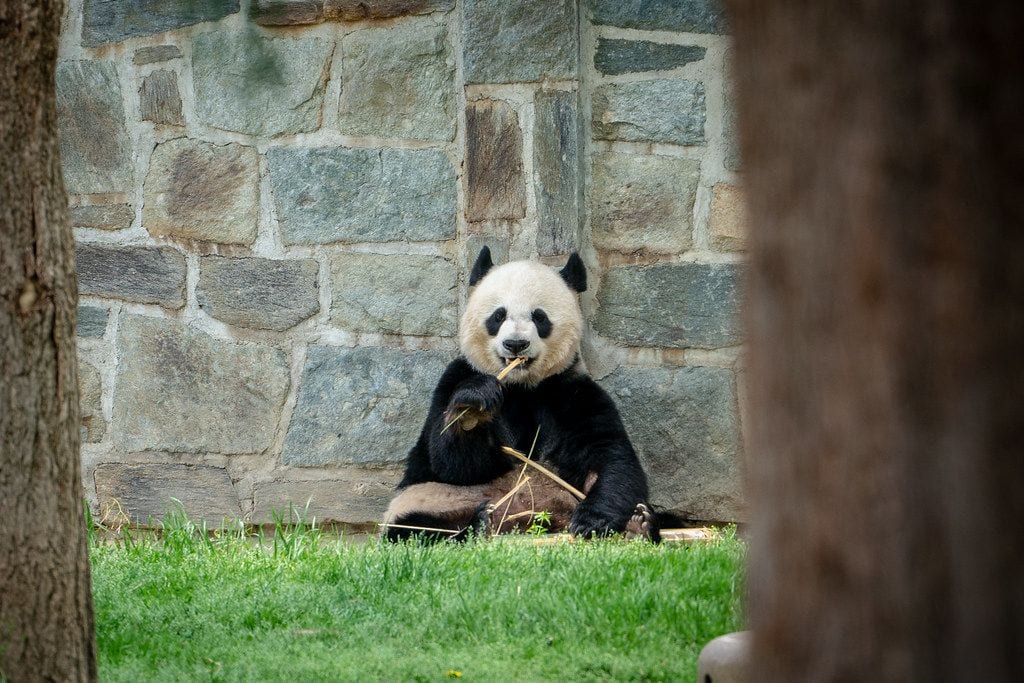
The National Zoo spreads 163 acres through the Rock Creek valley in Northwest Washington. Founded in 1889 and run by the Smithsonian, the National Zoo keeps about 2,700 animals of nearly 400 species, roughly a quarter of them endangered, and pairs the public park with a conservation-breeding campus in Front Royal, Virginia.
Giant pandas have been the signature residents on and off since 1972, joined by elephants along the Elephant Trails habitat, lions, tigers, gorillas, and a Kids’ Farm for the youngest visitors. The grounds tilt noticeably downhill – the smart move is to start at the top and work down. Winter evenings bring the ZooLights tradition, when the paths glow with animal-shaped light sculptures.
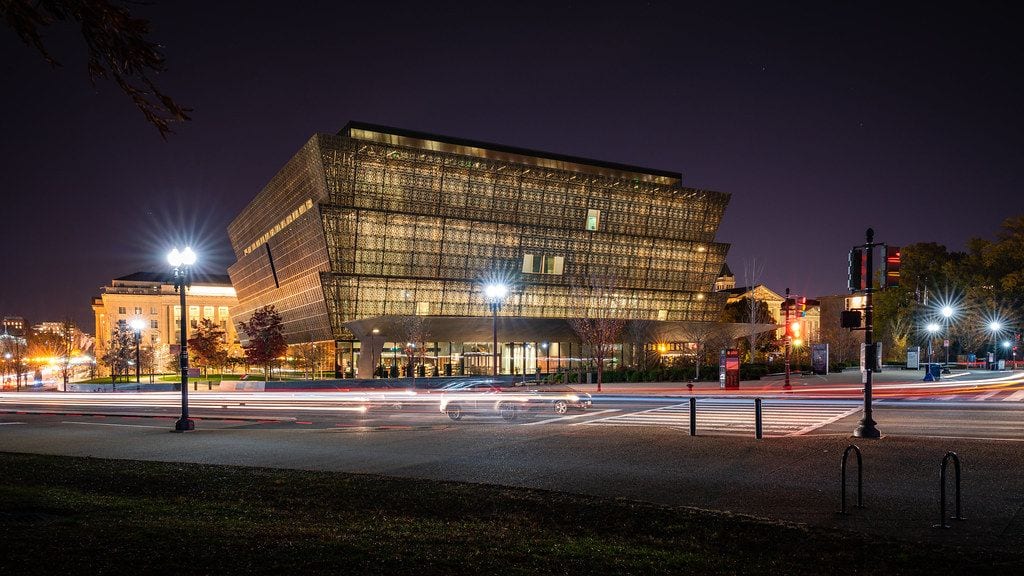
8. National Museum of African American History and Culture
The National Museum of African American History and Culture – the Smithsonian’s African American History and Culture Museum – was established by Congress in 2003 and opened on the Mall in 2016, wrapped in David Adjaye’s three-tiered bronze corona inspired by West African art. Its first four months drew more than a million visitors, a record among Smithsonian openings.
The history galleries begin three stories below ground with the trans-Atlantic slave trade and rise chronologically through segregation and the Civil Rights Movement, while the upper floors celebrate Black achievement in music, sports, the military, and the arts. Around 3,000 artifacts from a 40,000-object collection are on view at any time. Give it several hours, and start downstairs.
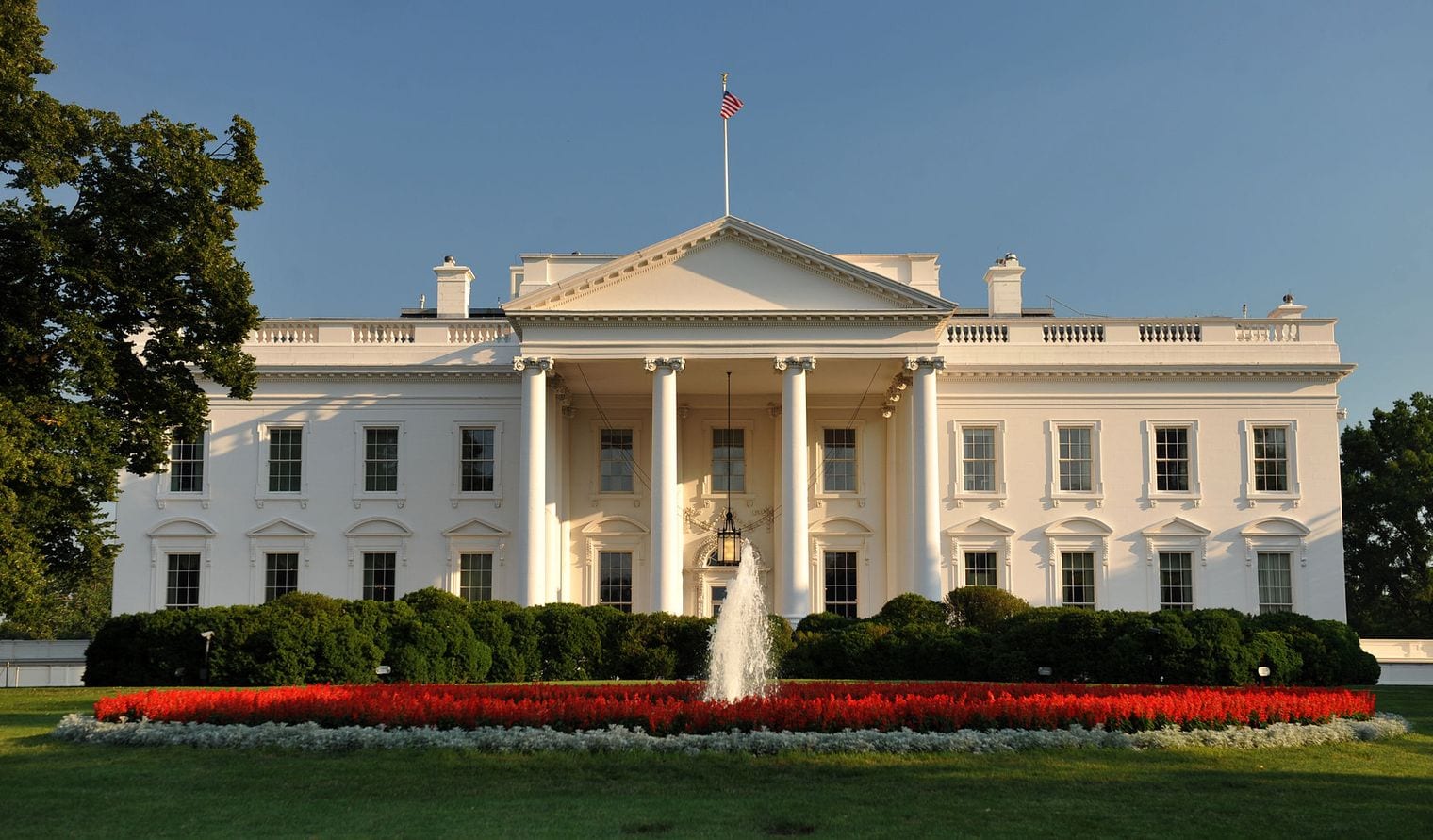
Every president except George Washington has lived in The White House, which James Hoban designed and workers – many of them enslaved – raised between 1792 and 1800. Behind the familiar sandstone facade sit 132 rooms and 35 bathrooms across six levels, plus the West Wing offices, the East Wing, and the Eisenhower Executive Office Building next door.
Public tours of the State Floor require long-lead requests – through a member of Congress for Americans, through their embassy for international visitors. Most people settle for the two classic exterior views: the North Portico from Lafayette Square on Pennsylvania Avenue, and the South Lawn from the Ellipse, where the National Christmas Tree stands each December. The nearby White House Visitor Center fills in the interior with artifacts and films.
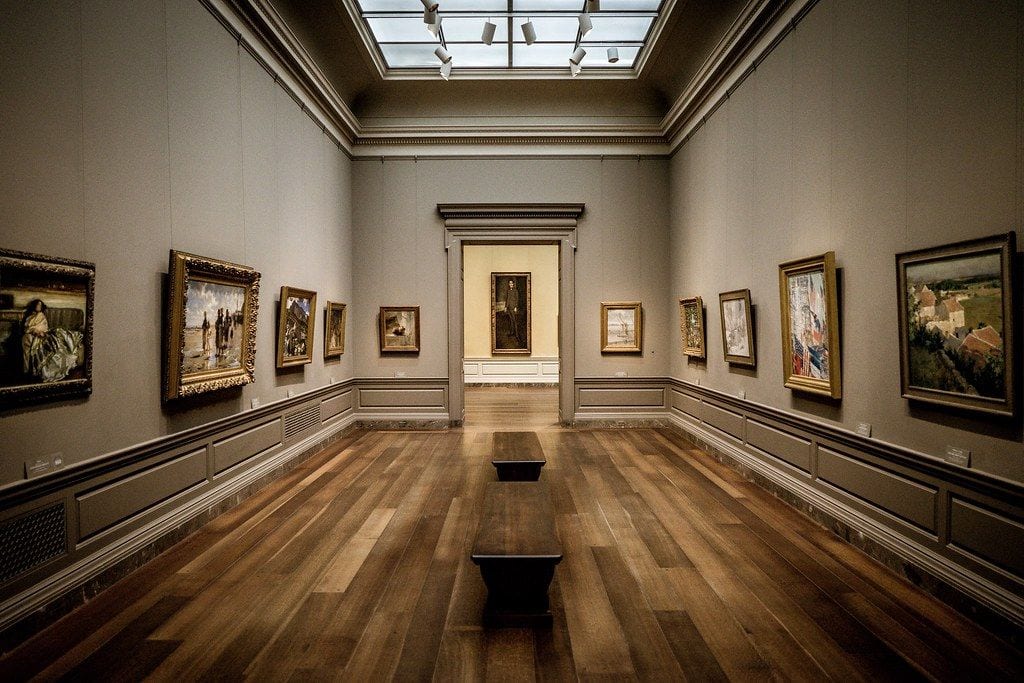
The National Gallery of Art, founded in 1937 on Andrew Mellon’s gift of his collection, fills two very different buildings on the Mall: John Russell Pope’s domed neoclassical West Building and I.M. Pei’s angular East Building, linked by an underground concourse lit by Leo Villareal’s Multiverse light tunnel. The collection runs past 140,000 paintings, sculptures, and works on paper.
Its singular treasure is Ginevra de’ Benci, the only Leonardo da Vinci painting on public view in the Americas, kept among the Dutch, Italian, and French masterworks of the West Building; the East side carries the modern collection beneath a giant Calder mobile in the atrium. The 6.1-acre Sculpture Garden across 7th Street rings a central fountain that becomes an ice rink in winter.
11. Smithsonian National Museum of American History
The National Museum of American History opened on the Mall in 1964 and keeps more than three million artifacts of the national story. Its centerpiece is the original Star-Spangled Banner, the garrison flag that flew over Fort McHenry in 1814 and inspired the anthem, displayed in a climate-controlled chamber at the heart of the building.
From there the icons pile up: Dorothy’s ruby slippers from The Wizard of Oz, Abraham Lincoln’s top hat from the night of his assassination, George Washington’s military uniform, Julia Child’s actual home kitchen, and galleries running from presidential history and the First Ladies’ gowns to transportation and American food. The National Museum of American History is the closest thing the country has to a national attic.
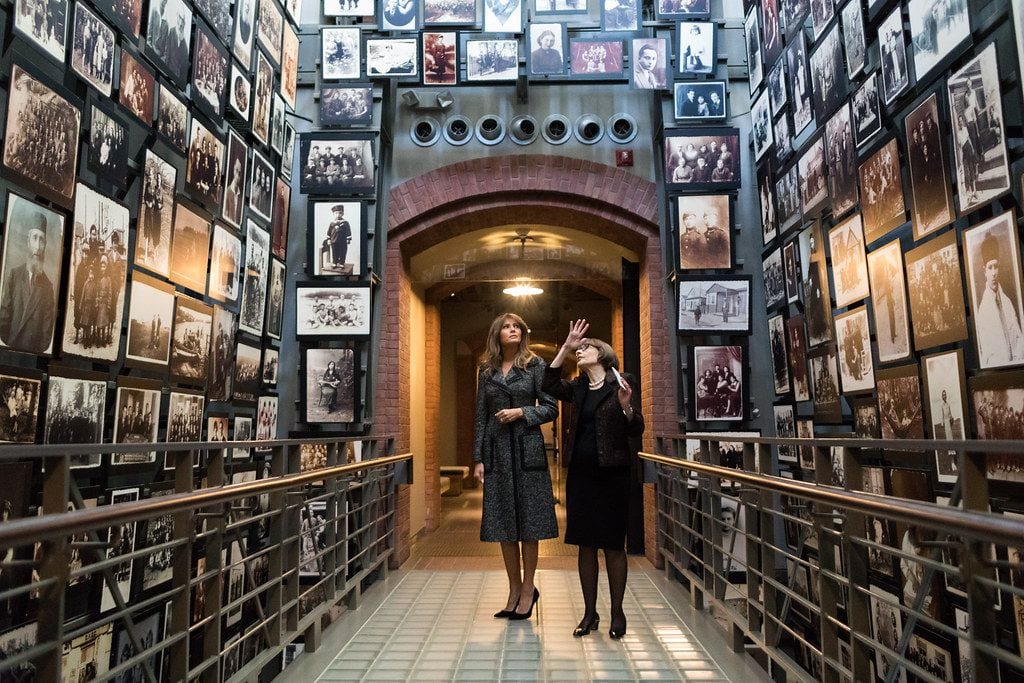
The United States Holocaust Memorial Museum, dedicated in 1993 just off the Mall, is the nation’s official U.S. memorial to the Holocaust. Visitors to the permanent exhibition carry the identification card of a real person who lived through – or died in – the Holocaust, and follow three floors of artifacts, photographs, and film tracing the rise of Nazism through the camps to liberation.
Some objects need no caption: a rail freight car of the type used for deportations, piles of victims’ shoes, a milk can that hid the Warsaw ghetto’s buried archive. Daniel’s Story presents the history at a level younger visitors can manage, and the skylit Hall of Remembrance with its eternal flame gives the United States Holocaust Memorial Museum a quiet place to end.
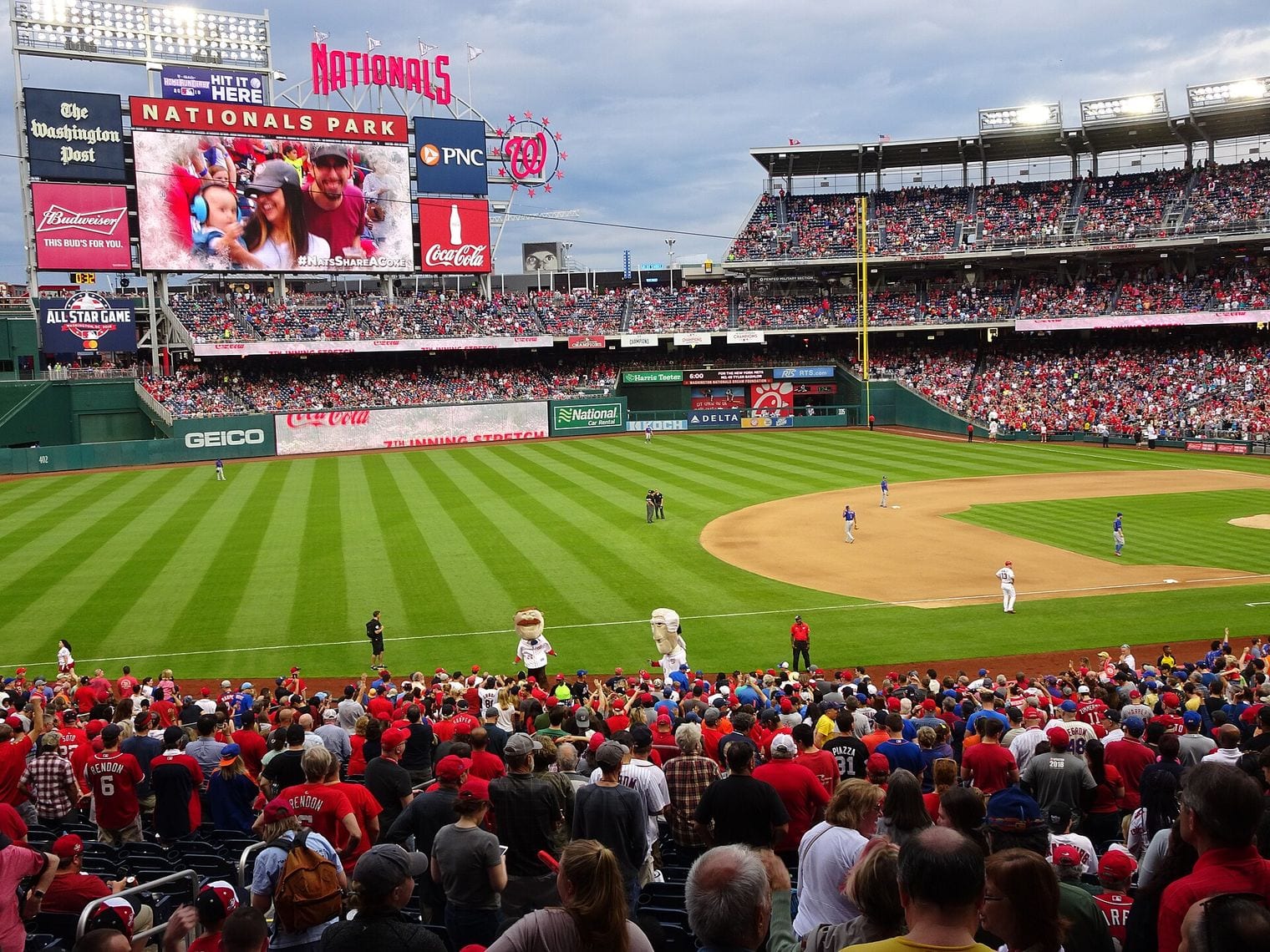
Nationals Park opened in the Navy Yard neighborhood in 2008 as the home of Major League Baseball’s Washington Nationals, with seats for more than 40,000. Sit in the upper decks along the first-base line and the Capitol dome and Washington Monument poke above the skyline, and the Anacostia riverfront boardwalk starts just beyond the outfield gates.
Mid-game comes the Racing Presidents, Nationals Park’s foam-headed George, Tom, Abe, and Teddy sprinting down the warning track – a tradition since the team’s early seasons. On non-game days, guided tours go behind the scenes into the press box, the dugout, and the bullpen, and the cherry trees planted around the concourses echo the Tidal Basin’s every spring.
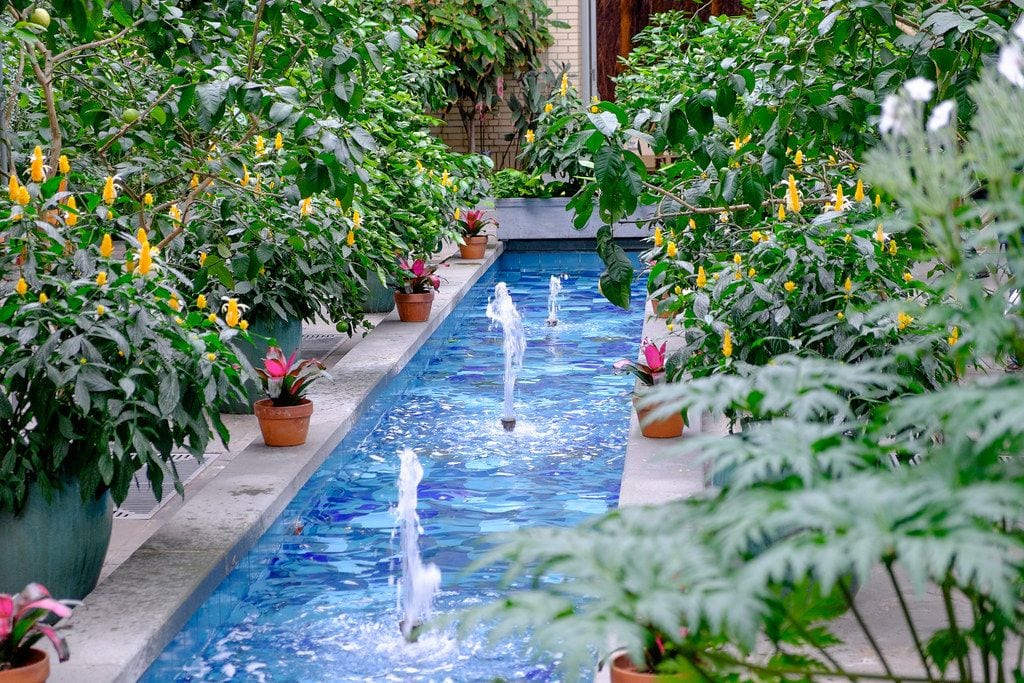
Established by Congress in 1820, the United States Botanic Garden at the foot of the Capitol is among the oldest continuously operating botanic gardens in North America. Its glasshouse Conservatory jumps between climates room by room – a jungle with a canopy walkway, desert succulents, Mediterranean and Hawaiian flora – with thousands of living plants, many of them rare or endangered.
Outside, the National Garden includes a rose garden honoring the First Ladies and a butterfly garden, while Bartholdi Park across Independence Avenue centers on a cast-iron fountain by Frédéric Auguste Bartholdi, sculptor of the Statue of Liberty. During the winter holidays the Botanic Garden’s Season’s Greenings show rebuilds Washington landmarks in plant material beside working model trains.
15. John F. Kennedy Center for the Performing Arts
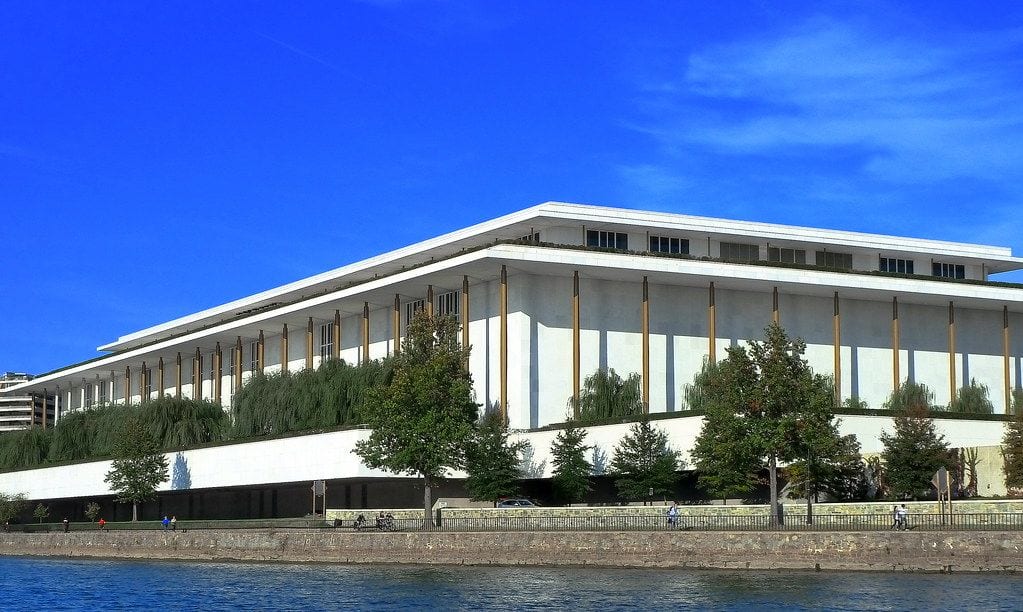
The John F. Kennedy Center for the Performing Arts – the Kennedy Center to everyone in town – opened on the Potomac riverbank in 1971 as the nation’s living memorial to the 35th president. The tributes are built into the site: 35 ginkgo trees, a reflecting pool matched to the dimensions of Kennedy’s wartime boat, and his words carved along the river terrace.
It is home to the National Symphony Orchestra and Washington National Opera, with halls running musicals, ballet, jazz, and comedy under one enormous roof, and the REACH campus adds rehearsal and performance pavilions next door. The Millennium Stage hosts performances most evenings that anyone can walk into, and the rooftop terrace gives a sweeping look over the Potomac toward Georgetown and the monuments.
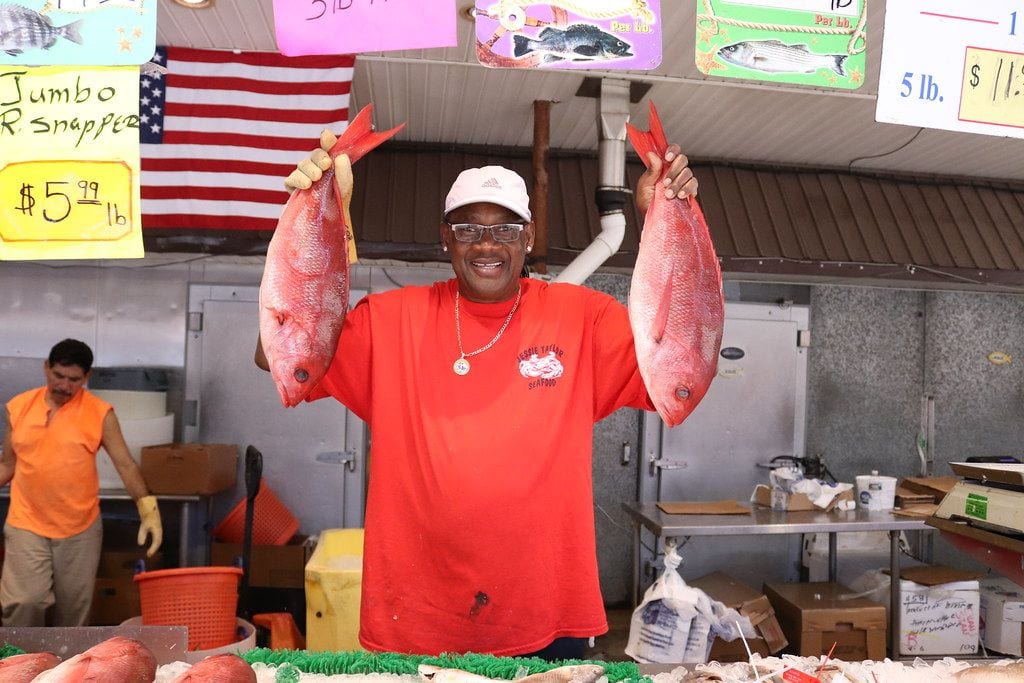
The Municipal Fish Market at The Wharf has been selling seafood from the same spot on the Washington Channel since 1805, which makes it the oldest continuously operating open-air fish market in the United States – older than the city’s great monuments and most of its government buildings.
Vendors sell from floating barges moored along the promenade: Chesapeake blue crabs steamed and seasoned on the spot, oysters, shrimp, clams, and whole fish on ice. Order at the counter, then eat standing along the water like the locals do. The Municipal Fish Market anchors the western end of The Wharf development, so a seafood lunch pairs naturally with a walk along the piers.
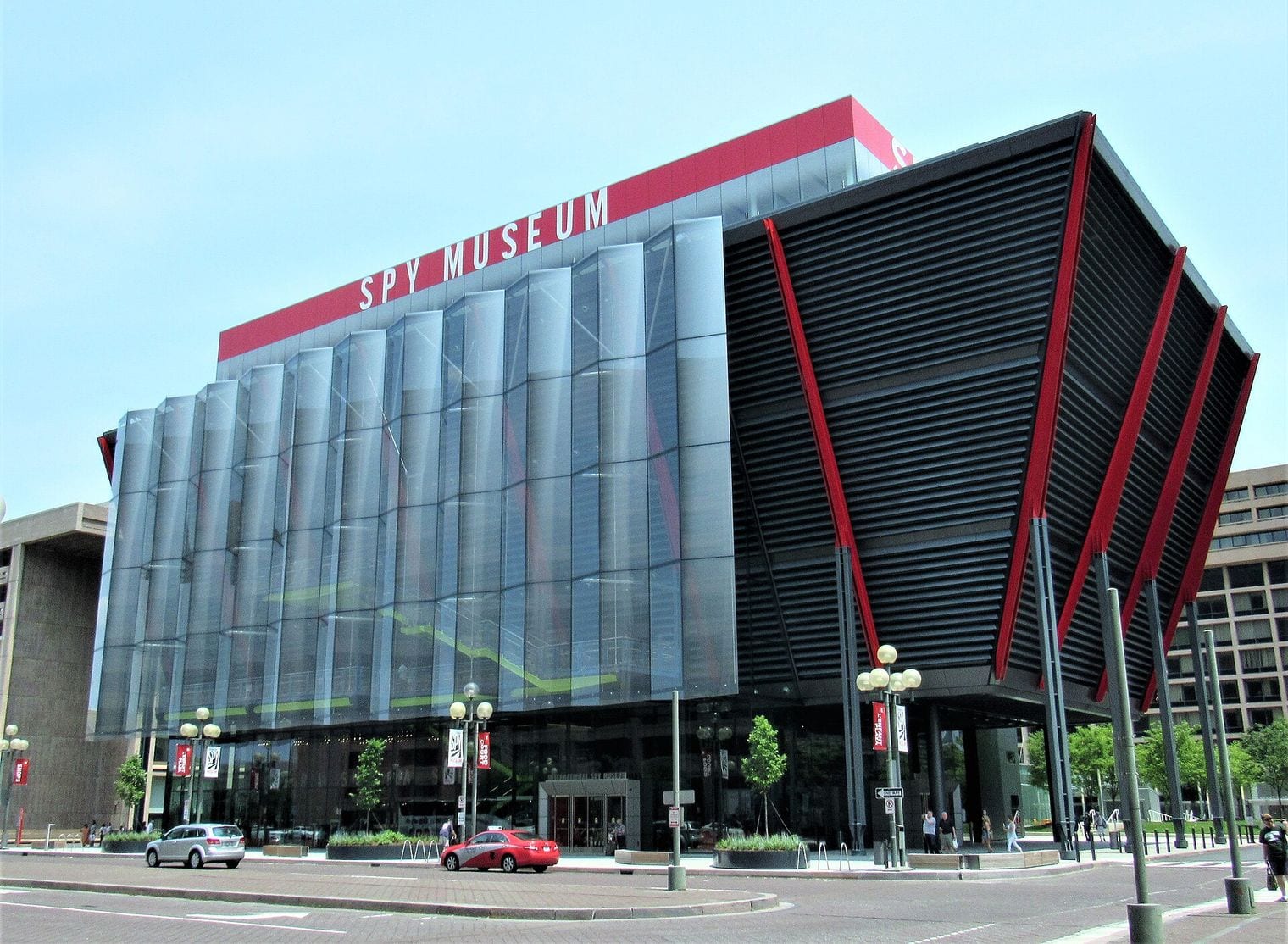
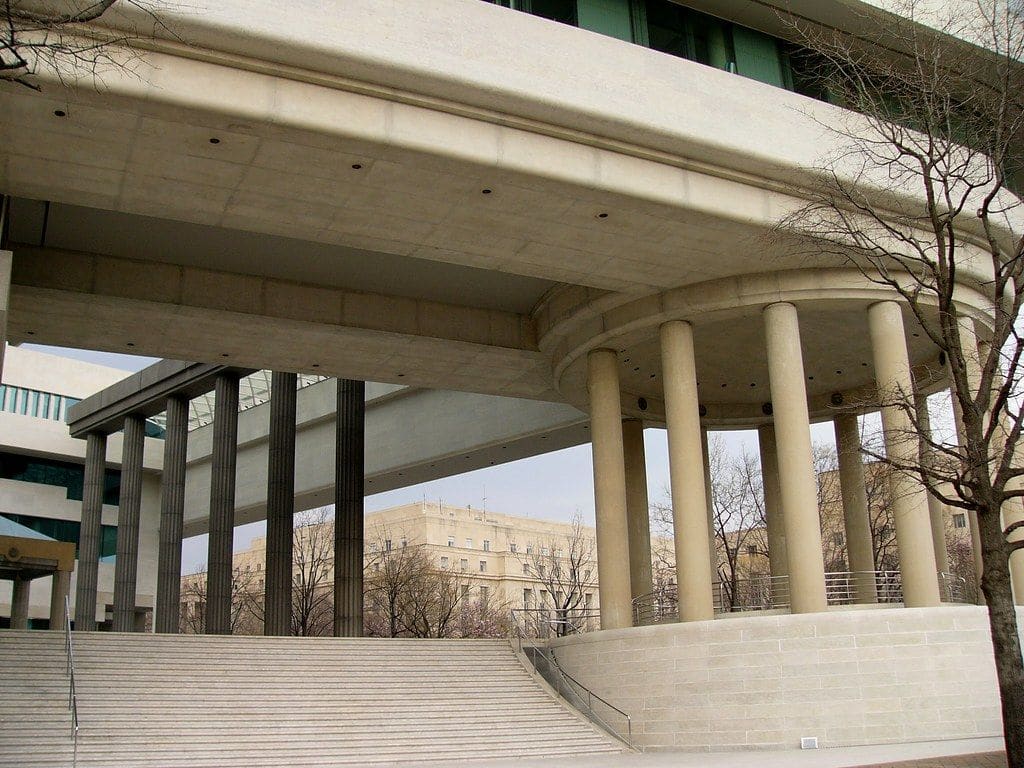
The International Spy Museum holds the largest public collection of espionage artifacts anywhere – lipstick pistols, hollowed coins, an Enigma cipher machine, and tradecraft gear spanning ancient history to the digital age. It was founded in 2002 by Milton Maltz, himself a code-breaker during the Korean War era, and occupies a striking purpose-built home at L’Enfant Plaza.
Every visitor adopts a cover identity at the door and tests it at interactive kiosks through the galleries, a running game that makes the International Spy Museum unusually engaging for kids without dumbing anything down. Exhibits dig into surveillance science, interrogation, and the true stories behind famous operations, informed by the former intelligence officers who advise the museum.
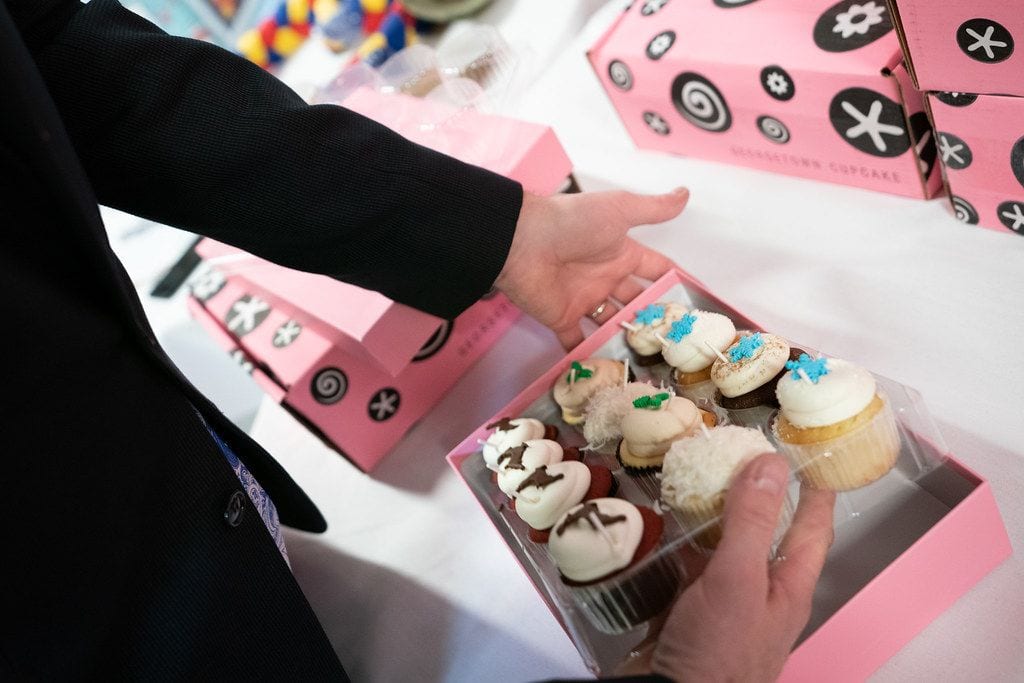
Sisters Katherine Berman and Sophie LaMontagne opened Georgetown Cupcake in 2008 and became household names when the TLC series DC Cupcakes filmed inside their shop. The queue outside is part of Georgetown lore – regulars order ahead, first-timers wait it out and watch the frosting swirls go on through the window.
The counter rotates around thirty flavors a day, from classic chocolate and red velvet to seasonal specials, and The Washington Post once crowned Georgetown Cupcake the best cupcakery in town. It makes an easy sugar stop between the C&O Canal, the waterfront park, and the shops along M Street and Wisconsin Avenue.
The National Portrait Gallery, founded by Congress in 1962, tells American history face by face – presidents, inventors, athletes, artists, and agitators. It shares the Greek Revival Old Patent Office Building downtown with the Smithsonian American Art Museum, a landmark begun in 1836 that served as a Civil War hospital where Walt Whitman tended the wounded.
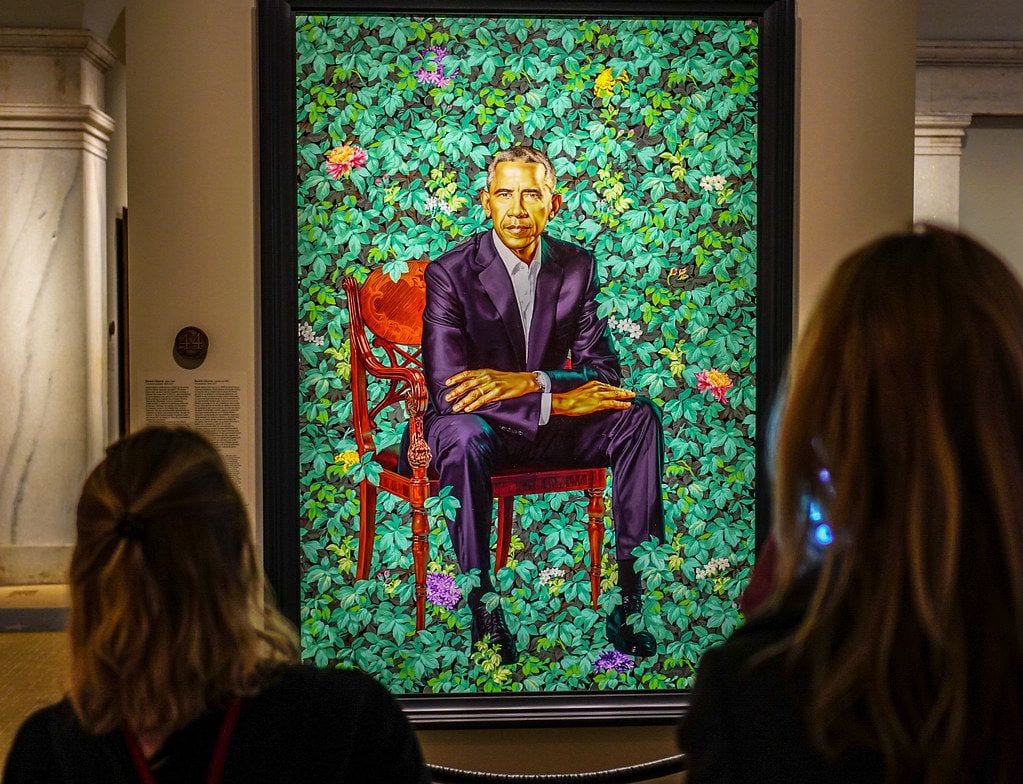
The America’s Presidents gallery is the only complete collection of presidential portraits outside the White House, from Gilbert Stuart’s Lansdowne portrait of George Washington onward – Kehinde Wiley’s portrait of Barack Obama drew record crowds when it joined. Between the wings, the National Portrait Gallery’s glass-canopied Kogod Courtyard is one of downtown Washington’s favorite sitting rooms.
Union Market carries on a market tradition that began on this site in 1931 with the old Union Terminal Market. Reopened in 2012 in a whitewashed warehouse district near Gallaudet University, it packs roughly 40 vendors under one roof – butchers, oyster shuckers, spice merchants, coffee roasters, and a rotating cast of chef-driven counters.
Union Market has served as a launchpad for Washington food businesses, several of which grew from a single stall here into stand-alone restaurants. Come hungry and graze, browse kitchenware and cookbooks from the retail stalls, then catch a film at the small cinema in the complex. On warm weekends the loading-dock steps outside become impromptu seating for half the neighborhood.
The Museum of the Bible opened in 2017 in a converted refrigerated warehouse a few blocks south of the National Mall, entered through 40-foot bronze gates stamped with lines from the Gutenberg Bible. Inside its 430,000 square feet are galleries on the book’s history, its narratives, and its imprint on culture, drawn from a large collection of manuscripts and artifacts.
The Bible in America galleries follow the text’s role in the country’s founding arguments, abolition, and civil rights; a motion-ride called Washington Revelations hunts down scripture carved into the city’s buildings; and a walk-through recreation stages the Hebrew Bible’s stories with theatrical sets. A ceiling-length digital display over the lobby and a 500-seat performance hall round out one of the most technically elaborate museums in Washington.
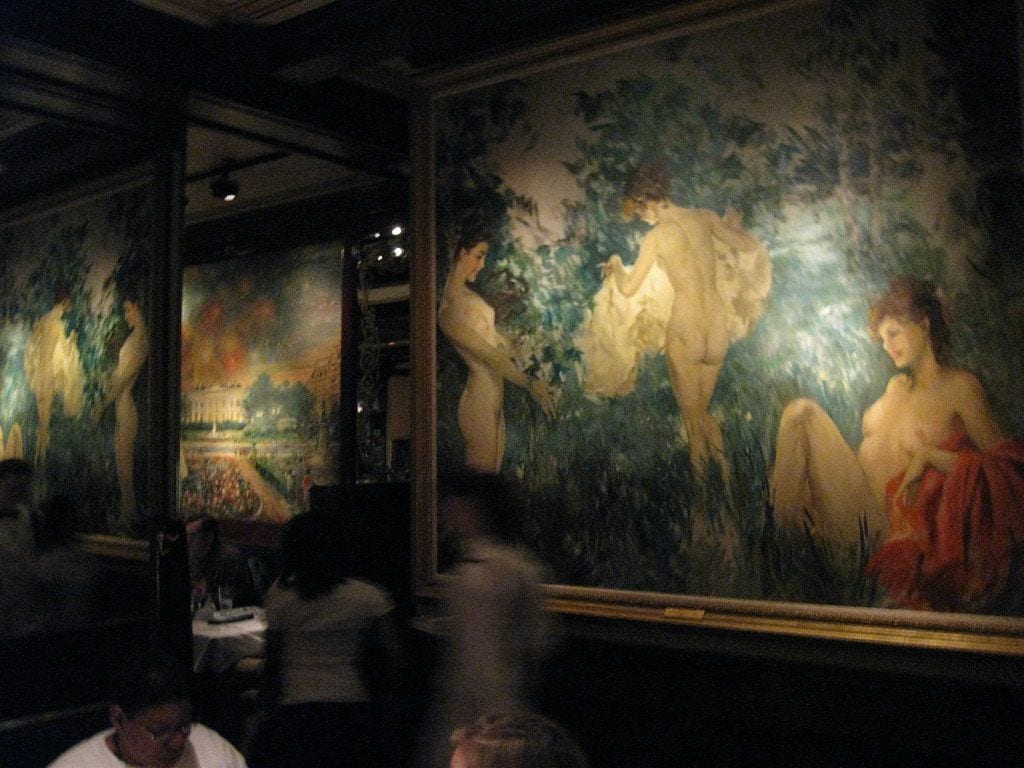
Washington’s oldest saloon, the Old Ebbitt Grill, has been feeding the city since 1856 and now sits on 15th Street, steps from the White House, after several moves around downtown. Presidents Grant, Cleveland, and Theodore Roosevelt are counted among its historical regulars, and the walrus head over the bar is said to be a Roosevelt trophy.
The dining rooms run on brass, velvet, and gaslight-era atmosphere, but the big draw is the Raw Bar – one of the busiest oyster counters in the city, backed by clams, shrimp, lobster, and a deep wine list. Political staffers, journalists, and tourists share the booths of the Old Ebbitt Grill in roughly equal numbers, which makes it as good a place as any to eavesdrop on the capital.
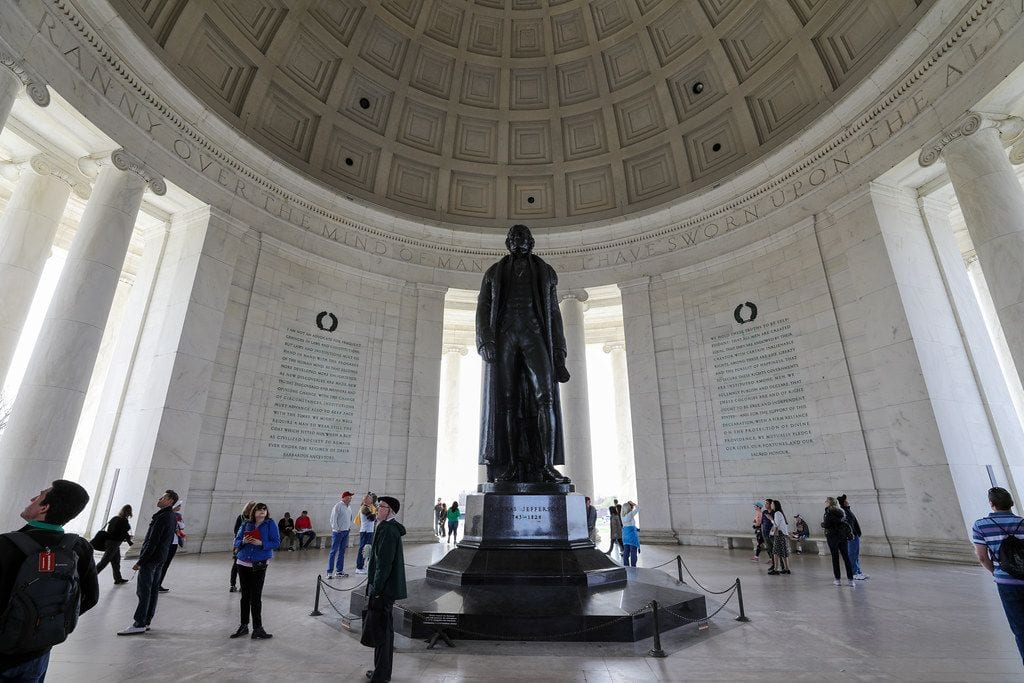
The Thomas Jefferson Memorial rises on the south rim of the Tidal Basin, a domed white rotunda that architect John Russell Pope modeled on the Pantheon – a form Jefferson himself favored. Franklin D. Roosevelt championed the project personally; construction ran from 1939 to 1943, and the 19-foot bronze of Jefferson was installed in 1947, once wartime metal restrictions had eased.
Passages from the Declaration of Independence and from Jefferson’s writings on religious freedom and education wrap the interior walls beneath the dome. In cherry blossom season the Thomas Jefferson Memorial floats above a ring of pink; at dawn the rest of the year, you can have the portico – and its straight view across the water toward the White House – nearly to yourself.
Ford’s Theatre opened in 1863 and entered history two years later, on April 14, 1865, when John Wilkes Booth shot President Abraham Lincoln in the presidential box during a performance of Our American Cousin. Lincoln died the next morning in the Petersen House directly across 10th Street; both buildings are preserved together as a National Historic Site.
The site works on two levels: the museum beneath the theatre displays Booth’s derringer and traces the conspiracy, while talks in the theatre itself unpack the assassination night beneath the flag-draped box. Ford’s Theatre is also a working playhouse with a full season of drama and an annual A Christmas Carol – the stage Lincoln watched is still in use.
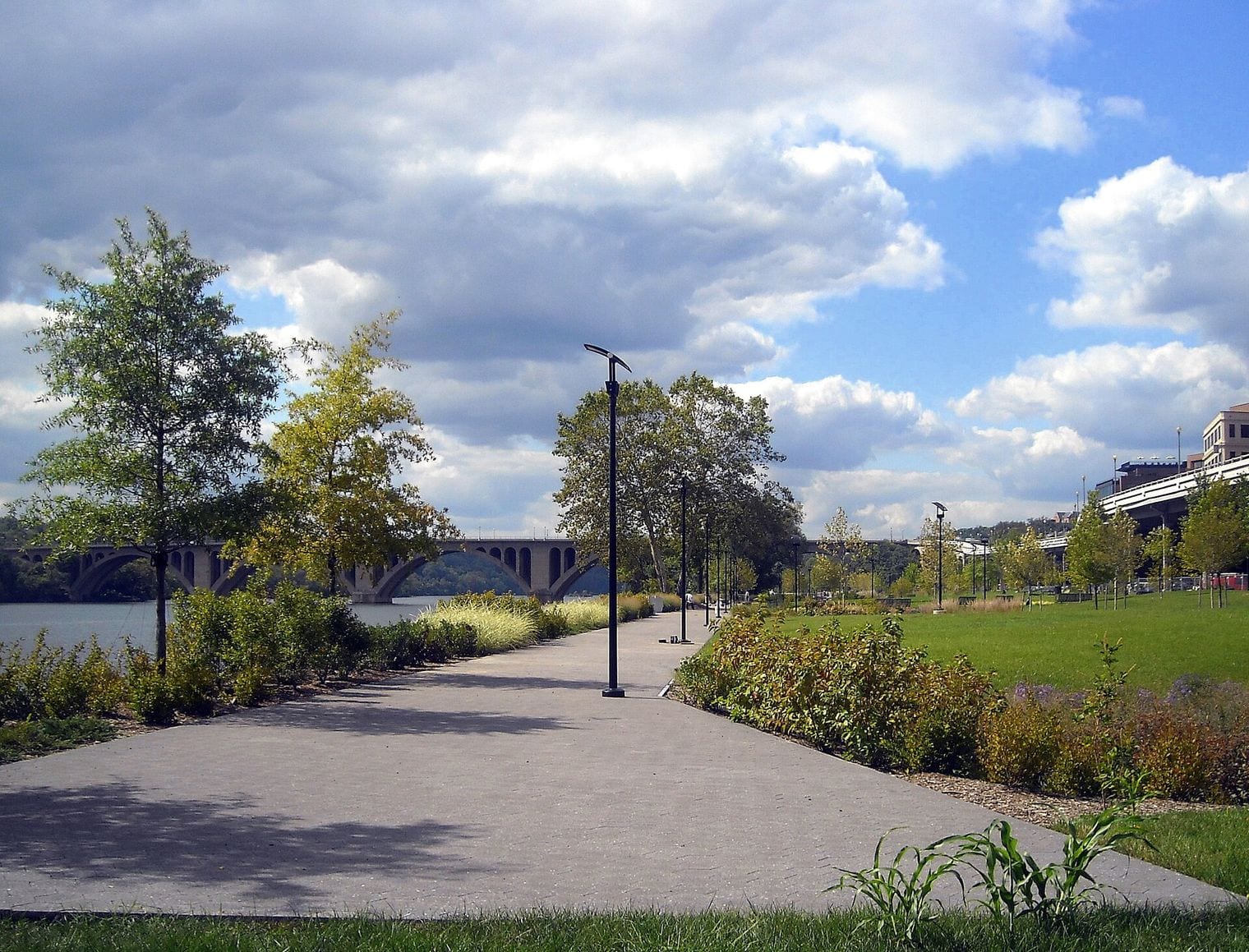
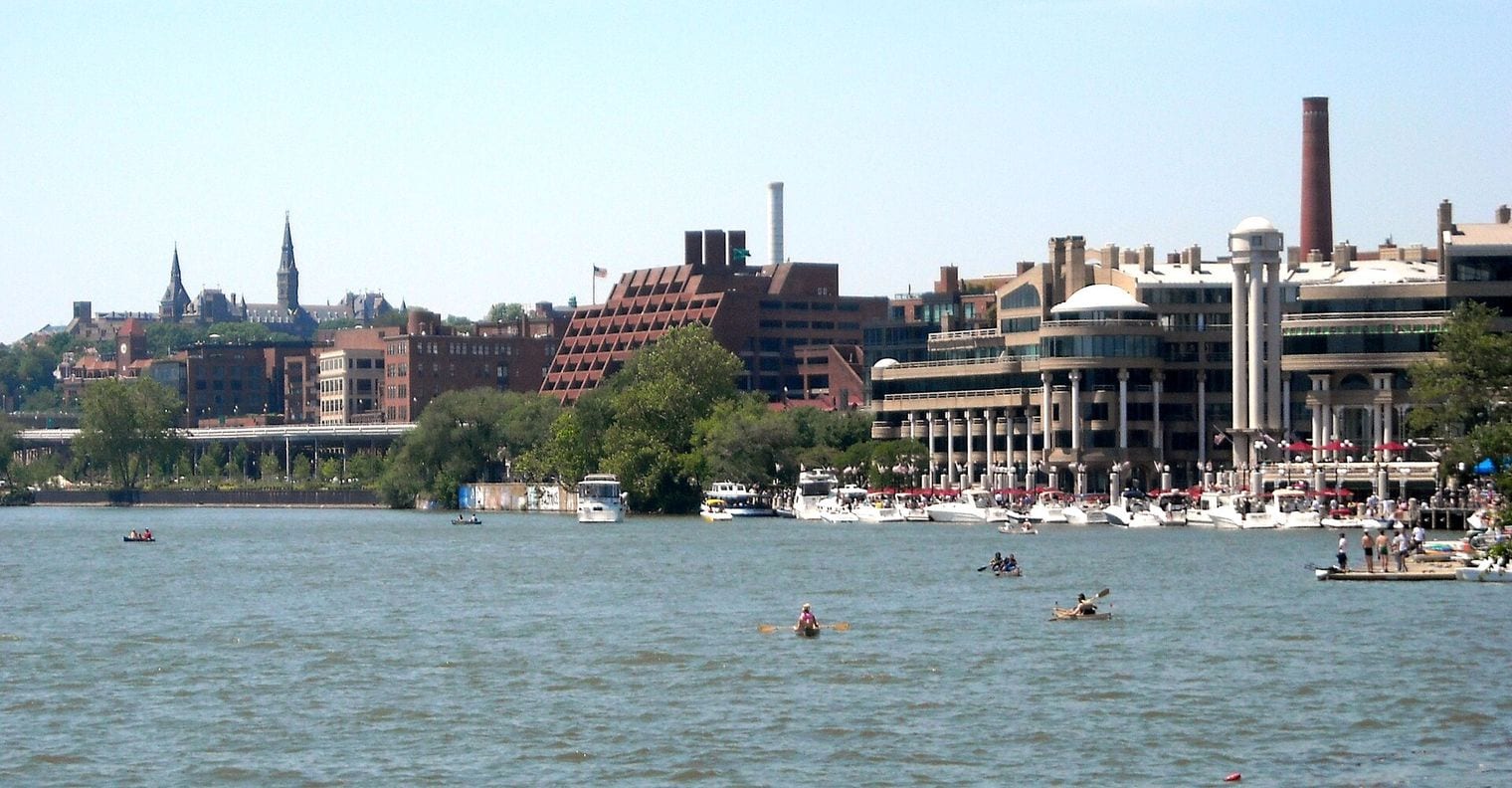
Georgetown Waterfront Park turned ten acres of former industrial riverbank into the neighborhood’s front porch on the Potomac, completed in 2011 and threaded by a path that follows the river’s curve from Washington Harbour up toward Key Bridge. Cyclists and runners use it as the link between the Capital Crescent Trail and the Rock Creek trails.
A tiered river staircase faces the water for watching rowing crews and paddlers, a stone labyrinth sits in one of the lawns, and a fountain plaza invites wading in summer. From the benches of Georgetown Waterfront Park the view takes in Key Bridge, the wooded shore of Theodore Roosevelt Island, and the Kennedy Center downstream.
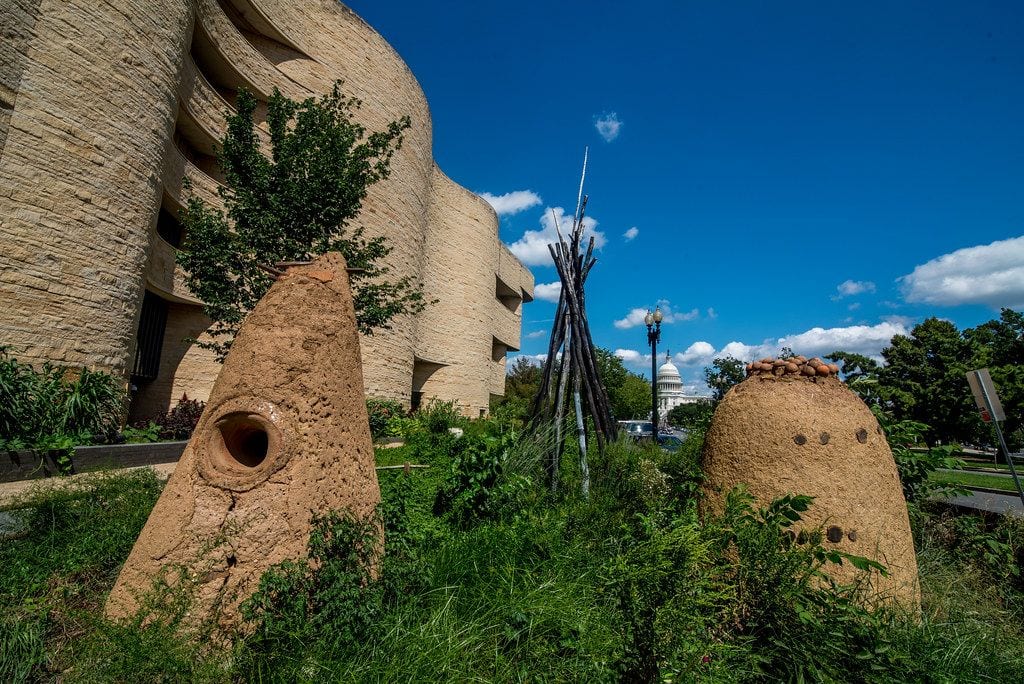
The National Museum of the American Indian opened on the Mall in 2004 in a building unlike anything around it: a curving shell of golden Kasota limestone shaped by Native architects and consultants, led by Blackfoot designer Douglas Cardinal, with wetland plantings standing in for manicured lawns.
Its collection reaches across more than 12,000 years and over 1,200 indigenous cultures of the Americas, presented through community-curated exhibitions that let nations tell their own histories. The Mitsitam Native Foods Cafe is a destination in itself, its stations serving dishes drawn from regional indigenous cuisines, and the National Museum of the American Indian’s soaring atrium hosts performances and festivals through the year.
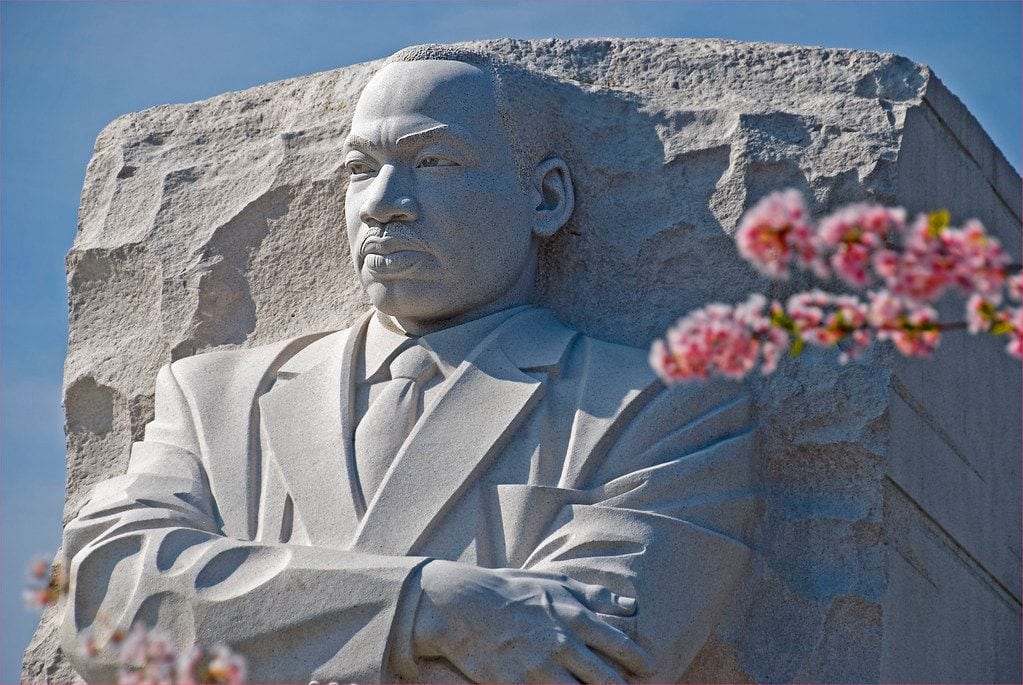
The Martin Luther King, Jr. Memorial opened on the Tidal Basin in 2011, its design built from a single line of the I Have a Dream speech: out of the mountain of despair, a stone of hope. Visitors walk through the cleft Mountain of Despair to reach the Stone of Hope, a 30-foot granite figure of Dr. King facing the water.
King was the first African American honored with a memorial on the Mall’s monumental core, and only the fourth non-president. A 450-foot inscription wall curves behind the statue carrying quotations from his sermons and speeches, and the site’s address – 1964 Independence Avenue – quietly nods to the Civil Rights Act of 1964. Cherry trees bloom directly over the Martin Luther King, Jr. Memorial’s plaza each spring.
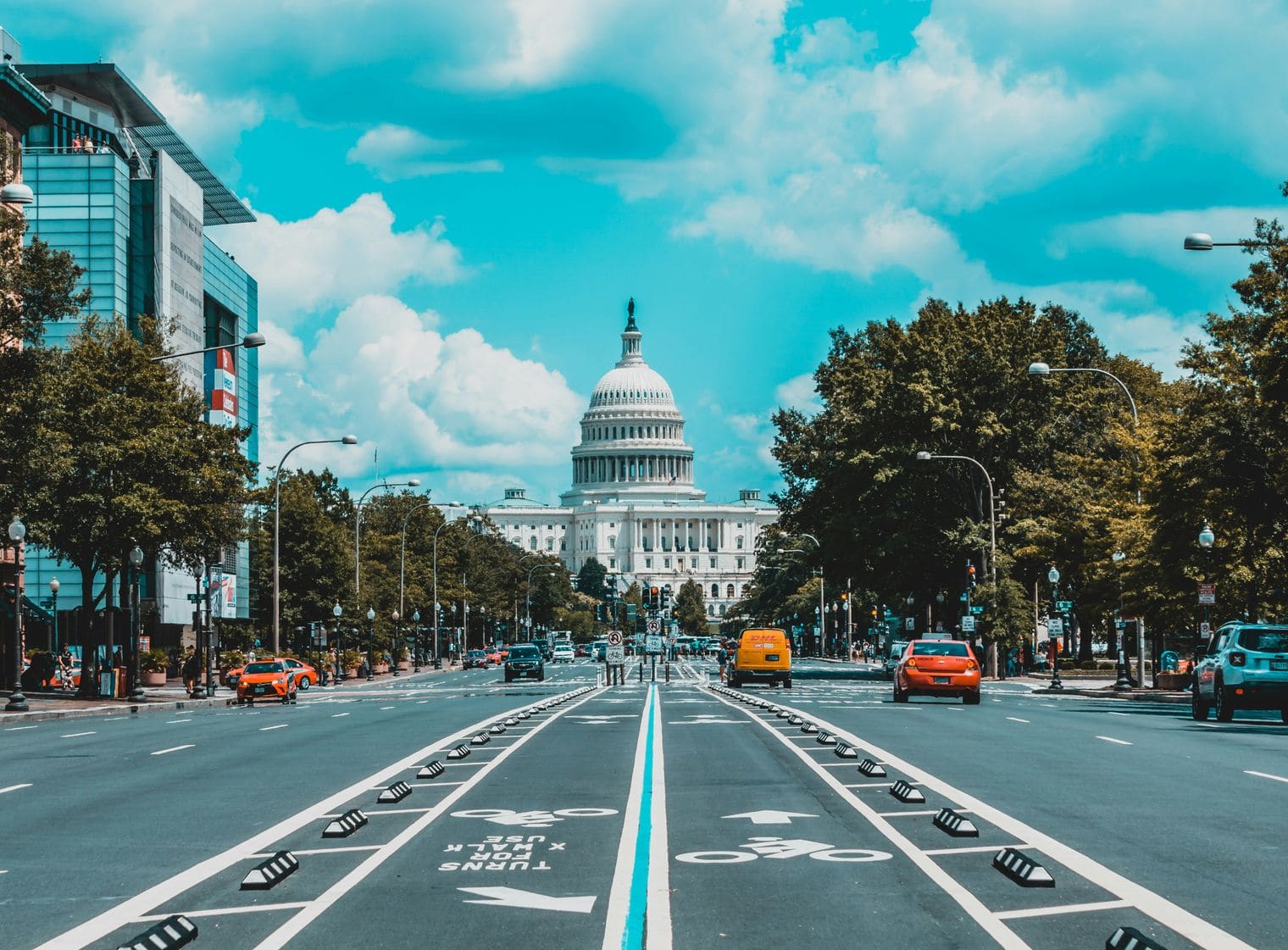
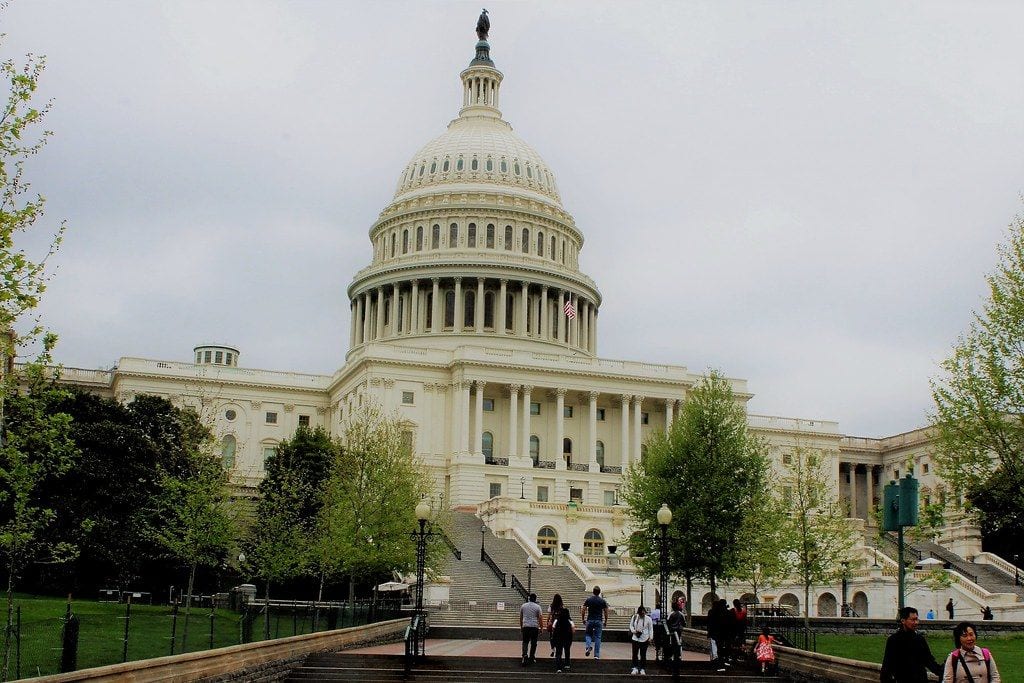
The United States Capitol has housed Congress since 1800, and its cast-iron dome – finished mid-Civil War and crowned by the Statue of Freedom in 1863 – still anchors the city’s entire street plan. Beneath it, Constantino Brumidi’s Apotheosis of Washington fresco floats 180 feet above the Rotunda floor.
Tours booked through the Capitol Visitor Center take in the Rotunda, the Crypt, and National Statuary Hall, where every state places two statues of its notable citizens. With gallery passes – via a congressional office for Americans, or issued to international visitors with a passport – you can watch the Senate or House in session. The west front of the United States Capitol is where presidential inaugurations take place.
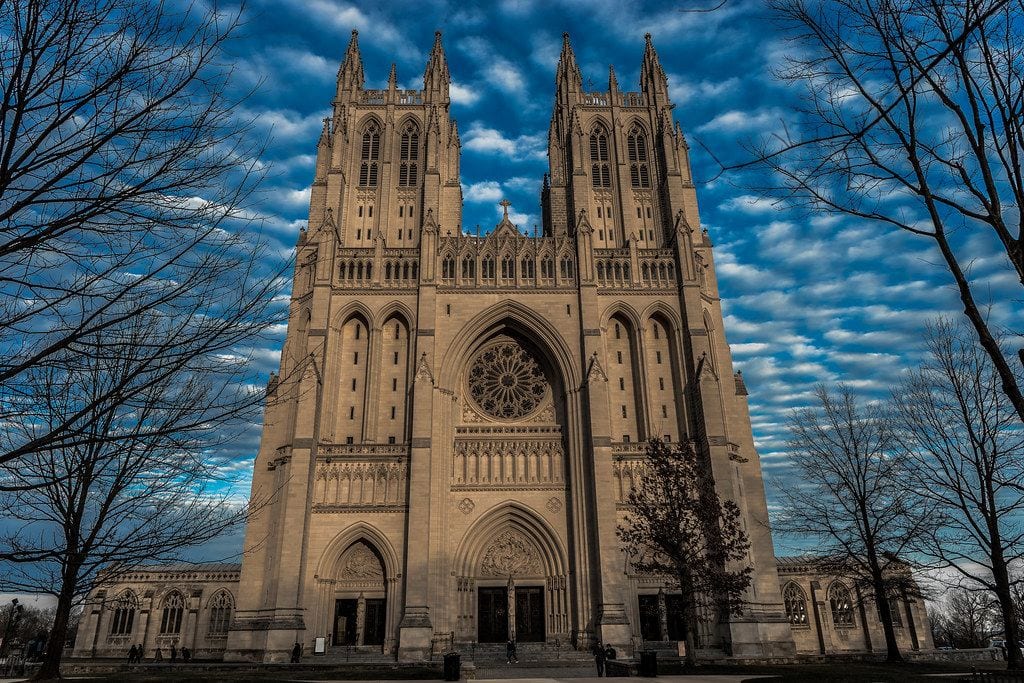
Washington National Cathedral took 83 years to build – the foundation stone was laid in 1907 and the last finial set in 1990 – and the result is one of the largest church buildings in the country, in full Gothic style atop Mount St. Alban, one of the highest points in Washington. Its 215 stained-glass windows include the Space Window, which carries a piece of Moon rock returned by Apollo 11.
This is where state funerals and presidential memorial services are held, and where Martin Luther King, Jr. preached his final Sunday sermon in 1968. Look closely at the northwest tower’s grotesques and you will find Darth Vader, winner of a children’s design competition. Below the south facade, Washington National Cathedral’s walled Bishop’s Garden mixes herbs, boxwood, and roses.
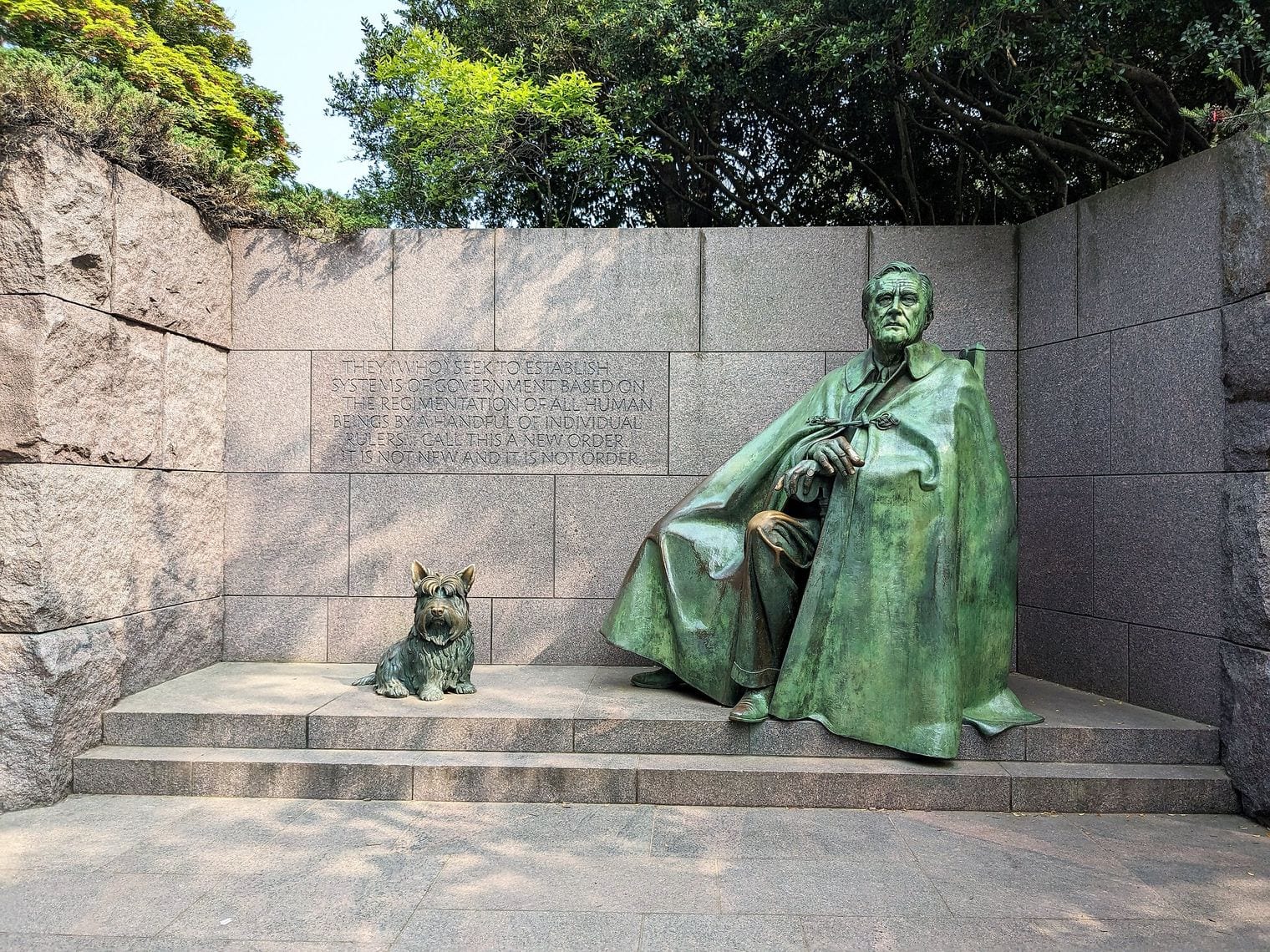
The Franklin Delano Roosevelt Memorial, dedicated in 1997, is less a monument than a 7.5-acre landscape along the Tidal Basin: four open-air granite rooms, one for each of Roosevelt’s four terms, threaded with waterfalls that grow larger and rougher as the presidency moves through the Depression into World War II.
George Segal’s bronze breadline figures stand for the Depression years; Eleanor Roosevelt has her own statue, the first First Lady honored in a presidential memorial; and FDR’s Scottish terrier Fala sits in bronze beside him, nose polished bright by countless hands. Laid out flat and broad, the Franklin Delano Roosevelt Memorial was designed from the start to be fully accessible – fitting for a president who used a wheelchair.
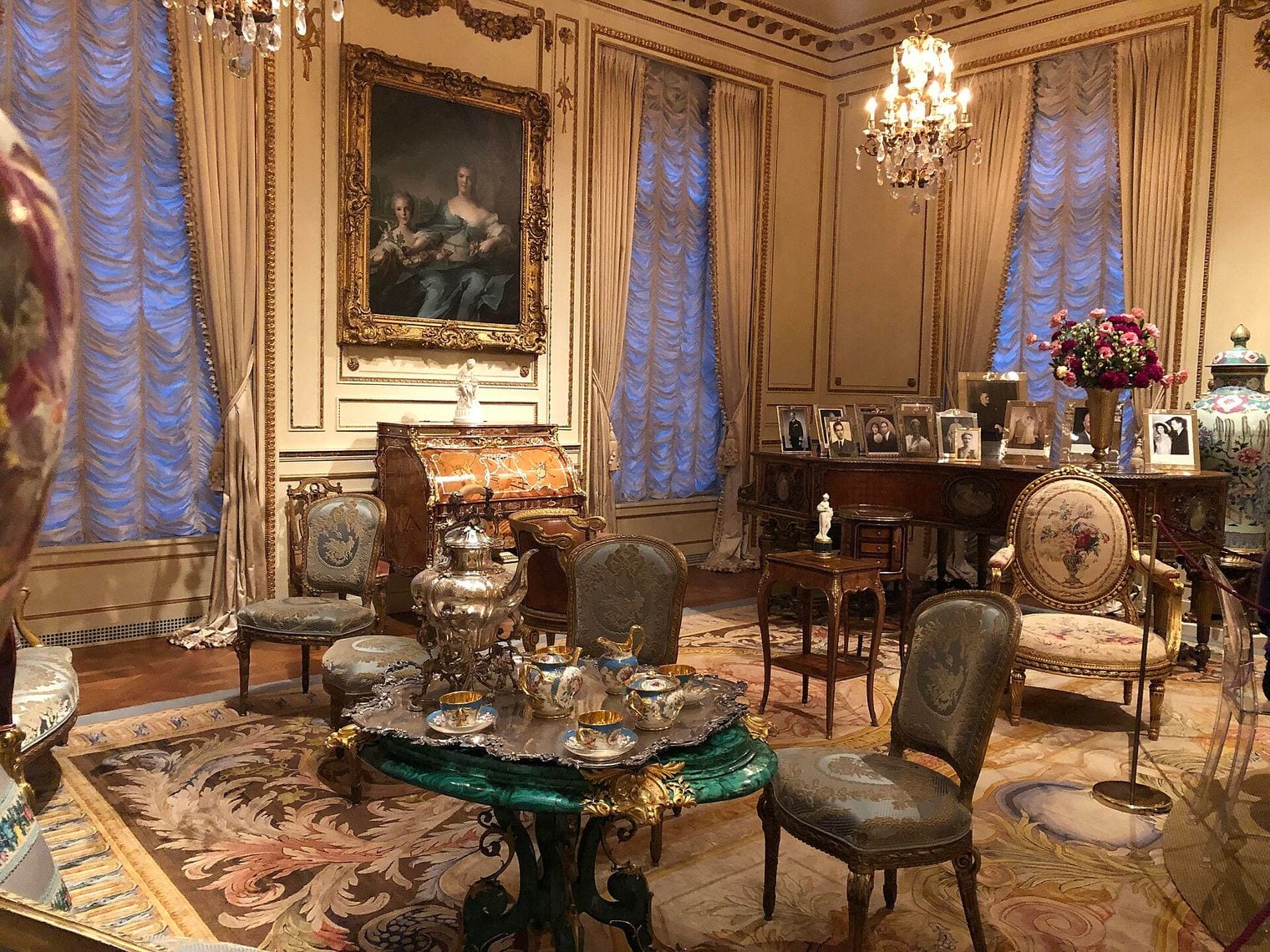
Hillwood Estate, Museum & Gardens preserves the world of Marjorie Merriweather Post, the Post cereal heiress, businesswoman, and collector. Her Georgian mansion in Northwest Washington, opened as a museum in 1977, holds the most significant concentration of Russian imperial art outside Russia – Fabergé eggs, icons, and porcelain gathered while her husband served as ambassador in Moscow – alongside 18th- and 19th-century French decorative arts.
The 25 acres outside are half the visit: a Japanese-style garden stepping down the hillside, a formal rose garden, a French parterre, and a greenhouse famous for its orchids. Post planned Hillwood as a museum from the start, so the house still reads as lived-in – the dining room set for company, the dressing rooms hung with her gowns and jewelry.
The U.S. National Arboretum spreads 446 acres across Northeast Washington, a working research station of the Department of Agriculture since 1927 as well as a public garden. Its strangest and best sight is the National Capitol Columns: 22 sandstone Corinthian columns that held up the Capitol’s East Portico from 1828 until a mid-century expansion, now standing alone in a meadow like a ruined temple.
The National Bonsai & Penjing Museum shelters miniature trees measured in centuries, among them a Japanese white pine that survived the Hiroshima bombing and has been in training since 1625. Azalea-covered hillsides erupt in late spring, herb and conifer collections carry the rest of the year, and the U.S. National Arboretum’s open loop roads make it one of the few Washington attractions best toured partly by car.
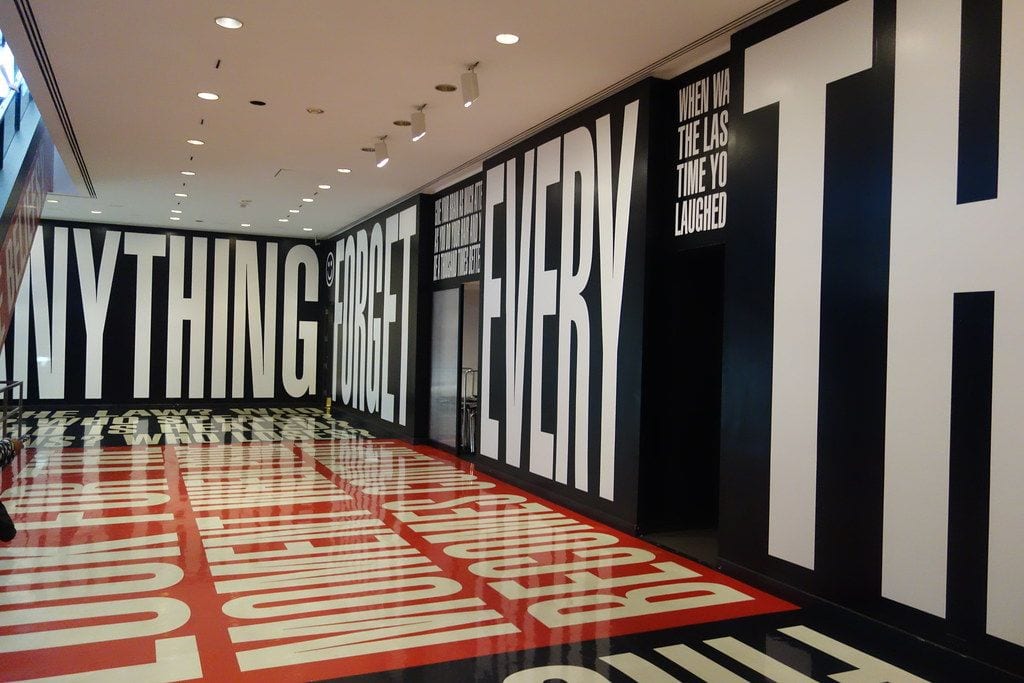
The Hirshhorn Museum is the Smithsonian’s modern and contemporary art arm, opened in 1974 around financier Joseph H. Hirshhorn’s founding gift and housed in Gordon Bunshaft’s raised concrete cylinder – the building Mall regulars simply call the doughnut. The collection tops 12,000 works, weighted toward art made since World War II.
Inside the ring, the galleries push into video, installation, and boundary-testing contemporary work, so no two visits look alike. The sunken Sculpture Garden across Jefferson Drive holds pieces by Auguste Rodin and Yoko Ono, and the fountain courtyard at the Hirshhorn Museum’s center is one of the Mall’s quieter places to sit.
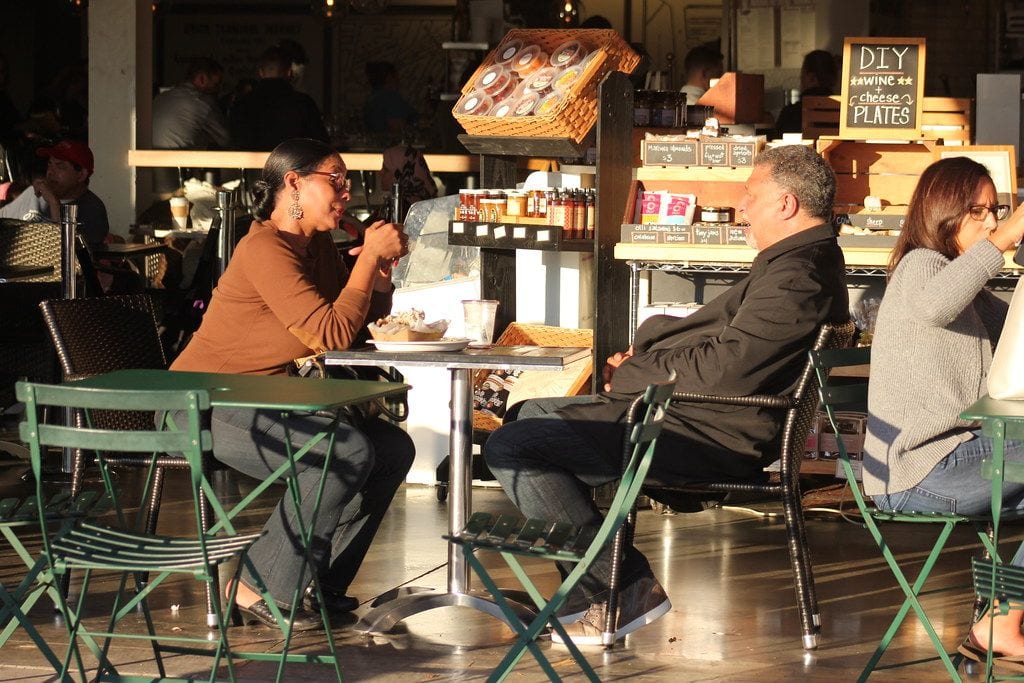
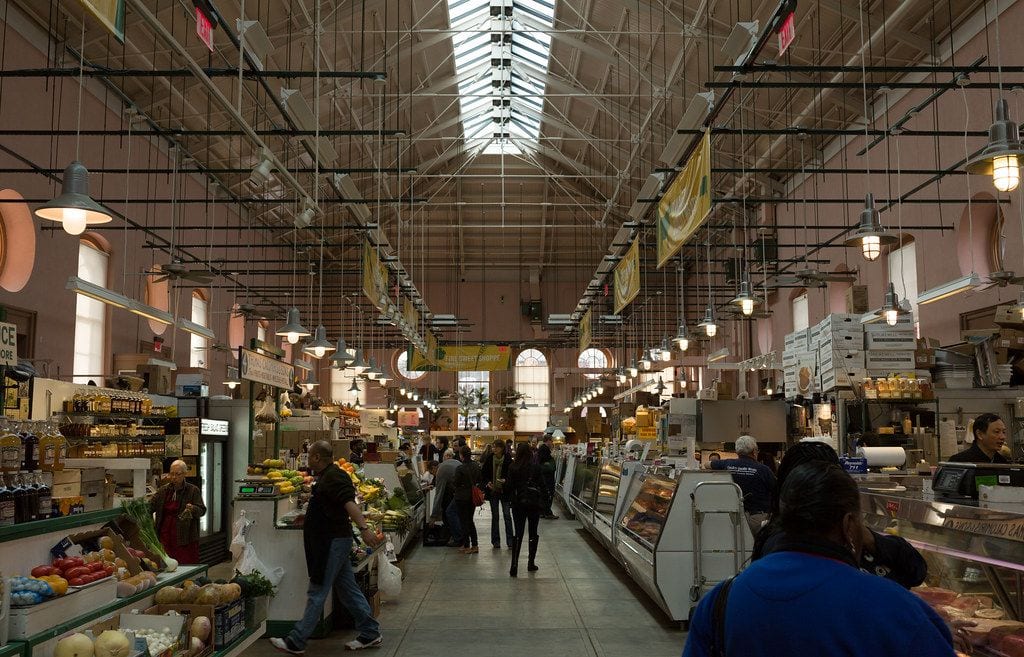
Eastern Market has anchored Capitol Hill since 1873, a red-brick market hall designed by Adolf Cluss, the architect behind much of Victorian Washington. Gutted by fire in 2007 and reopened in 2009, its South Hall still runs the old way – butchers, fishmongers, bakers, cheesemongers, and produce stands under one roof.
Weekends are the main event, when farmers fill the outdoor sheds and a flea market brings around a hundred vendors of art, crafts, vintage goods, and antiques to the surrounding blocks. Inside, the lunch counter’s blueberry buckwheat pancakes and crab cakes are Capitol Hill institutions. Eastern Market repays a slow Saturday morning better than almost anywhere in Washington.
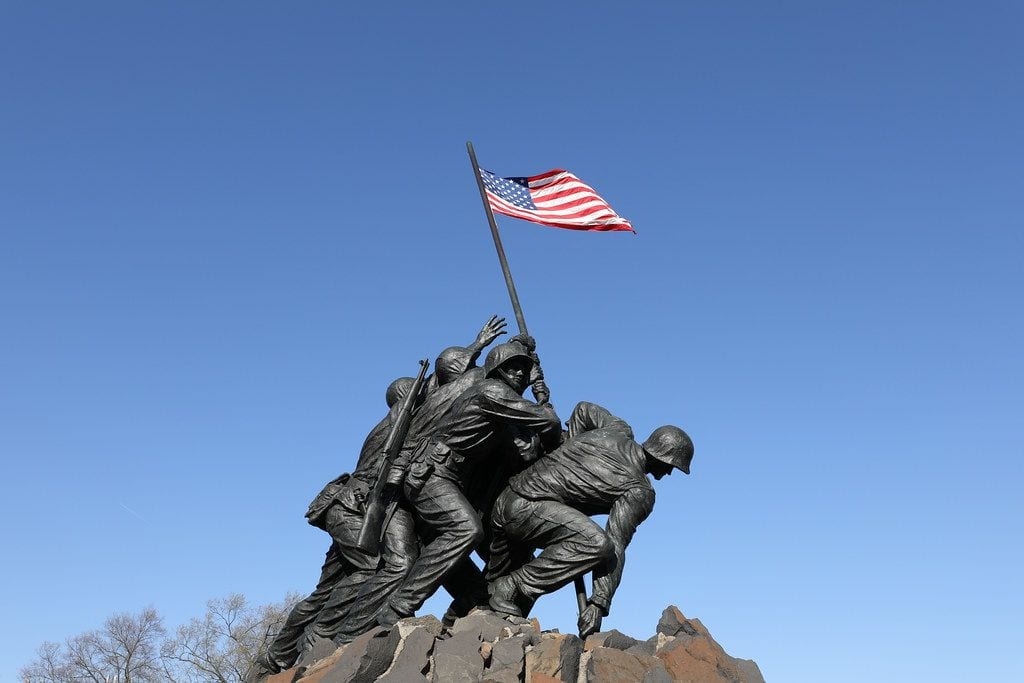
The Marine Corps War Memorial – better known as the Iwo Jima Memorial – translates Joe Rosenthal’s Pulitzer Prize-winning photograph of six Marines raising the flag on Mount Suribachi into 32-foot bronze figures. Sculptor Felix de Weldon worked on it for nearly a decade before its dedication in 1954 to all Marines who have died for the country since 1775.
The United States Marine Corps War Memorial stands in Arlington Ridge Park just across the Potomac, where the ground lines up one of the best views anywhere of the Washington skyline – Lincoln Memorial, Washington Monument, and Capitol dome in a single row. On summer Tuesday evenings the Marines traditionally stage their Sunset Parade at its base, with the Drum and Bugle Corps and the Silent Drill Platoon.
36. Basilica of the National Shrine of the Immaculate Conception
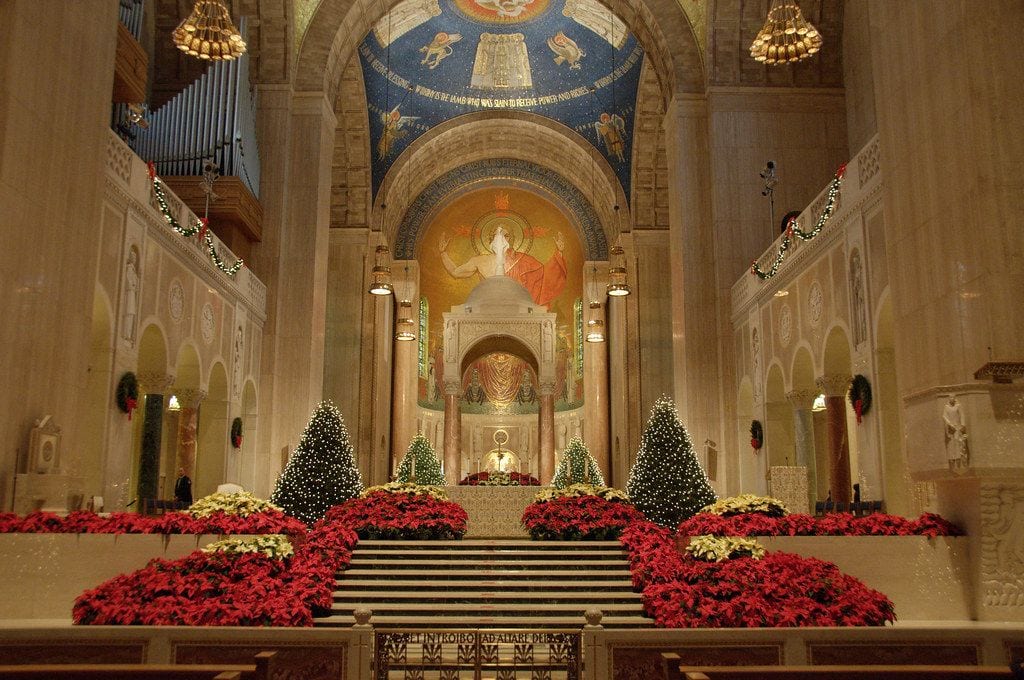
The Basilica of the National Shrine of the Immaculate Conception is the largest Roman Catholic church in North America and among the ten largest churches in the world, raised in Byzantine-Romanesque style beside The Catholic University of America in Brookland. More than eighty chapels and oratories line its Great Upper Church and crypt level, and popes have celebrated here on their American visits.
The mosaics are the draw: domes sheathed in glass tile, including the vast Christ in Majesty filling the north apse, one of the largest mosaic images of Jesus in the world. Nearly a million pilgrims and visitors come to the Basilica of the National Shrine of the Immaculate Conception each year, and both guided and self-guided tours run daily routes through the upper church and crypt.
The National Building Museum occupies the 1887 Pension Building, and the building itself outruns most exhibits: the Great Hall rises around 75-foot Corinthian columns, among the tallest interior columns anywhere, and a 1,200-foot terra-cotta frieze of Civil War soldiers circles the exterior. Presidential inaugural balls have been held beneath this roof since Grover Cleveland’s day.
As a museum it digs into architecture, engineering, construction, and city planning, with hands-on family galleries and one of the best design-focused gift shops in the country. The National Building Museum’s summer installations in the Great Hall – past editions have included a lawn, a maze, and an indoor beach – have become a Washington ritual of their own.
Arthur Cotton Moore’s Washington Harbour complex steps down to the Potomac at the foot of Georgetown, its boardwalk, fountain plaza, and curved terraces facing the river. The Washington Harbour restaurants put more tables at the water’s edge than anywhere else in the neighborhood, with the Kennedy Center and Theodore Roosevelt Island in view.
The central fountain flips with the seasons – spray and splash in summer, then one of the region’s larger outdoor ice rinks in winter. Sightseeing cruises and water taxis leave from the dock out front, linking Georgetown to The Wharf and Old Town Alexandria by river, which remains the most scenic way to move around Washington.
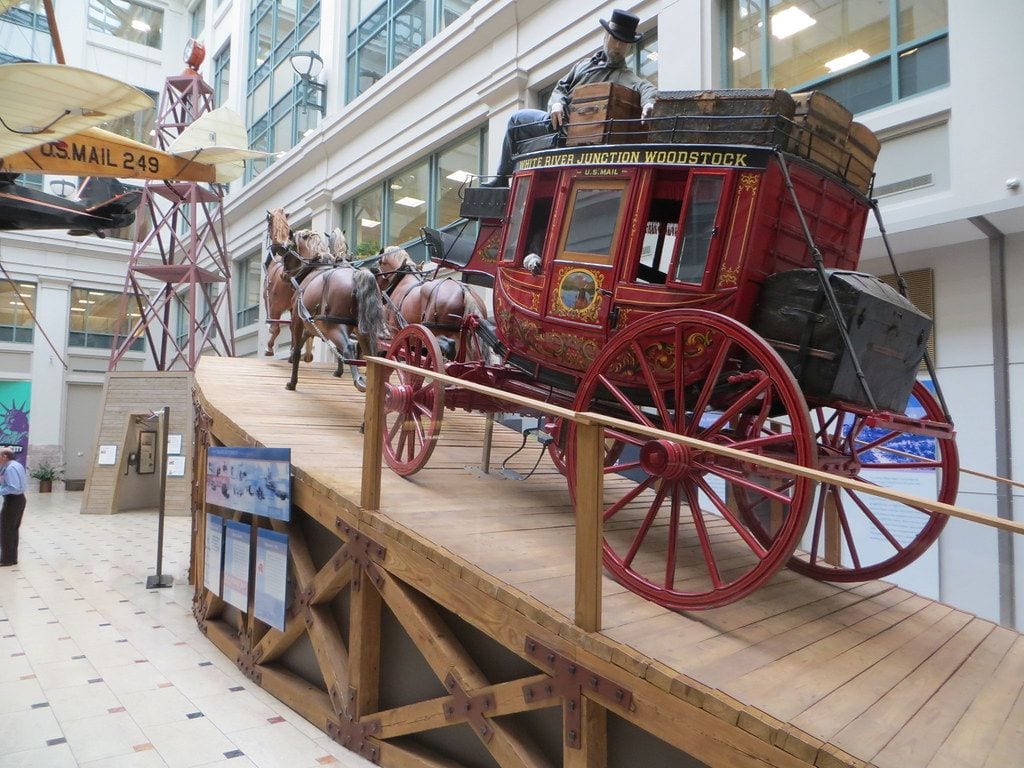
The National Postal Museum occupies Daniel Burnham’s 1914 City Post Office building beside Union Station, holding some six million objects that trace how mail moved a nation – from post riders and the Pony Express to the airmail planes suspended in its atrium.
The eccentric treasures make it: Amelia Earhart’s flight suit, John Lennon’s childhood stamp album, and Owney, the scruffy terrier who rode the Railway Mail Service as its mascot in the 1890s. The William H. Gross Stamp Gallery is the largest gallery in the world devoted to stamps, and visitors leave the National Postal Museum with a souvenir built in – you can pick real postage stamps to start a collection and post a card on the way out.
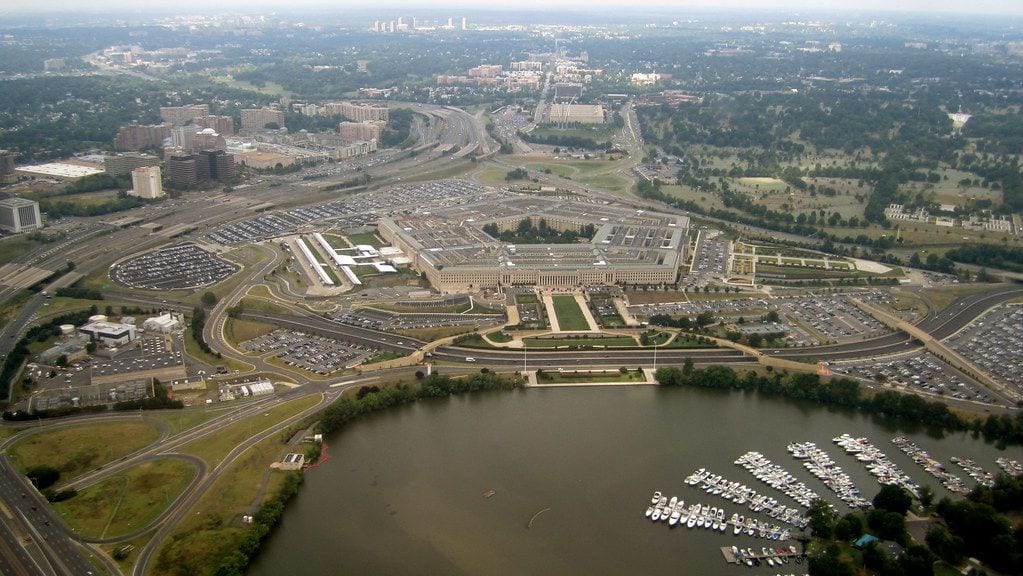
One of the world’s largest office buildings by floor area sits just across the river in Arlington: the Pentagon, headquarters of the Department of Defense, opened in 1943 after a wartime construction sprint. Five sides, five floors above ground, two below, more than 17 miles of corridors, and a workforce of over 25,000 military and civilian employees.
Guided tours of the Pentagon must be requested well in advance and walk visitors past service exhibits and the Hall of Heroes honoring Medal of Honor recipients. Outside, the National 9/11 Pentagon Memorial marks the 2001 attack with 184 illuminated benches, one for every life lost here, arranged by the age of the victim.
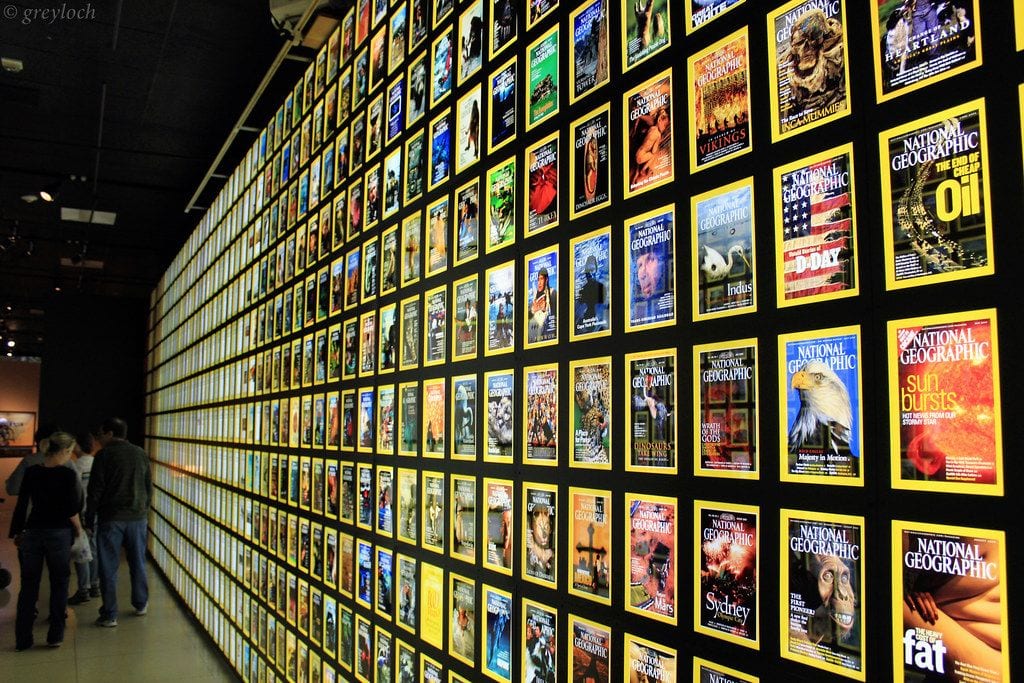
The National Geographic Society has been headquartered in Washington since its founding in 1888, and its 17th Street campus opens to the public as the National Geographic Museum of Exploration, unveiled in 2026 after a wholesale rebuilding of the block. The name is literal: 100,000 square feet given over to the science and storytelling of exploration.
Immersive galleries draw on the Society’s deep archives of photography and expedition artifacts, two theaters run large-format films and talks, and a technology-laced courtyard ties the campus together, while the Learning Launchpad aims squarely at students with hands-on geographic thinking. For anyone raised on the yellow-border magazine, the National Geographic Museum of Exploration is that archive brought to life.
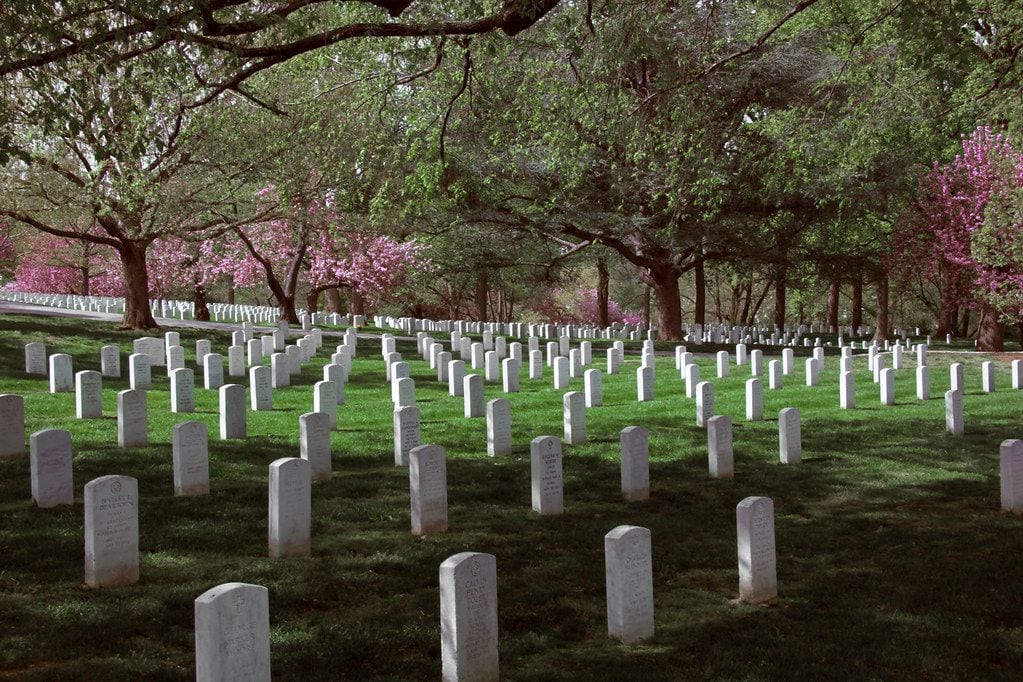
Arlington National Cemetery spreads across more than 600 acres of Virginia hillside facing the capital, established in 1864 during the Civil War on the confiscated grounds of Arlington House, Robert E. Lee’s former home. More than 400,000 service members, veterans, and family members rest beneath its ranks of white headstones.
The Tomb of the Unknown Soldier has been guarded around the clock since 1937 by sentinels of the 3rd U.S. Infantry Regiment, and the changing of the guard is the most solemn regular ceremony in Washington. President John F. Kennedy lies beneath an eternal flame on the slope below Arlington House, near the graves of President William Howard Taft and Justice Ruth Bader Ginsburg – a few of the notable Americans across Arlington National Cemetery’s sections.
The National Museum of Women in the Arts was the first museum in the world devoted solely to women artists when Wilhelmina Cole Holladay founded it in 1987, a mission it still owns nearly alone. It fills a Renaissance Revival former Masonic temple downtown – nearly 79,000 square feet of galleries in a building whose original occupants admitted no women at all.
The collection holds more than 4,500 works from the 16th century to the present, including paintings by Frida Kahlo, Mary Cassatt, and Élisabeth Louise Vigée-LeBrun, alongside contemporary sculpture and photography. The National Museum of Women in the Arts makes a pointed companion to the Mall museums: the history of art with the missing half restored.
Ben’s Chili Bowl has held its corner of U Street since 1958, when Trinidad-born Ben Ali and his wife Virginia opened it beside the Lincoln Theatre. It kept serving through the 1968 riots that burned much of the corridor – feeding police and activists alike – and has outlasted every wave of change around it.
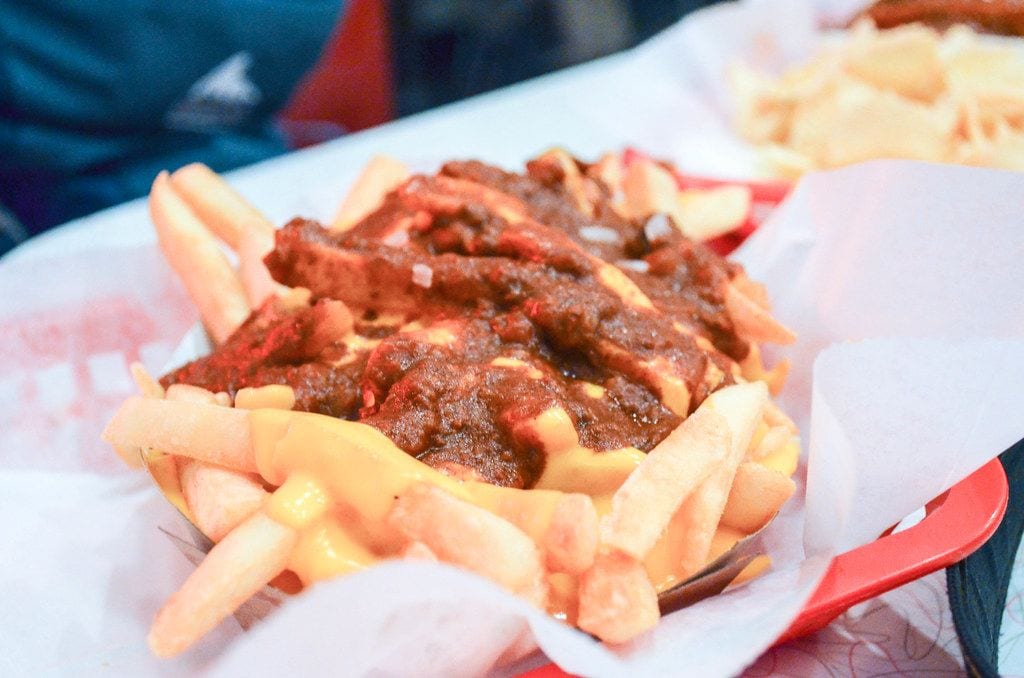
The order is the chili half-smoke: a half-pork, half-beef smoked sausage buried in the house chili, chased with a milkshake or chili cheese fries. The photographs on the wall run from U Street’s Black Broadway era to Barack Obama’s famous visit, and members of the Ali family still work the counter at Ben’s Chili Bowl’s original location.
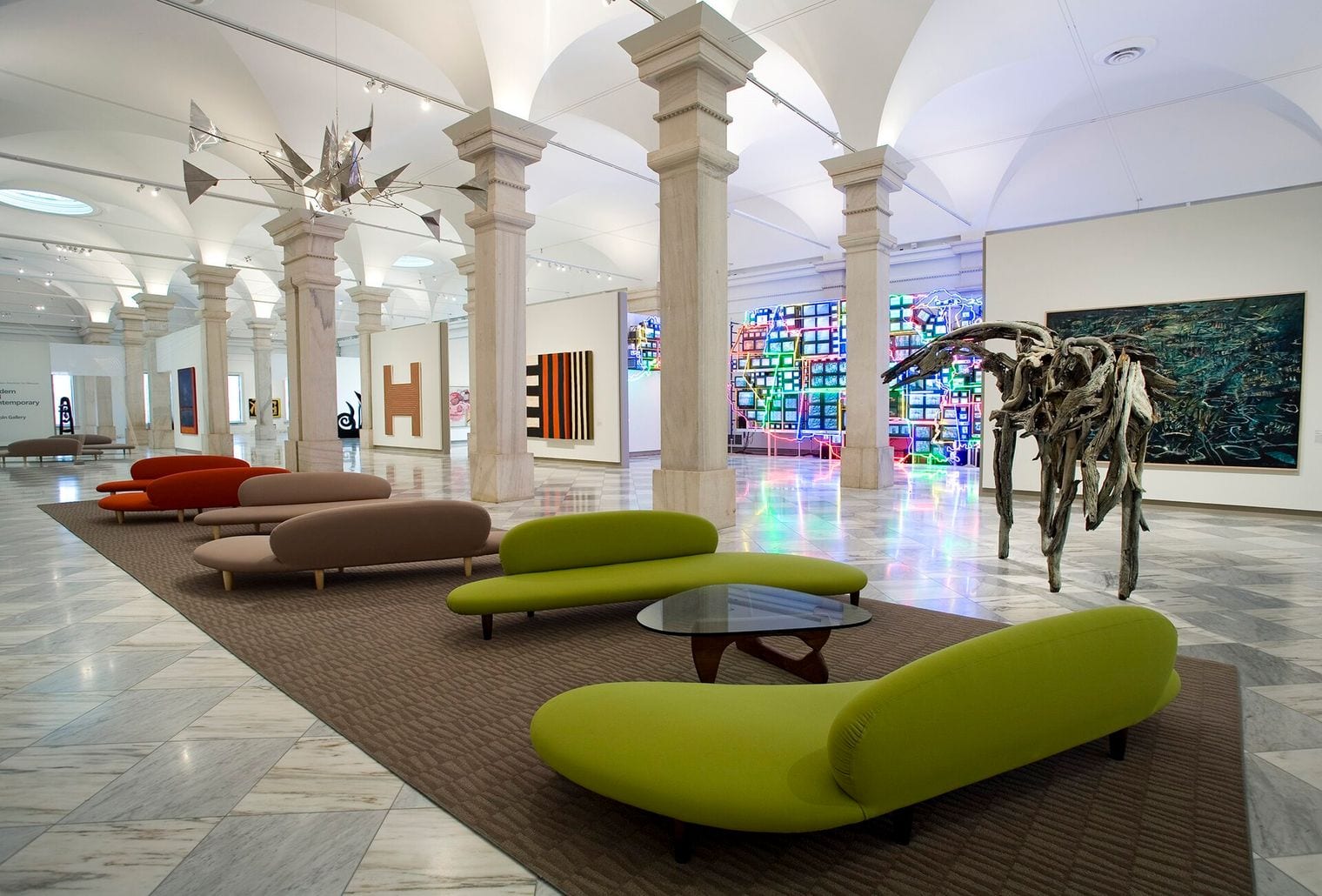
The Smithsonian American Art Museum shares the Old Patent Office Building with the National Portrait Gallery and holds one of the world’s largest and most inclusive collections of American art – more than 7,000 artists, with deep folk, Latino, and African American holdings and the largest collection of New Deal-era art anywhere.
Its signature piece may be Nam June Paik’s Electronic Superhighway, a wall of neon-outlined televisions mapping the continental United States, but the range runs from colonial portraiture to James Hampton’s hand-built foil Throne of the Third Heaven, one of American folk art’s great obsessive masterpieces. The Smithsonian American Art Museum’s craft-focused branch, the Renwick Gallery, faces the White House across Pennsylvania Avenue.
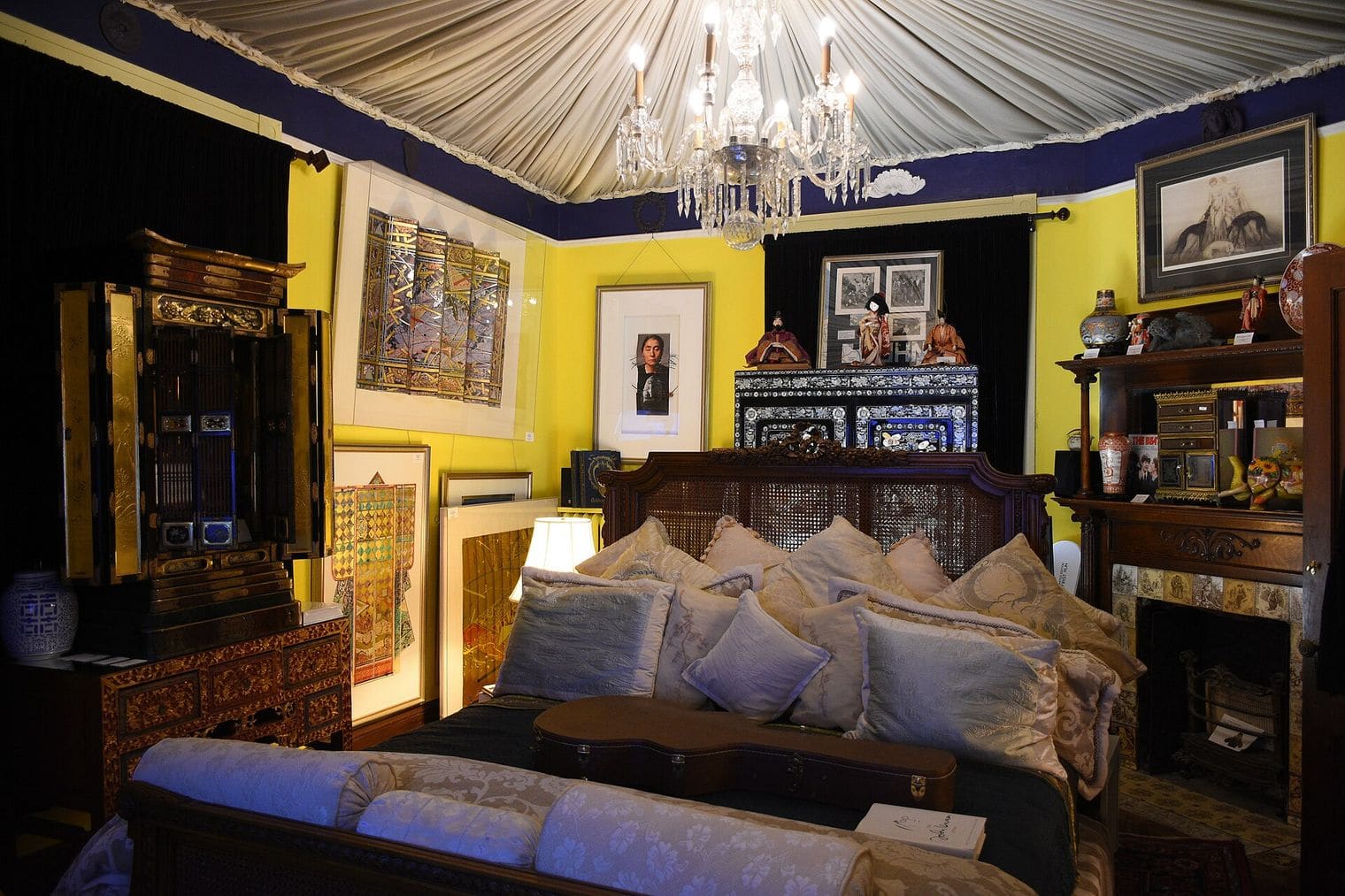
The Mansion on O & O Street Museum – The O Mansion to regulars – sprawls through a row of linked townhouses near Dupont Circle: roughly 100 rooms connected by more than 70 secret doors hidden behind bookcases and mirrors. Part boutique hotel, part museum, part treasure hunt, nearly everything on its walls and shelves is for sale.
Visits are self-guided door-hunts past a log cabin room, a wine cellar, signed guitars, and decades of eccentric collections; Rosa Parks stayed here regularly for a decade, and her room is preserved. Presidents, ambassadors, and touring musicians have hidden out at The O Mansion behind the same discretion the staff still practices.
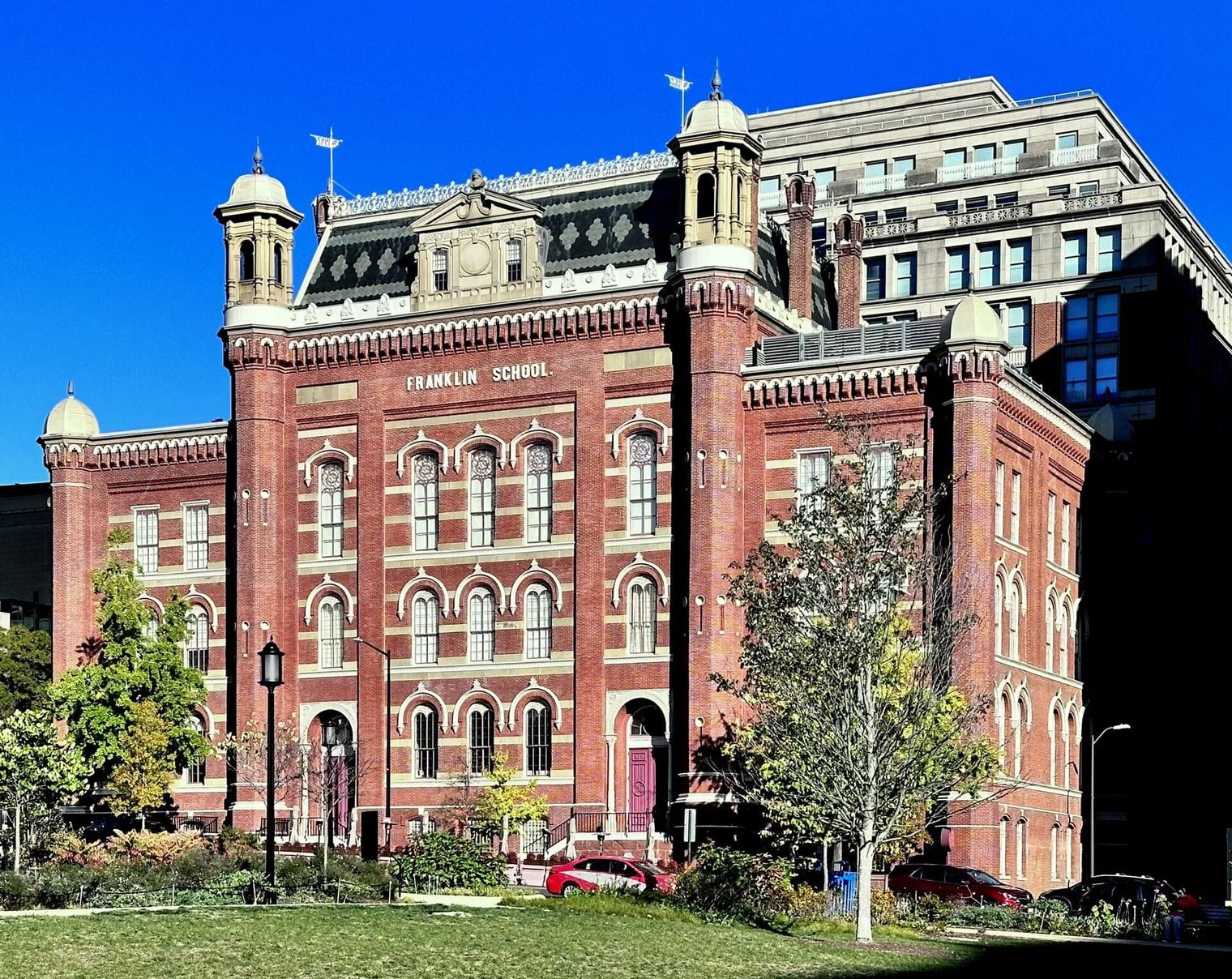
Planet Word turned the 1869 Franklin School on Franklin Square into a museum of language – fitting, since Alexander Graham Bell sent the world’s first wireless voice message from its rooftop in 1880 using his photophone. Founded by philanthropist Ann Friedman, Planet Word opened in 2020 after a full restoration of Adolf Cluss’s landmark school building at 13th and K Streets.
Billed as the world’s first voice-activated museum, it gets visitors talking: to a giant wall of words that talks back, in karaoke booths, at joke-telling and persuasion stations, across three floors on how language works, where words come from, and why they matter. In a city dominated by history museums, Planet Word is the rare one built around something every visitor already carries – their own voice.
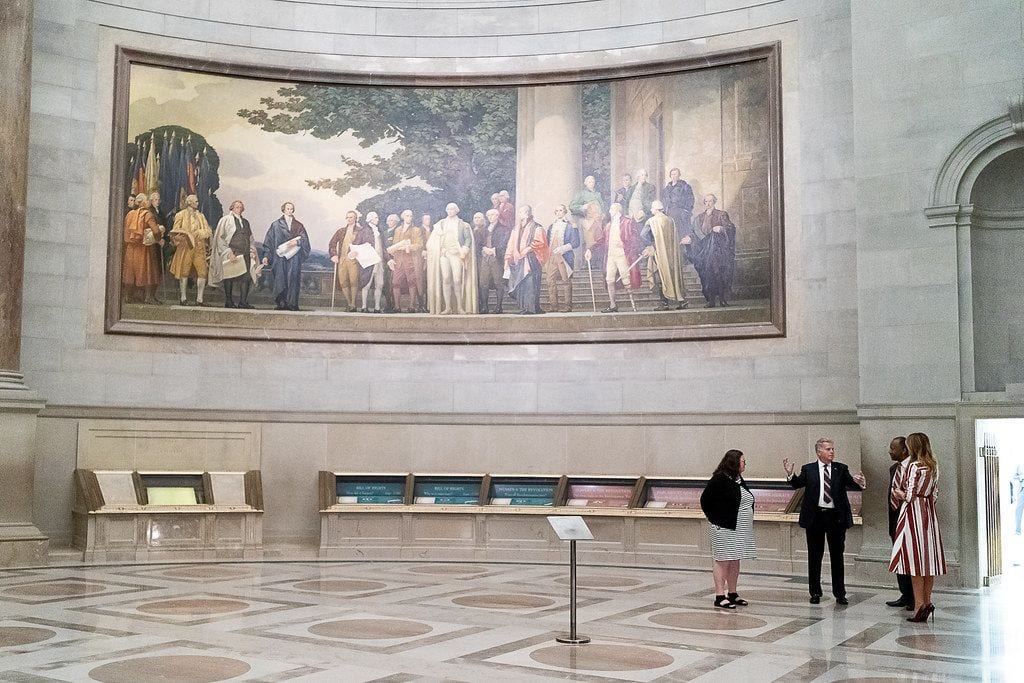
The National Archives Museum displays the country’s founding paperwork in the original: the Declaration of Independence, the Constitution, and the Bill of Rights, sealed in argon-filled cases in the Rotunda of John Russell Pope’s temple-like Archives building, open to the public since 1935.
The supporting cast is remarkable on its own – a 1297 Magna Carta, one of the few originals outside Britain, plus the Emancipation Proclamation and rotating documents pulled from holdings of more than three billion records. The Public Vaults galleries make the archives hands-on with touchscreens and listening booths, the William G. McGowan Theater screens documentaries, and younger visitors get the Boeing Learning Center. The National Archives Museum proves paper can outdraw marble.
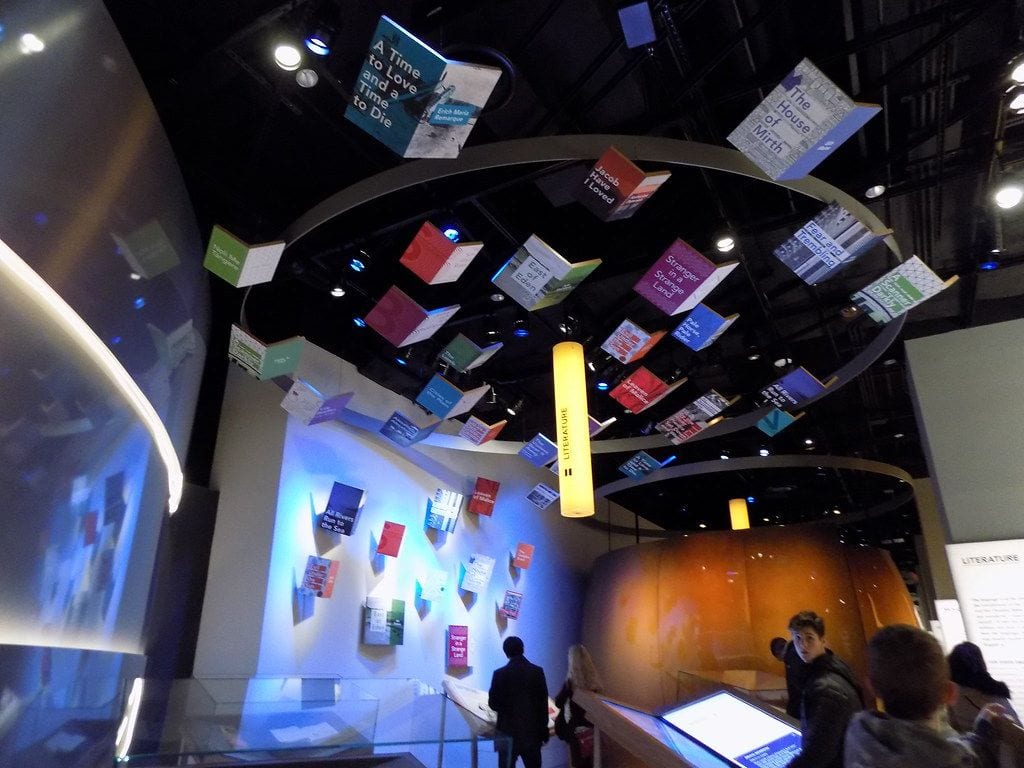
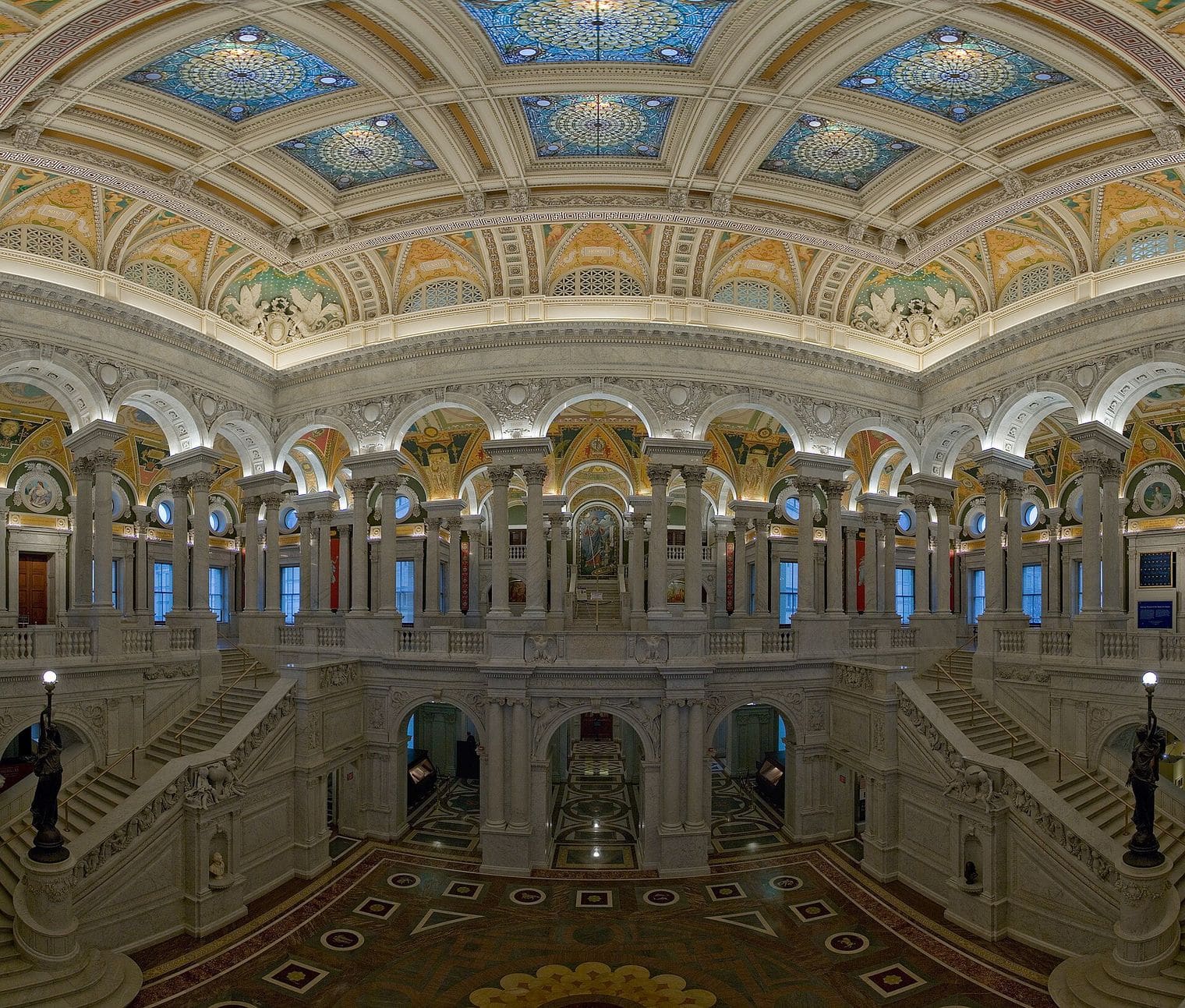
The Library of Congress is the largest library in the world: more than 164 million items in some 450 languages, spread across three buildings on Capitol Hill. Start at the 1897 Thomas Jefferson Building, whose Great Hall of mosaics, murals, and stained glass may be the most spectacular interior in Washington, with the domed Main Reading Room visible from an overlook gallery.
The treasures on display include a Gutenberg Bible – one of three perfect vellum copies in the world – and Martin Waldseemüller’s 1507 world map, the first document to use the name America. Exhibitions draw on Thomas Jefferson’s personal library, sold to Congress in 1815 after the British burned the Capitol’s collection. Anyone sixteen or older can register for a reader card and use the Library of Congress for real research – the ultimate Washington souvenir.
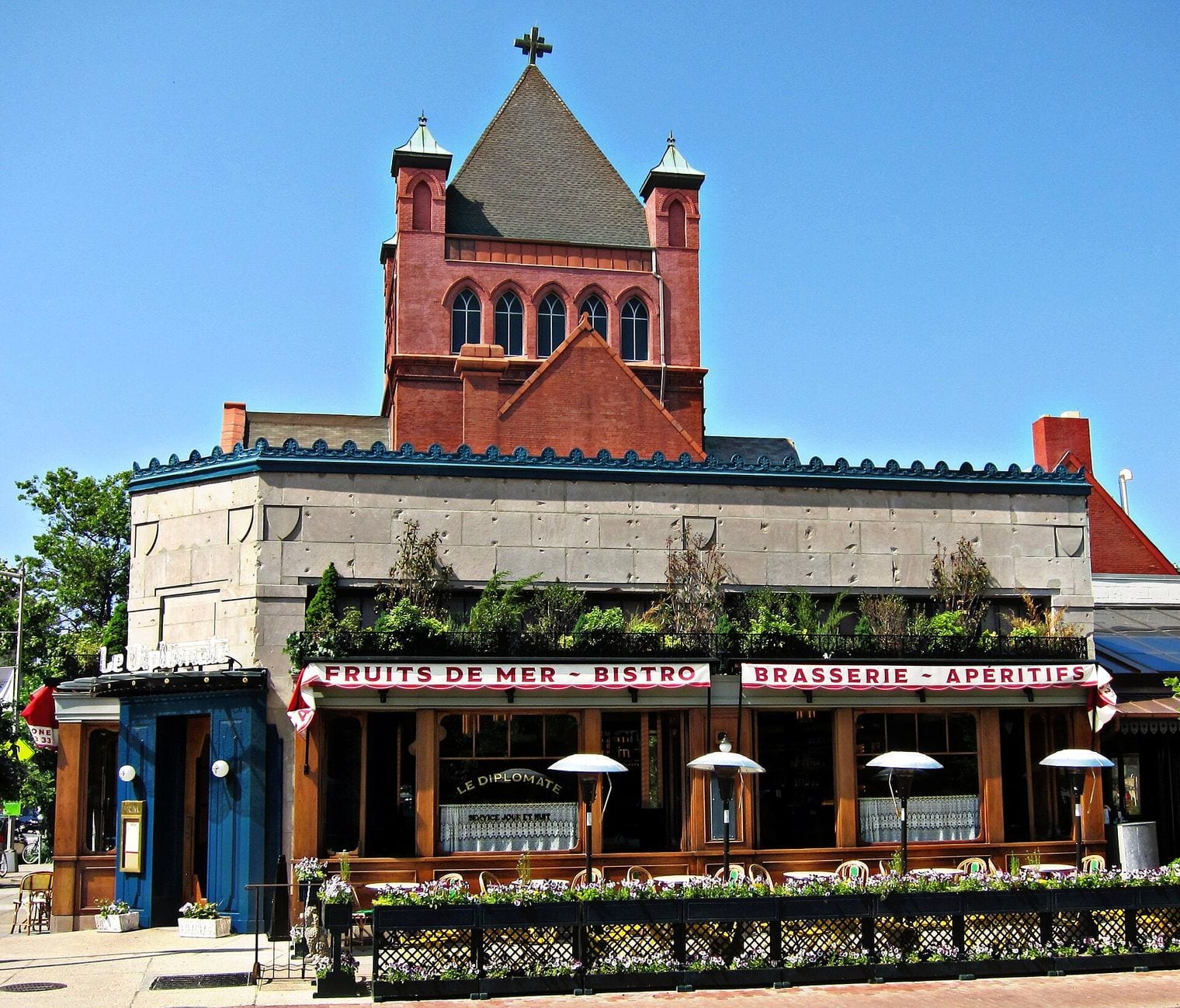
Le Diplomate holds down a corner of 14th Street in Logan Circle, a Parisian brasserie transplant complete with zinc-topped bar, rattan cafe chairs, and sidewalk tables built for people-watching. Since opening it has stayed one of the toughest reservations in the city, its dining room humming nightly with politicians, journalists, and neighborhood regulars.
The kitchen works the brasserie canon – steak frites, duck, French omelets, towers of shellfish – with baskets of house-baked bread, a long French wine list, and a crème brûlée worth saving room for. Le Diplomate makes the point this list keeps circling back to: Washington’s table stands up to its monuments.
Best Time to Visit Washington
Spring and fall are the sweet spots. Late March into April brings the famous cherry blossoms and mild days ideal for walking the Mall, while September and October pair comfortable temperatures with smaller crowds than the peak summer months. These shoulder seasons are the easiest time to move between monuments and museums on foot.
Summer is the busiest stretch — hot, humid and thick with school-trip and holiday crowds around the Fourth of July, though long daylight hours make for excellent evening monument walks. Winter is cold and quiet, but the museums are free and uncrowded, and the season brings holiday displays and a calmer city. Whenever you come, weekday mornings are the least crowded time at the marquee Smithsonian museums.
Getting to Washington
Washington sits at the hub of the Mid-Atlantic road network, and most drivers reach it on Interstate 95, the East Coast’s main north-south artery, which loops the city as the Capital Beltway (Interstate 495) just outside the District line. From the west, Interstate 66 runs straight in toward the edge of Georgetown, while Interstate 395 (the Southwest and Center Leg freeways) and Interstate 295 feed traffic across the rivers into the core. Older US highways layer over the same corridors, with US 1 shadowing the interstate north-south and US 50 heading east toward the bay and west into the mountains. Note that single-occupant cars face rush-hour restrictions on the inside stretch of I-66, so time your approach from the west accordingly.
The city has its own close-in airport a few miles south across the river, reachable in well under half an hour outside peak traffic, which handles most short- and medium-haul flights. Longer and international routes lean on a larger hub airport roughly 45 minutes to the west, and a third major airport up near Baltimore, about an hour northeast, is a common and often cheaper alternative that many visitors simply drive down from. Washington is also one of the best-connected rail cities in the country: its grand downtown station anchors the busy Northeast Corridor with frequent trains up the coast, and an upper bus deck at the same station gathers the long-distance intercity coach lines, making a car entirely optional for reaching the city.
Getting Around Washington
Central Washington is one of the most walkable cities in the country, and you do not need a car to see the marquee sights. The monumental core around the National Mall, along with the dense downtown, waterfront and market districts, and the historic rowhouse neighbourhoods spreading north and east, all reward walking, and the flat, grid-planned streets make it easy to string several attractions together on foot. A clean, far-reaching subway and bus network ties the districts and the suburbs together, so most visitors move between neighbourhoods on transit rather than behind the wheel.
Bike-share docks are scattered across the central districts and paired with a growing web of protected lanes and riverside trails, and rideshare and taxis fill in the late-night and cross-town gaps. Driving downtown, by contrast, means one-way grids, traffic circles, rush-hour lane reversals and scarce, pricey kerb space, so it is more hindrance than help in the core. If you do bring a car, it is easiest to park it at your lodging or at a station on the transit line out in the residential neighbourhoods and near the Beltway, then ride in, keeping the vehicle for day trips rather than daily sightseeing.
Where to Stay in Washington
For first-time visitors, basing yourself in or near the monumental core pays off: the downtown and Penn Quarter districts put you within walking distance of the National Mall, the Smithsonian museums, the National Gallery of Art and the memorials, with the deepest concentration of transit and dining. The Southwest waterfront around The Wharf and the neighbourhood by the grand rail station offer a slightly calmer, water-and-transit-anchored alternative that is still an easy walk or short ride from the sights.
If you prefer quieter, more residential streets with local cafes and a neighbourhood feel, the leafy northwest districts and the historic rowhouse quarters near Union Market and along the U Street and Shaw corridors trade walk-to-the-Mall convenience for character and generally gentler rates, while staying on the transit spine. Travellers arriving by car often do best at the edges, basing near the Beltway or beside a suburban transit station where parking is far easier, or in the university-anchored neighbourhoods, then riding the train in each morning.
Where to Eat in Washington
Washington’s signature contribution is the half-smoke, a coarse, smoky pork-and-beef sausage traditionally served on a bun with mustard, onions and chilli, and it remains the city’s most local street-food staple. The other defining thread is a deep, celebrated Ethiopian food scene, spicy stews scooped up with spongy injera flatbread, concentrated in the neighbourhoods along the U Street and Shaw corridors. Being a Mid-Atlantic city on the tidewater, it also does the region’s blue-crab traditions well, from crab cakes to steamed crabs dusted in a peppery bay seasoning, and its international makeup means excellent Vietnamese pho, Salvadoran pupusas and Caribbean cooking are never far away.
For grazing, aim for the covered public markets and food halls, where the historic Eastern Market and the Union Market district gather regional produce, oysters and prepared-food stalls under one roof. The revitalised Southwest waterfront around The Wharf is the place for seafood and a long-running open-air fish market, while the downtown, Penn Quarter and Chinatown blocks pack in the widest range of sit-down options, and the U Street, Shaw, Adams Morgan and H Street corridors carry the livelier, more independent and late-night restaurant scene.
One Day in Washington
Morning: Start at the west end of the Mall with the Lincoln Memorial, then walk east past the reflecting pool to the World War II Memorial and on to the base of the Washington Monument, taking in the city’s central axis on foot.
Afternoon: Continue east to the United States Capitol and step across the plaza to the Library of Congress, whose Great Hall is one of the most beautiful interiors in the city.
Evening: Head up to U Street for a half-smoke at Ben’s Chili Bowl, or settle in for a proper dinner at the 14th Street brasserie Le Diplomate to round out the day.
Washington makes an easy base for exploring the wider Mid-Atlantic. About an hour northeast on Interstate 95 lies Baltimore, a working harbour city with a revived waterfront, historic maritime sights and standout crab shacks. Continuing in the same direction, roughly two hours northeast up the same corridor, Wilmington offers riverfront revitalisation, grand du Pont-era estates and gardens on the Delaware. To the southwest, about two hours away by Interstate 66 and US 29, Charlottesville sits in the Blue Ridge foothills amid Jefferson-era history, a celebrated university town and a well-known wine country.
For scenery over cities, head west: the northern end of Shenandoah National Park is only about an hour from downtown by Interstate 66, where the Skyline Drive threads the crest of the Blue Ridge Mountains past overlooks, waterfalls and hiking trails. Any of these makes a comfortable single day out and back, with the mountains and Baltimore being the shortest hops and the Virginia and Delaware towns worth an early start.
FAQ: Visiting Washington
What is Washington best known for?
Monuments and museums define Washington: the Washington Monument, Lincoln Memorial, and United States Capitol anchor the National Mall, which is lined with free Smithsonian museums like the National Air and Space Museum. The city is also home to the White House, the National Archives Museum’s founding documents, and the Library of Congress, the largest library in the world.
Is Washington worth visiting?
Yes – few cities pack this much within walking distance. Beyond the memorials, Washington offers the National Gallery of Art’s only Leonardo da Vinci in the Americas, oysters at the 1856 Old Ebbitt Grill, half-smokes at Ben’s Chili Bowl, and the Georgetown waterfront. Nearly all of its headline museums charge no admission, making it one of America’s best-value trips.
How many days do you need in Washington?
Plan three to four days. One day covers the National Mall’s memorials, a second the Smithsonian museums you care most about, and a third the United States Capitol, Library of Congress, and National Archives Museum. A fourth day adds Georgetown, Arlington National Cemetery, or the Washington National Cathedral without rushing any of them.
What can you do in Washington for free?
An enormous amount: every Smithsonian museum, including the National Zoo and the National Museum of Natural History, charges no admission, and the Lincoln Memorial, World War II Memorial, and the other National Mall monuments are open parkland. Add the United States Botanic Garden, U.S. National Arboretum, and Arlington National Cemetery, and days in Washington cost nothing in tickets.
When is the best time to visit Washington?
Late March to early April, when roughly 3,000 cherry trees – a 1912 gift from Tokyo – bloom around the Tidal Basin by the Thomas Jefferson Memorial. Autumn brings crisp weather and thinner crowds, while summers run hot and humid with the longest lines. December compensates indoors with holiday shows at the United States Botanic Garden.