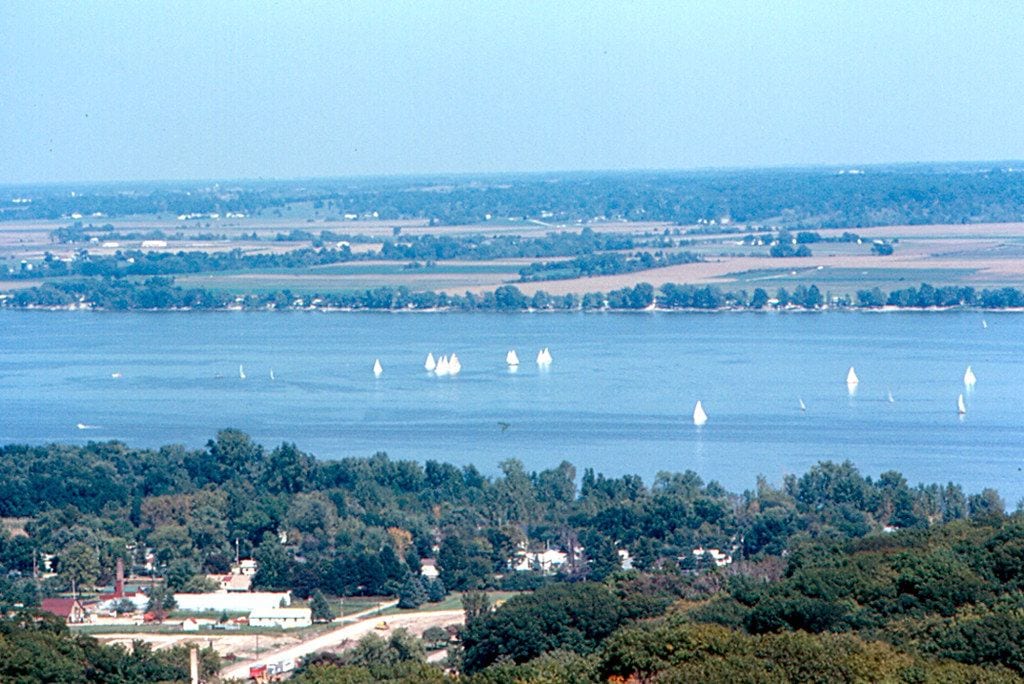
Spread along the bluffs and banks of the Illinois River, Peoria is the state's oldest European settlement and the largest city on the river, a working Midwest town that grew up around Caterpillar's heavy-equipment works. Its riverfront carries a genuine museum, a paddle-wheel heritage, and downtown streets that climb to wooded ridgelines within a few minutes' drive of the water.
Peoria rewards a visitor who mixes indoor culture with river-bluff scenery. You can spend a morning among the collections of the Peoria Riverfront Museum, an afternoon on the two-and-a-half-mile Grand View Drive that Theodore Roosevelt praised, and an evening under a big-top tent at Corn Stock Theatre. These are the 25 best things to do in Peoria, from Glen Oak Park's zoo and botanical garden to the Fulton Sheen cathedral downtown. Its central spot in the state also makes Peoria a comfortable base for exploring the rest of Illinois.
Fun Facts About Peoria, Illinois
Peoria is the oldest European settlement in Illinois, founded by French explorers on the Illinois River in 1691.
The phrase “Will it play in Peoria?” came out of the vaudeville era, when the city was seen as a bellwether for mainstream American tastes.
Peoria was the world headquarters of Caterpillar for more than a century before the company moved its head office out of the city in 2018.
Scientists at Peoria’s USDA laboratory developed the methods to mass-produce penicillin during World War II, in time to treat Allied troops after D-Day.
Before Prohibition, Peoria was known as the “Whiskey Capital of the World,” distilling more spirits than any other city in the country.
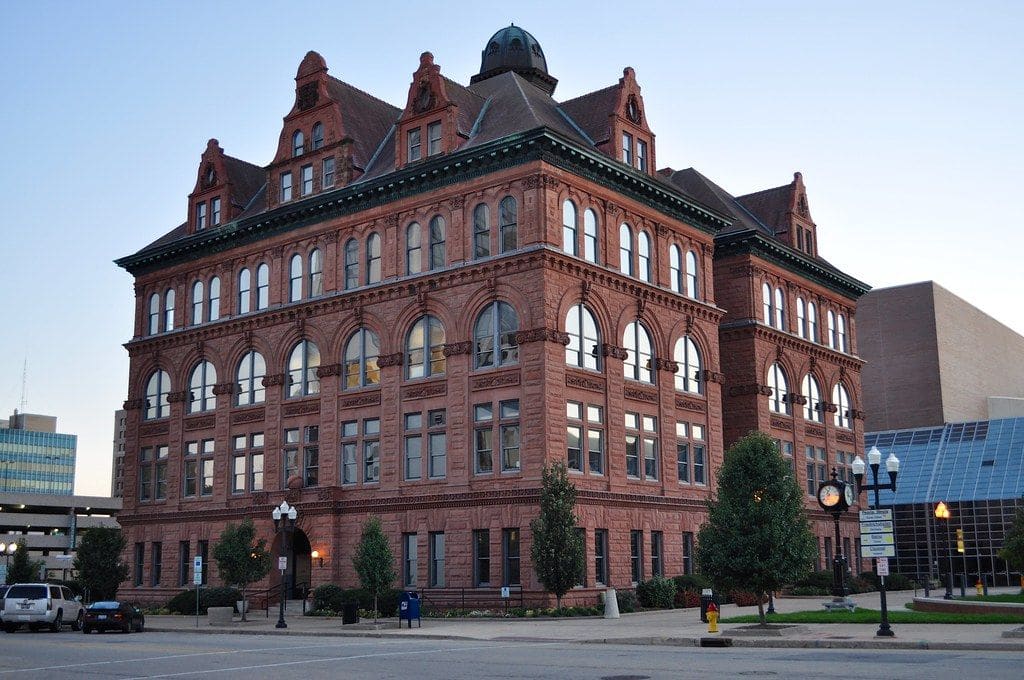
Peoria's Riverfront Museum resists a single label. Opened on the downtown riverbank in 2012, it folds fine art, natural science, local history, and a planetarium into one building on the Illinois River. The art holdings span paintings and sculpture through Native American, African, and Oceanic works, while the history galleries run from early motorized vehicles to a replica of Neil Armstrong's space suit.
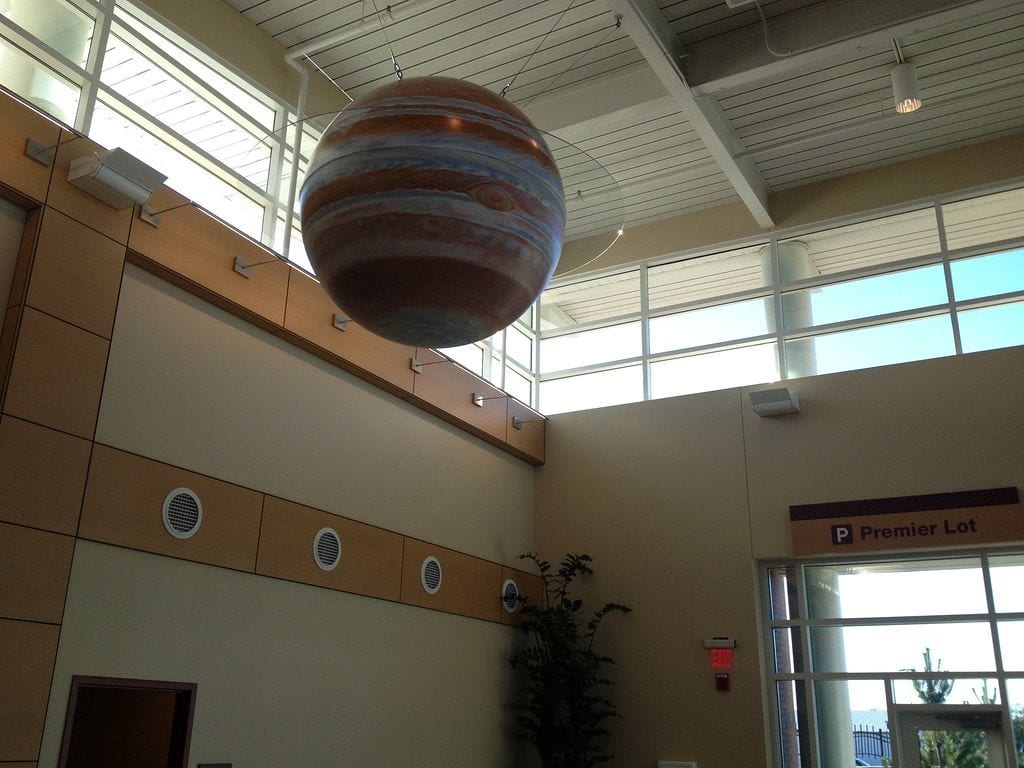
Under the museum's 40-foot Digistar dome, planetarium programs play out for stargazers, and the adjoining Giant Screen Theater runs one of the largest film screens in the country. A 400-gallon aquarium stocks native Illinois River species alongside displays on the river's history, and the Schoenheider Goose, a famous cast-iron hunting decoy, sits among the collection.
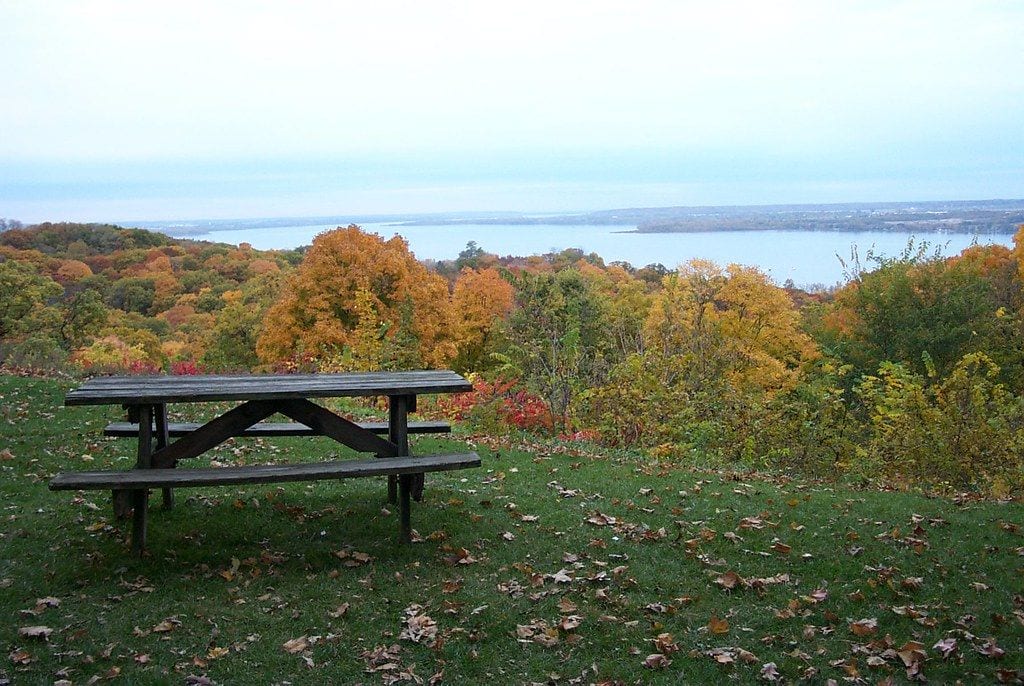
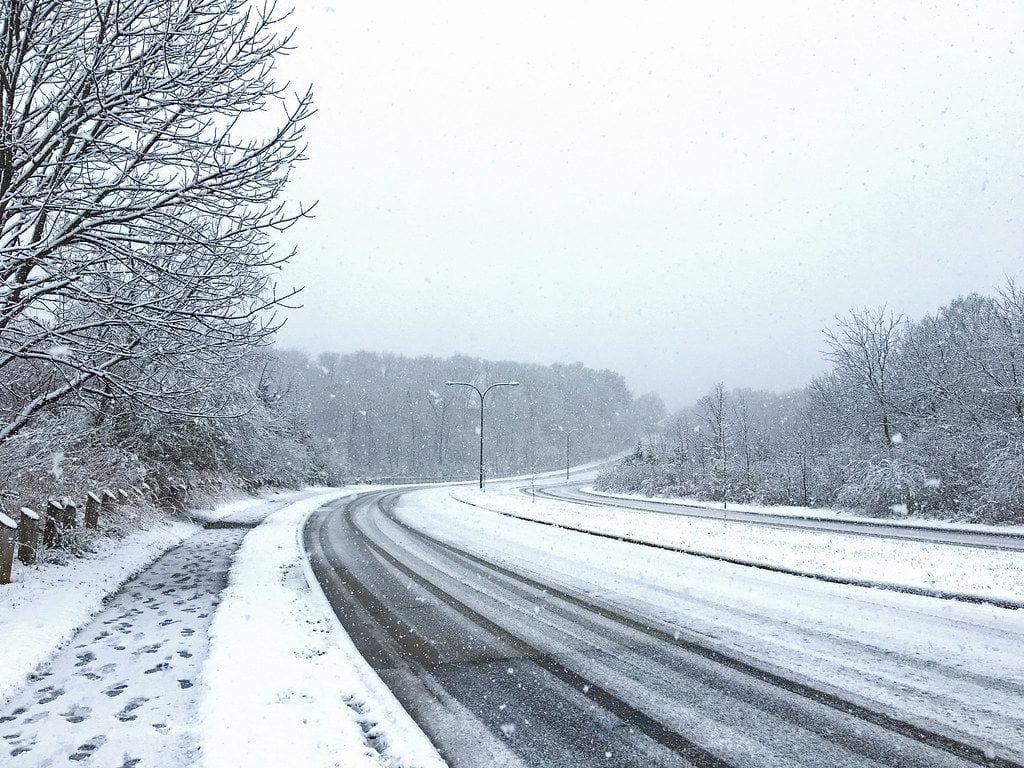
When Theodore Roosevelt visited Peoria in 1910, he called the two-and-a-half-mile Grand View Drive "the world's most beautiful drive." The road still delivers on that, tracing the bluff edge above the Illinois River past historic homes and hardwood forest, with the water opening up between the trees at nearly every turn.
Grand View Drive doubles as a linear park, so a paved path shadows the road for walkers, runners, and cyclists who prefer a slower pace than a car. Dogs are welcome along it, and the greenway threads together picnic tables, playgrounds, baseball diamonds, and volleyball courts on the strip of land between the drive and the river bluff.
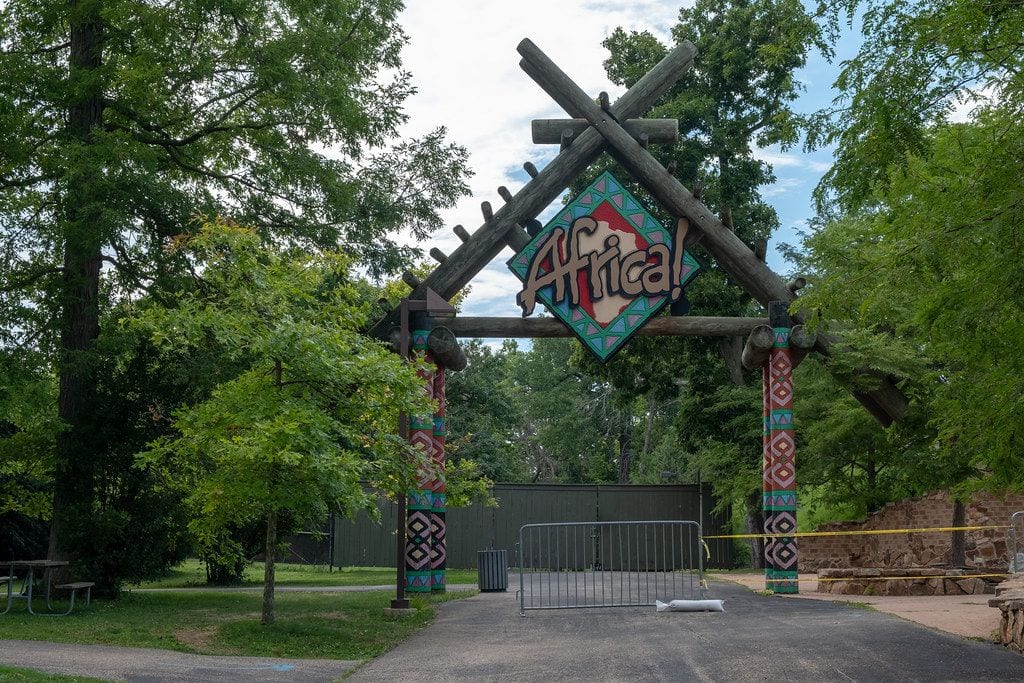
The Peoria Zoo sits inside nineteenth-century Glen Oak Park, and its roots reach back to a herd of elk donated to the city in the late 1800s. Long called the Glen Oak Zoo, it was renamed the Peoria Zoo after a major expansion in 2009 that added its African section.
That Africa exhibit is home to giraffes, gazelles, zebras, and rhinos, with separate areas for lions and several monkey species. The Australia Walk-About lets visitors move among Australian animals and hand-feed budgies in a walk-in aviary. The wider Glen Oak Park around the zoo holds a children's museum, the Rotary Adventure Grove playground, an amphitheater, and a lagoon.
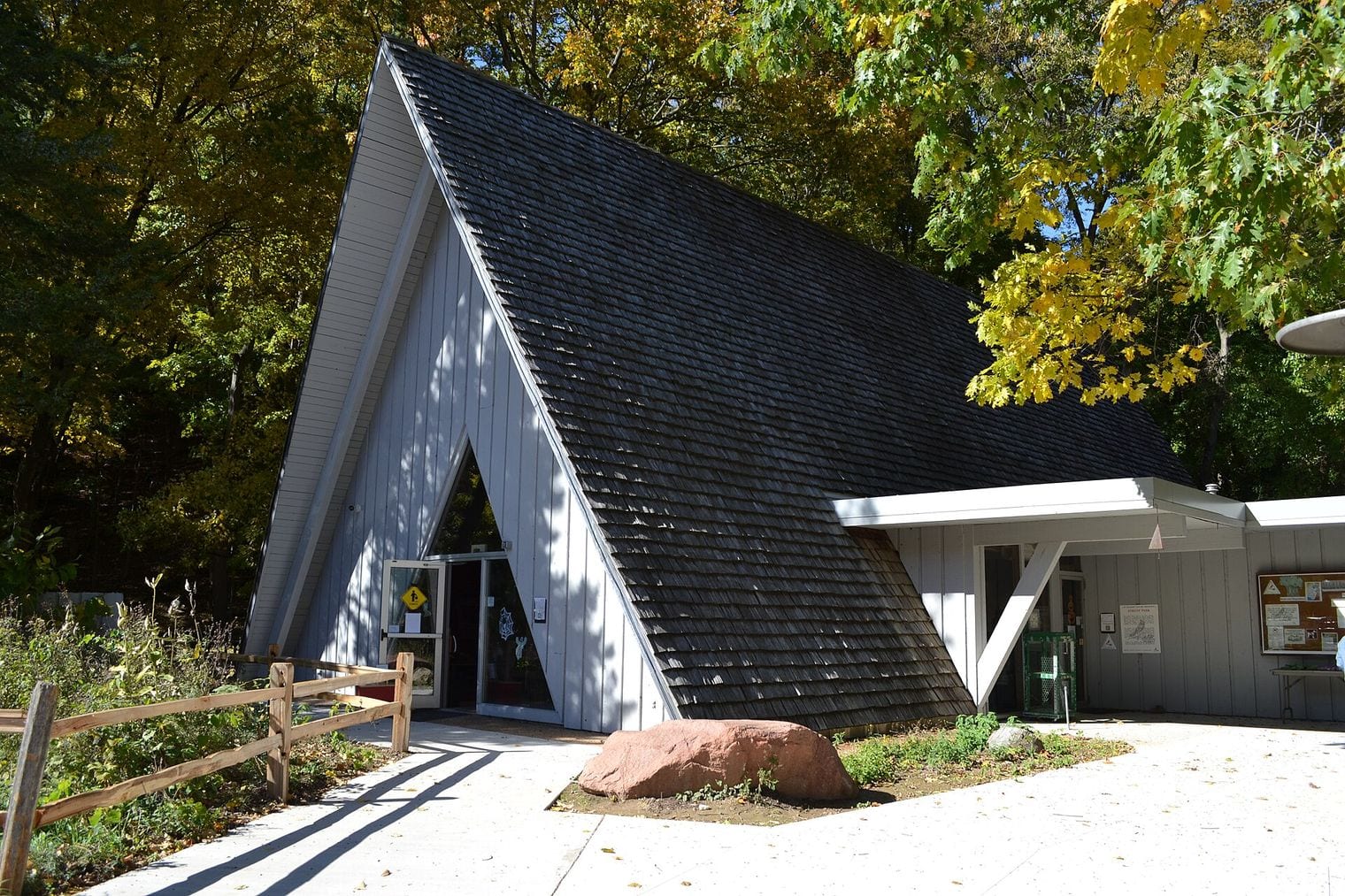
Forest Park Nature Center leads walkers straight into the wooded bluffs above the Illinois River, and its seven miles of hiking trails wind through more than 500 acres of dedicated Illinois State Nature Preserve. The upland forest makes it one of the best birdwatching and wildlife-viewing spots in the Peoria area.
At the trailhead a natural-history museum hosts talks and workshops, often led by groups such as the Audubon Society and the Sierra Club, and a bird-observation room gives visitors a warm vantage on local species. The Trailhead Nature Store stocks field guides and mementos. Pets are not permitted on the preserve trails, which helps keep the wildlife close.
Peoria's Louisville Slugger Sports Complex is built for players as much as spectators. Its 125,000-square-foot Slugger Dome holds synthetic softball fields and volleyball courts under one climate-controlled roof, so leagues and tournaments run year-round regardless of Illinois weather, alongside batting-cage rentals and open floor space.
Outside the dome, the Slugger Stadiumplex adds championship softball fields with seating for 1,300, in-ground dugouts, an LED scoreboard, and backstop netting that give it a professional feel. Adult recreational leagues at the complex cover softball, volleyball, kickball, and soccer, and the venue draws travel-ball tournaments from across the Midwest.
The Peoria PlayHouse is the city's children's museum, opened in 2015 inside a Glen Oak Park pavilion and built entirely around imaginative, hands-on play. At the Fossils Rock exhibit children dig through real fossils like paleontologists, and the Peoria, Then and Now area lets young visitors ride a train and stage a vaudeville show from the city's past.
Staff trained in art and history work the floor, turning open-ended play into learning for kids of every age. Whether they are running loaders and dump trucks at the construction exhibit or harvesting pretend produce on the family farm, children steer their own visit while the Peoria PlayHouse keeps the emphasis firmly on discovery rather than instruction.
Docked on the Illinois River in East Peoria, the Par-A-Dice Hotel Casino is a four-deck riverboat casino with a smoke-free gaming floor. Nearly a thousand slot machines and around thirty table games keep the boat busy around the clock, and three onsite restaurants feed players between hands.
The table lineup runs to blackjack, craps, roulette, three-card poker, Mississippi Stud, and Mini Baccarat, and an onsite sportsbook takes wagers on the major U.S. leagues. Guests who want to stay put can book one of the 202 rooms in the attached hotel, making the Par-A-Dice a full overnight stop rather than just a gaming floor.
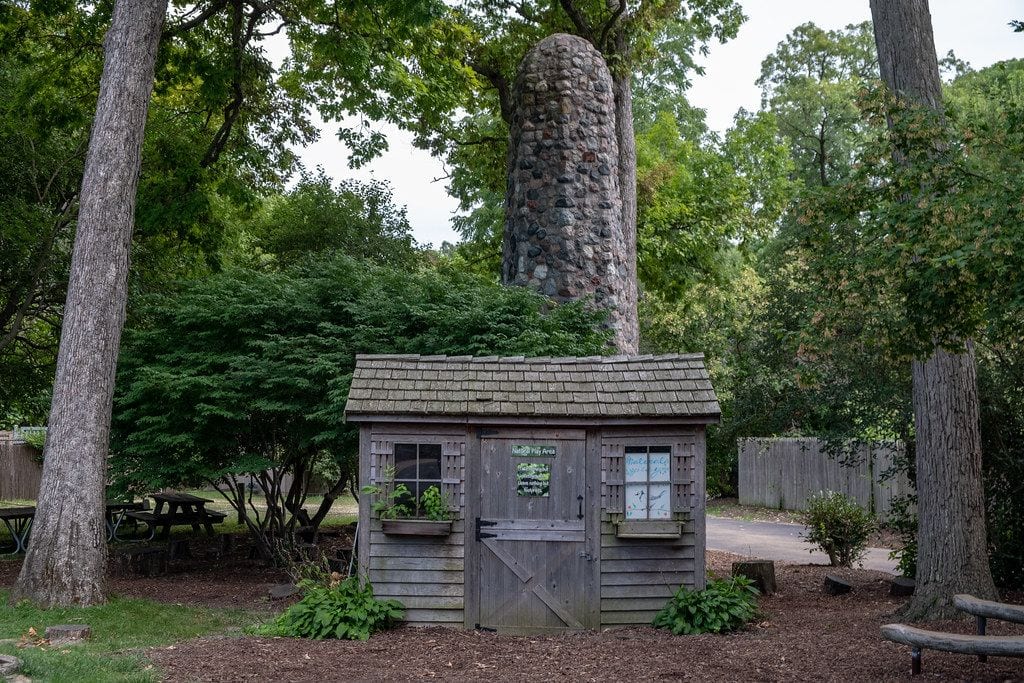
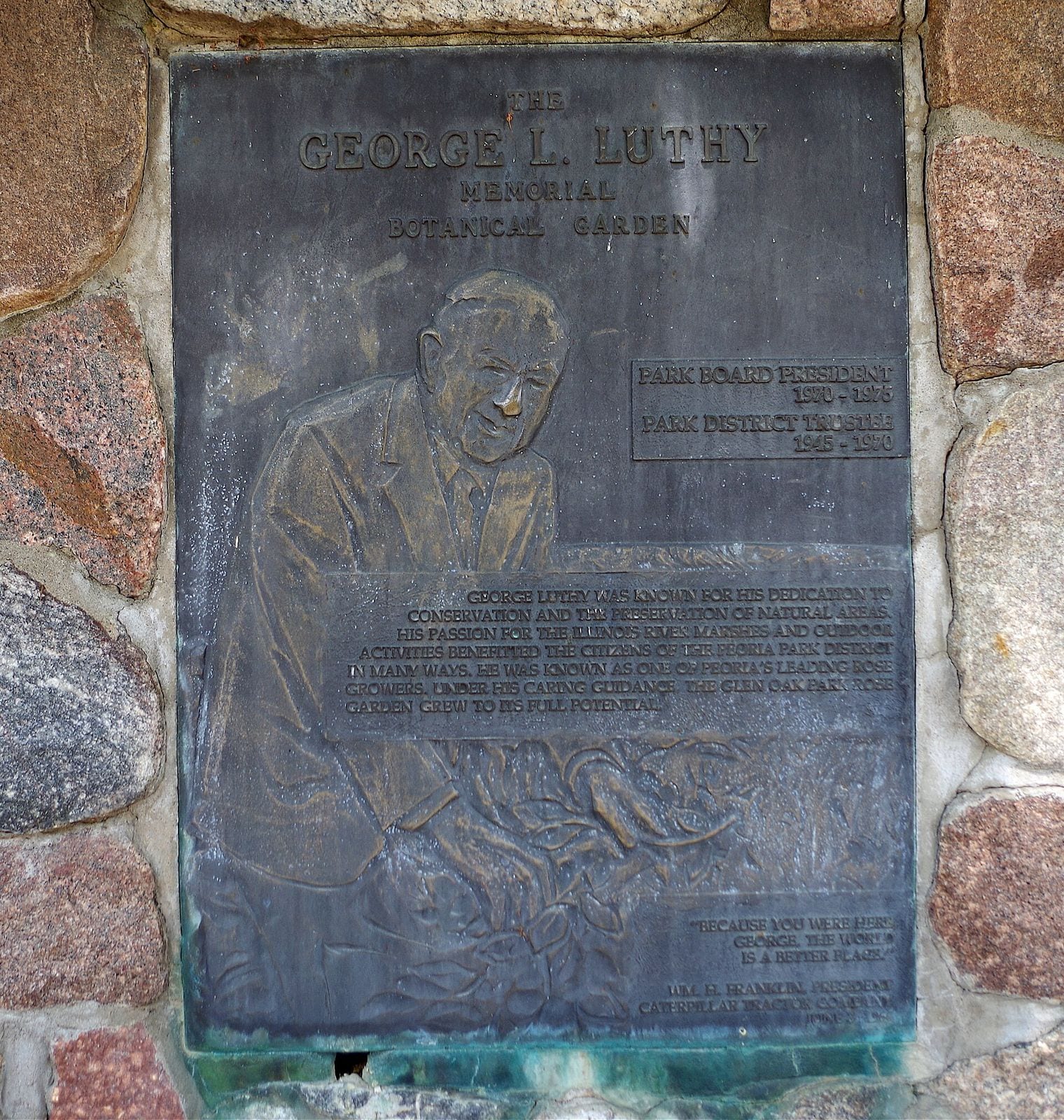
Tucked inside Glen Oak Park, the five-acre George L. Luthy Memorial Botanical Garden gives visitors a quiet, cultivated break from the city around it. Its beds are organized into distinct sections, among them an herb garden, a rose collection, a viburnum planting, and an all-season garden, with a tropical conservatory sheltering plants that could never survive an Illinois winter outdoors.
Across the year the Luthy stages flower shows built around orchids, chrysanthemums, and poinsettias, giving the conservatory a fresh look with each season. For home gardeners, the staff offer landscape consultation on pruning, fertilizing, and pest control, and the garden hosts a steady run of educational programs and community events.
At Corn Stock Theatre the show goes up under a genuine big-top tent on the grounds of Laura Bradley Park. Corn Stock is an outdoor community theatre that runs both a summer season in the tent and a smaller winter season indoors, staffed and performed by Peoria residents.
The company opened in 1954 with a production in Detweiler Park, then partnered with the Peoria Park District and moved to its permanent home in Bradley Park the following year. Its stated aim is theatre by the community, for the community, and its Corn Stock for Kids program mounts two shows and a summer workshop each year to bring the next generation onto the stage.
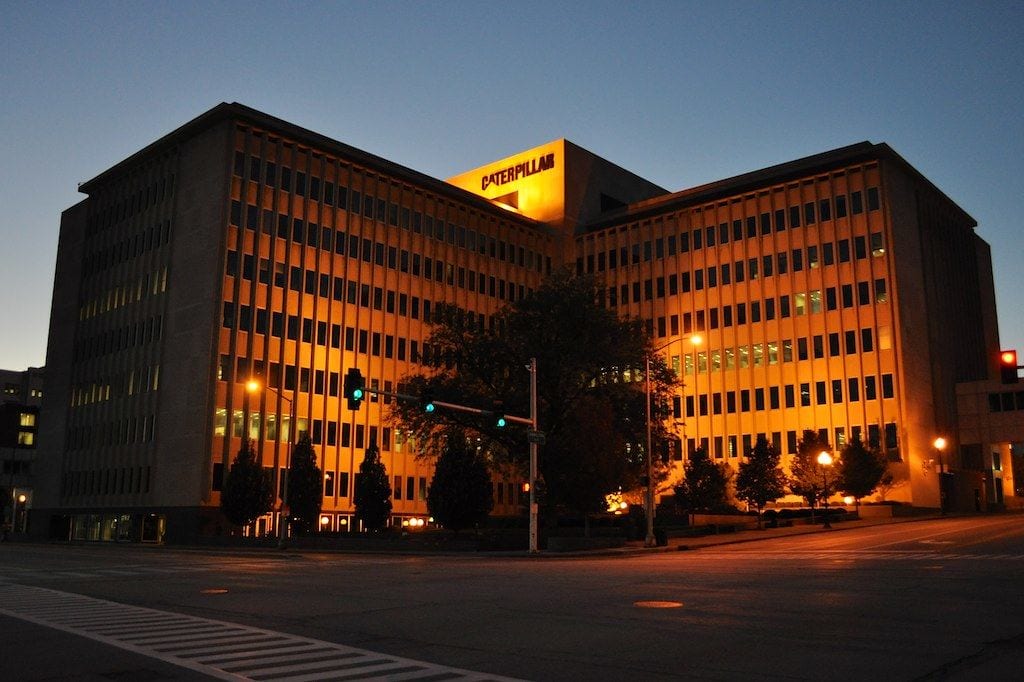
Ever wanted to ride a two-and-a-half-story construction machine? A visit to the Caterpillar Visitors Center opens with a virtual ride inside a Caterpillar mining truck. Set downtown a short walk from the river, the center tells the story of the equipment maker that has anchored Peoria's economy for a century.
Beyond the company history, the exhibits put guests inside the heavy machinery that has built roads, buildings, and infrastructure worldwide. Simulators let visitors take the controls of several Caterpillar vehicles, and an interactive station invites them to design a machine of their own, making the center as hands-on as it is informative.
Wheels O'Time is a 30,000-square-foot museum devoted to vintage vehicles of nearly every kind. It began in 1977 as a home for antique cars, and its early Packards, Ford Model Ts, and Chevrolets have since been joined by fire trucks, bicycles, and aircraft, along with a Rock Island steam locomotive and heavy Caterpillar equipment.
Because most of the collection was sourced from the surrounding area, Wheels O'Time doubles as a record of Peoria's own industrial past. The museum has kept growing over the decades, adding a 5,000-square-foot building in 2020, and its clocks, jukeboxes, and mechanical oddities round out a lineup that goes well beyond cars.
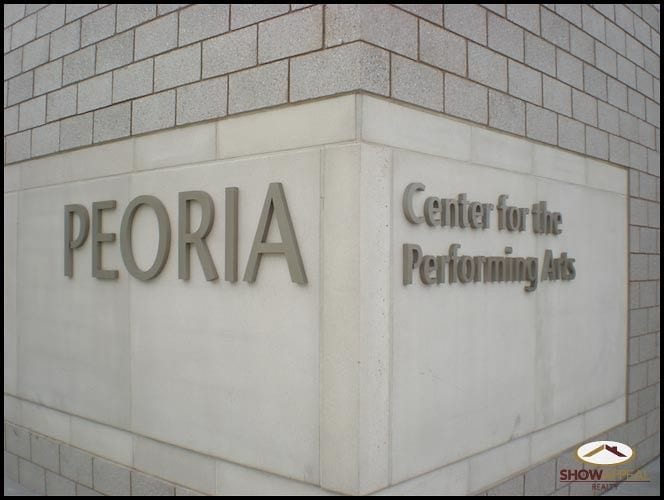
12. Betty Jayne Brimmer Center for the Performing Arts
The Betty Jayne Brimmer Center for the Performing Arts is one of Peoria's more recent additions, built around the shell of the old Peoria Heights Library and opened in 2019. As a dedicated performing-arts center it stages musical theatre, concerts, drama, and lectures through the year, and it stands as a visible piece of the area's community-renewal effort.
The center is named for the mother of developer Kim Blickenstaff, who led the library's renovation. Betty Jayne Brimmer herself was a vaudeville performer and dancer during Peoria's Big Band era, so the naming closes a loop between the building's new life and the city's entertainment history. Checking the event calendar is the best way to catch its programming.
The village of Peoria Heights perches on the bluffs above the western bank of the Illinois River, and Grand View Drive runs along its edge. Compact and walkable, the village center is lined with independent restaurants and shops that draw visitors up from the riverfront below.
Beside the village hall stands Tower Park, a green space anchored by a 200-foot water tower whose three observation decks, reached by a glass elevator, open panoramic views across the river valley. The park's gazebo hosts live performances, and both Forest Park Nature Center and the Rock Island Greenway lie within easy reach of Peoria Heights.
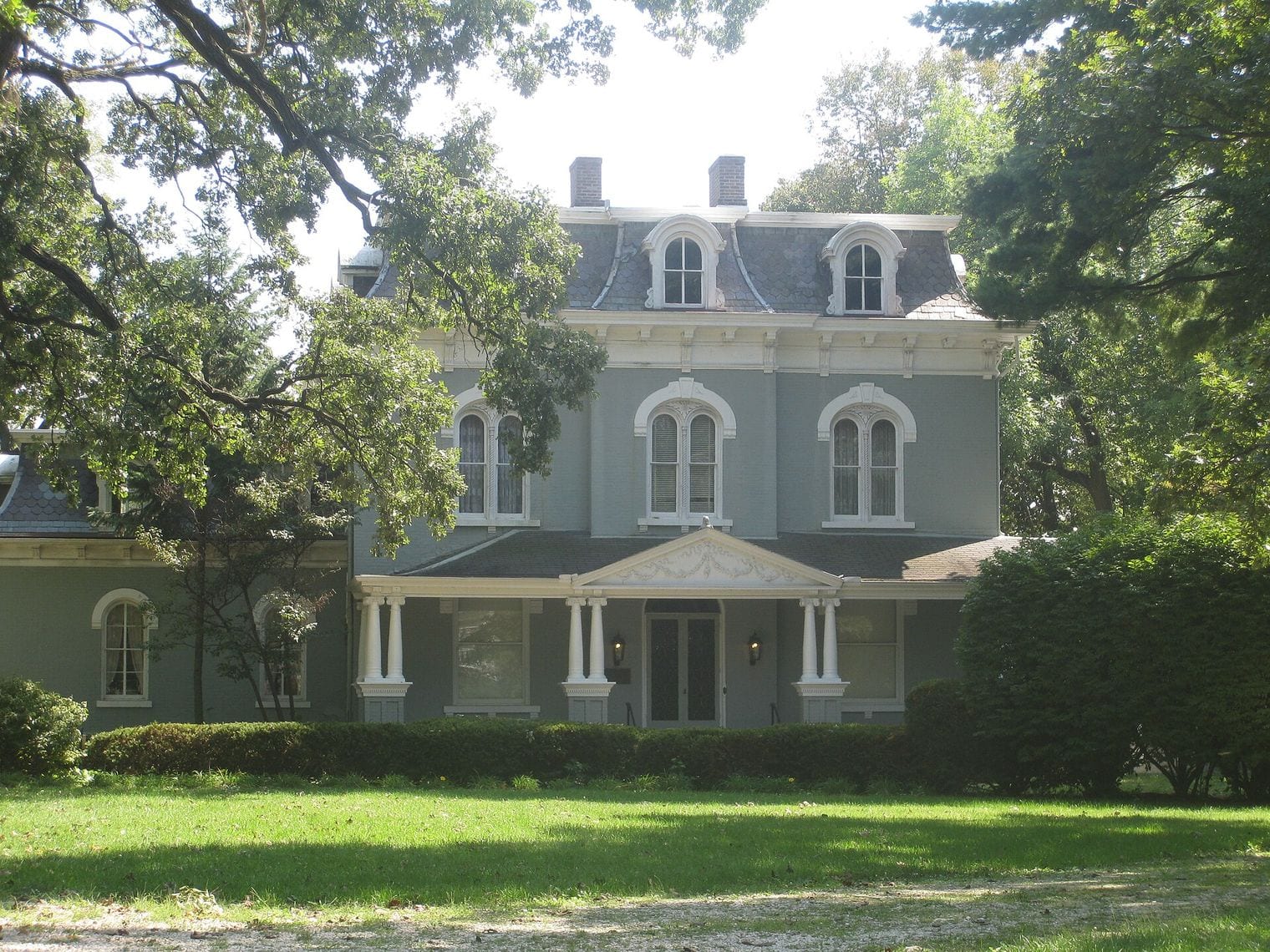
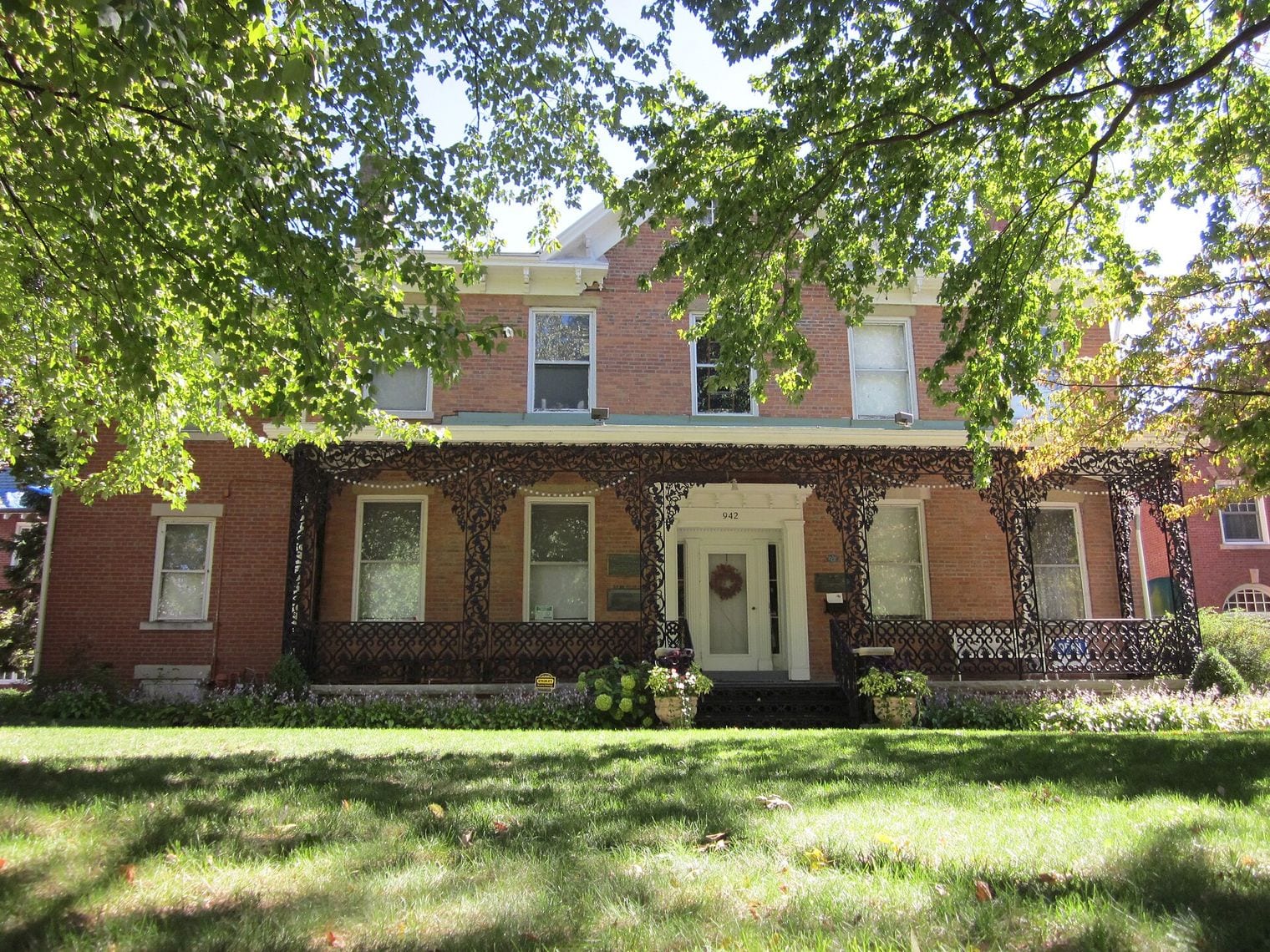
Built in 1868 for the abolitionist Moses Pettengill, the Pettengill-Morron House is one of Peoria's finest surviving nineteenth-century homes. A strong example of Second Empire architecture, it carries an imposing Colonial Revival porch and stands as a window into the city's mid-1800s prosperity.
Inside, displays recount the abolitionist work of Moses and Lucy Pettengill. Pettengill, originally from Salisbury, New Hampshire, began as a teacher before making his fortune as a hardware merchant and builder, and family artifacts remain in the house. A later resident, Jean McLean Morron, left additional antique furnishings to the Peoria Historical Society, which now operates the house as a museum.
From its southern trailhead on the Peoria riverfront, the Rock Island Trail runs thirteen miles to the northwest of the city. Apart from one short on-street stretch with a dedicated bike lane, the multi-use path stays off-road for nearly its whole length, linking the Riverfront Museum with the Caterpillar Visitors Center and passing Springdale Cemetery and Glen Oak Park along the way.
A longer, wilder section of the corridor picks up at the Kickapoo Creek Recreation Area near the community of Alta, north of Peoria. This northern stretch is managed as an Illinois state park and carries walkers, cyclists, and runners past scenic overlooks and stands of restored prairie.
The Peoria Historical Society's John C. Flanagan House Museum is the oldest standing house in Peoria, built in 1837 by local judge John C. Flanagan in the Federal style. Inside, period furnishings and collections of antiques recreate an authentic nineteenth-century domestic setting.
The Peoria chapter of the Daughters of the American Revolution keeps its headquarters in the house, and local tradition holds that Abraham Lincoln stayed here during the era of the Lincoln-Douglas debates. Historical Society volunteers lead tours of the John C. Flanagan House Museum on a regular basis, and the home is also available for private event rental.
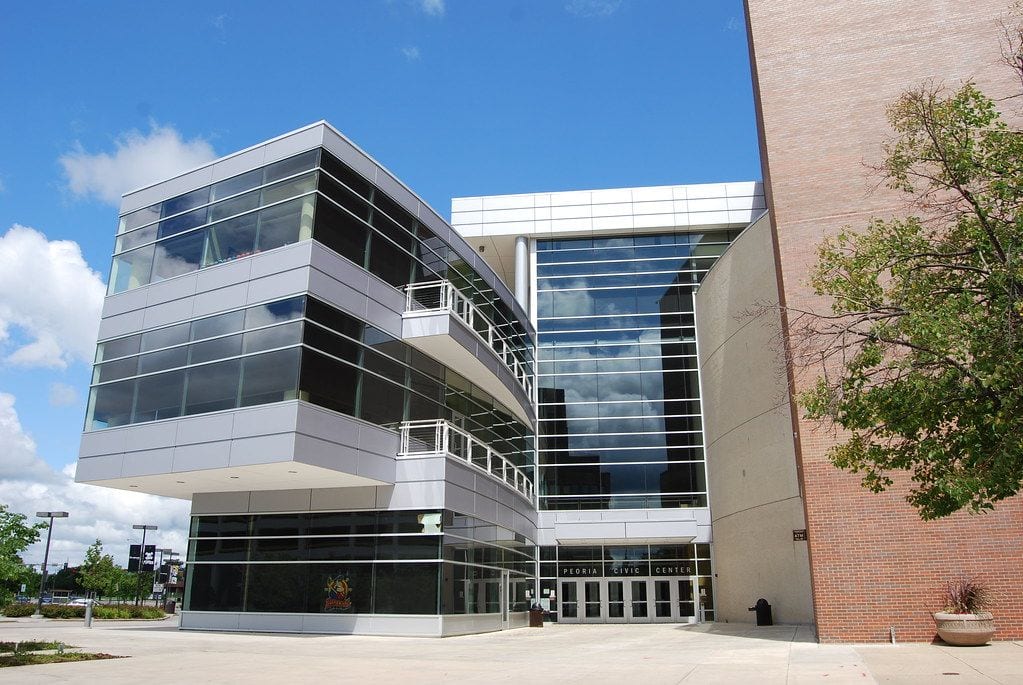
The multi-use Peoria Civic Center opened downtown in 1982 to a design by the noted American architect Philip Johnson, and it has anchored the city's event calendar ever since. Its 10,000-seat arena serves as home floor for local basketball and hockey teams, and its stated purpose is to support Peoria's economy and quality of life through the events it draws.
Conventions and trade shows fill the center's 100,000 square feet of exhibit space, while its theatre and concert halls host the Peoria Symphony Orchestra and Peoria Ballet. A steady slate of touring Broadway productions rounds out a program that keeps the Peoria Civic Center busy across all four seasons.
Detweiler Park spreads over 740 acres just north of Peoria along the Illinois River, with more than five miles of hiking trails offering a fast, quiet escape from the city. Sports fields sit alongside a boat ramp and a riverfront beach where visitors fish, sunbathe, or watch for birds on the water.
The park carries real history under its trees. A massive redwood log, hauled to the area by the Caterpillar company in 1915, remains a local landmark, and Detweiler Park itself was established in 1928 in honor of steamboat captain Henry Detweiler. The captain's nineteenth-century icehouse still stands on display within the grounds.
On Peoria's northwest side, Charter Oak Park is built around the 6.4-acre Charter Oak North Lake. Anglers fish the lake from the shoreline and three small piers, pulling in largemouth bass, bluegill, red-ear sunfish, and channel catfish from its stocked water.
Away from the water, Charter Oak Park lays out a short network of paved and gravel hiking trails, plus courts for basketball, pickleball, and tennis and open soccer fields. Leashed dogs are welcome throughout, which makes it an easy, low-key green space for Peoria residents and visitors staying on the northwest edge of town.
20. Cathedral of Saint Mary of the Immaculate Conception
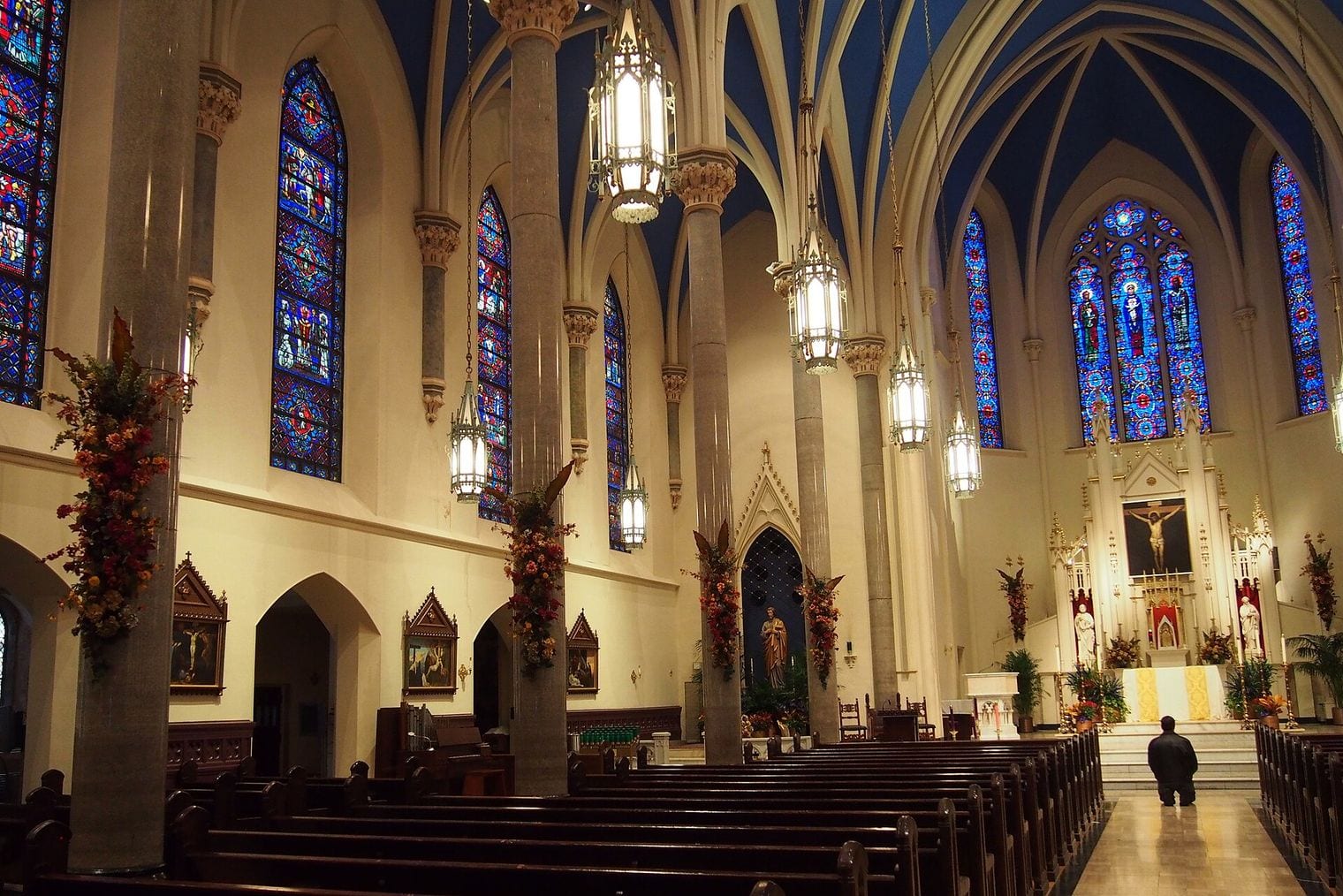
Modeled on St. Patrick's Cathedral in New York City, the Cathedral of Saint Mary of the Immaculate Conception rose between 1885 and 1889 as the mother church of the Diocese of Peoria. Its limestone facade anchors the city's North Side Historic District, and the cathedral has been listed on the National Register of Historic Places since 1983.
Guided tours can be arranged through the Museums of the Diocese of Peoria. Next to the cathedral sits the Fulton Sheen exhibit dedicated to the Peoria-raised Catholic broadcaster and Servant of God, whose remains were entombed at the cathedral in 2019 following a restoration of the historic interior.
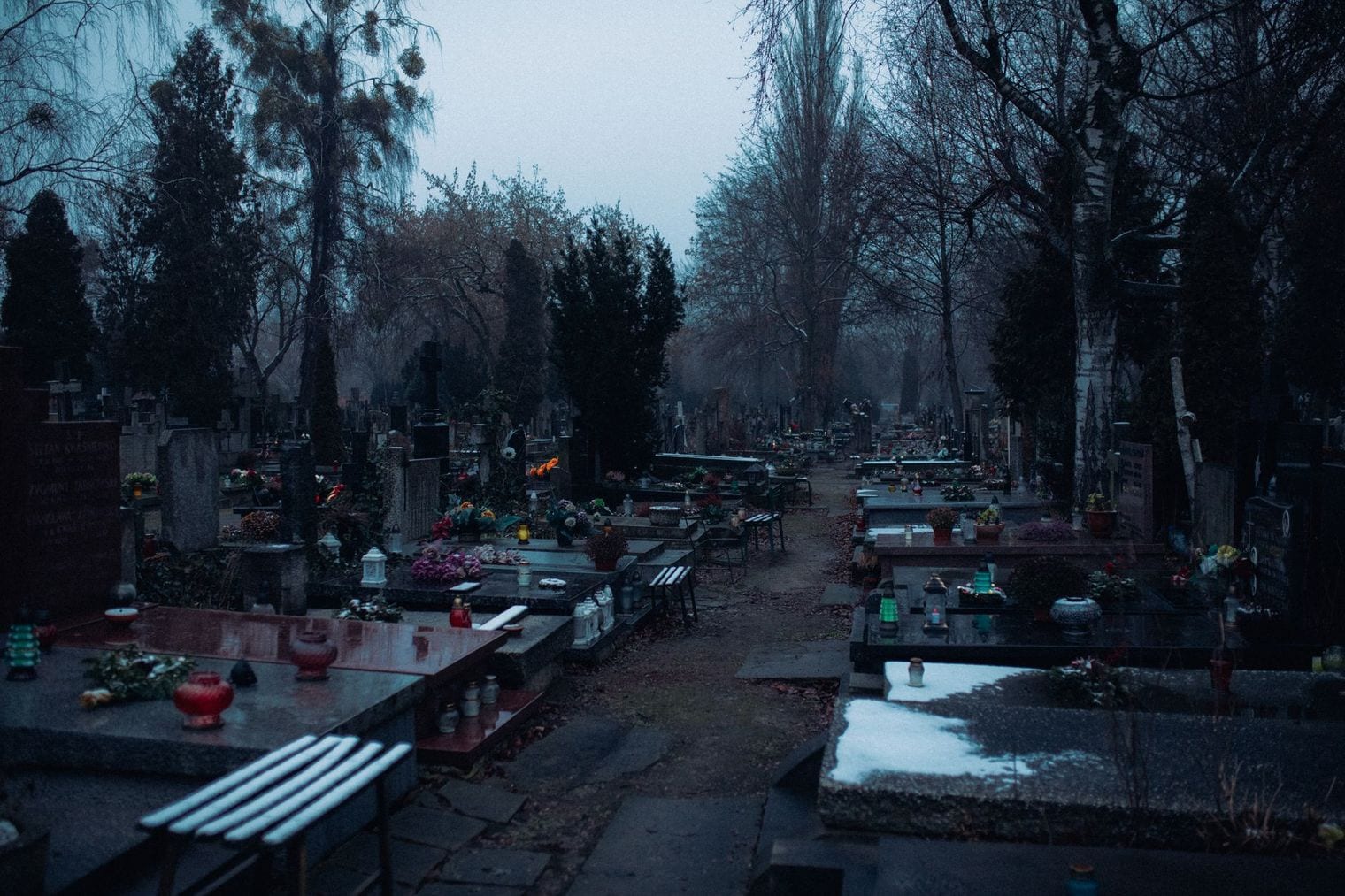
Chartered in 1855, Springdale Cemetery is the largest cemetery in Illinois and among the state’s oldest, and one of Peoria's most atmospheric places to walk. Laid out across 225 hilly, wooded acres as both a burial ground and a public park, it holds nearly 70,000 graves along more than six miles of winding roadways and is listed on the National Register of Historic Places.
The rolling grounds double as an unofficial arboretum and a record of Peoria's past. Guided history tours, several departing from the Caterpillar Visitors Center, lead visitors to the resting places of the city's soldiers, athletes, educators, and civic leaders, while self-guided drives let you take the ridgelines and ravines of Springdale Cemetery at your own pace.
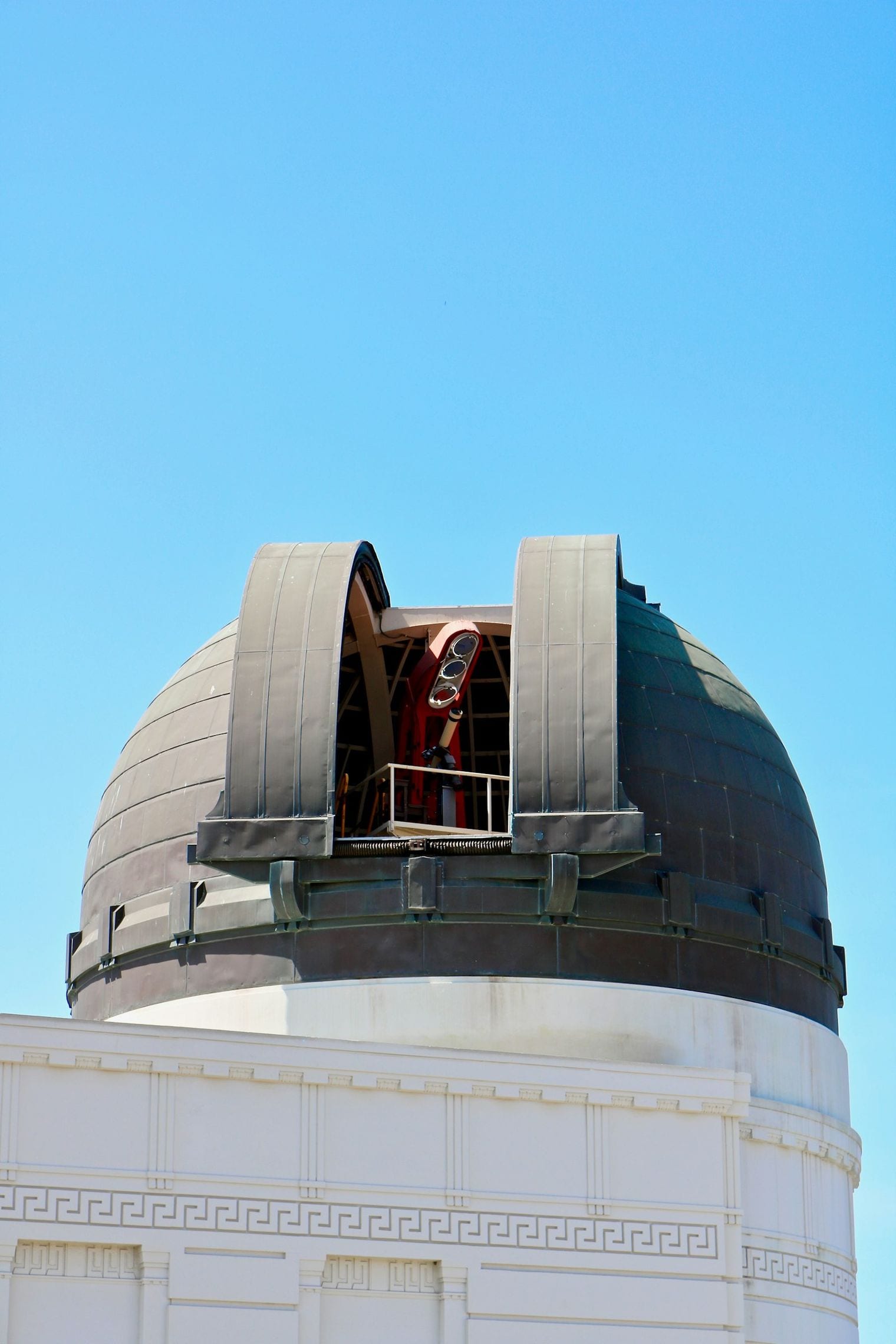
Set in quiet Donovan Park, the Northmoor Observatory was the first observatory in Illinois opened to the general public. Its nine-inch refractor telescope dates to 1913, and though it has since been updated and reassembled, a rotating dome added in 2009 keeps the historic instrument trained on the sky. The Peoria Astronomical Society now runs the site.
On clear Saturday evenings, Northmoor Observatory holds free public viewings, with society volunteers guiding guests through the night sky. Donovan Park around it is a destination in daylight too, offering picnic tables, walking trails, and a public shelter for a relaxed afternoon before the stars come out.
The Pekin community lies just south of Peoria across the Illinois River, and its Park District is a network of thirteen parks covering more than 2,500 acres. Pekin Lake itself is a state reserve that draws a wide range of wildlife, and Mineral Springs Park sits at the district's heart with a landmark pavilion set beside a lagoon.
Recreation runs deep across the district. DragonLand Water Park packs a three-acre complex of pools, waterslides, and play areas, and the wider system adds the Happy Trail Dog Park, Memorial Stadium and Ice Arena, a senior center, and a racquet club, giving day-trippers from Peoria a full slate of activity on the river's south bank.
Built by the Army Corps of Engineers in 1951 to shield Peoria from periodic flooding, Farmdale Reservoir sits three miles east of the city. The flood basin stays dry most of the year, and when it is, its fifteen miles of trails open to hikers, mountain bikers, and horseback riders; after heavy rain the area closes while it does its real job of holding back water.
The Corps has overseen a deliberate return of native tall-grass prairie across the site, and with hunting prohibited, wildlife moves freely over Farmdale Reservoir's 837 acres. That combination of restored grassland and long, quiet trails makes it one of the better places near Peoria to spend a half-day outdoors.
Peoria's Lakeview Park and Recreation Center gathers a surprising amount under one roof on the city's west side. The recreation center holds courts for basketball, pickleball, and volleyball, a dance studio open for community use, and four classrooms used for workshops, education, and events.
An indoor ice-skating rink runs at Lakeview alongside the Peoria Players Theatre and a branch of the public library, so the park works as much as a civic hub as a sports facility. The Peoria Park District keeps its administrative offices here, and the Girl Scouts of Central Illinois are headquartered on the same grounds.
Best Time to Visit Peoria
The most comfortable stretches to explore Peoria are the shoulder seasons of late spring and early autumn, when mild days make it easy to stroll the riverfront, wander Grand View Drive, or spend an afternoon at Luthy Botanical Garden without contending with humidity or cold. Spring brings blossoms and greening bluffs above the Illinois River, while autumn drapes the same drives and nature trails in color, and the Forest Park Nature Center is at its most photogenic. Both seasons are ideal for pairing outdoor time with indoor stops like the Peoria Riverfront Museum or Caterpillar Visitors Center.
Summer is warm and lively, the peak season for river activity, festivals, and outdoor family days at the Peoria Zoo and Peoria PlayHouse, though afternoons can turn hot and sticky. Autumn leans into a football-and-harvest mood, with crisp evenings and college and high-school game days giving the city a distinct seasonal energy. Winters are cold and often snowy, quieter and better suited to museums, the botanical garden’s conservatory, and holiday-season lights, so pack layers and plan indoor anchors if you visit in the colder months.
Getting to Peoria
Peoria sits at the crossroads of Interstate 74, which runs northwest–southeast through the metro and connects it to the Quad Cities in one direction and Bloomington-Normal and Champaign in the other, with Interstate 474 looping around the south and west as a bypass for through traffic. Several US highways, including US 150 and US 24, feed into the city as well, so arriving by car from most of central Illinois and eastern Iowa is straightforward.
The city has its own commercial airport just west of downtown with regional service, and many travelers seeking wider connections instead fly into the Chicago-area hubs and drive down, roughly a three-hour trip southwest, or use the smaller regional airports at Bloomington-Normal (about an hour away) or the Quad Cities. Peoria does not currently have passenger rail, but intercity and connecting buses link it to the wider network, including a bus connection to the rail station at Bloomington-Normal for onward train travel.
Getting Around Peoria
Peoria is a car-friendly city, and having a vehicle is the easiest way to move between its spread-out attractions, from the riverfront museums to the zoo, the botanical garden, and the nature center in the surrounding bluffs. The downtown and riverfront core is the most walkable stretch, compact enough to cover on foot once you have parked, and the Peoria Heights and Grand View Drive areas reward slow, scenic driving with places to pull over and take in the river valley.
A local bus system covers the city and neighboring communities, and rideshare is available for shorter hops, but service is geared to residents rather than dense tourist circuits, so most visitors default to a car. Cyclists will find riverfront and rail-to-trail paths pleasant for recreation. Parking is generally easy and inexpensive compared with big cities, with lots and garages downtown and ample space at the outlying attractions and along the retail corridors.
Where to Stay in Peoria
For a first visit, basing yourself downtown or along the riverfront puts you within walking distance of the museum district, dining, and the water, and keeps the drives to other attractions short. Travelers who want a quieter, more scenic base often look to Peoria Heights and the bluff neighborhoods near Grand View Drive, where residential streets and overlooks feel a world away from the highway while still being a quick drive into the center.
If convenience for road trips or business at the industrial and corporate campuses matters most, the corridors near the interstates and around the airport on the west side offer easy in-and-out access and cluster near shopping and chain dining. Across the river, East Peoria is another practical base with straightforward highway access and its own retail and riverside development, handy if you are passing through or continuing on toward Bloomington-Normal.
Where to Eat in Peoria
Peoria’s dining is anchored downtown and along the riverfront, where you will find the widest mix of sit-down restaurants and bars, with additional clusters up in the Peoria Heights village district and scattered along the University Street and Sheridan Road corridors. This is central-Illinois Midwestern cooking at heart, so expect hearty tavern fare, steaks and pork chops, and comfort classics alongside a growing range of international kitchens.
Look for regional signatures like breaded pork tenderloin sandwiches, Midwestern-style barbecue and smoked meats, and the Illinois horseshoe, an open-faced sandwich piled with meat, fries, and cheese sauce. River-town casual spots do burgers, fried catfish, and pub food well, and the area’s German and other European heritage shows up in sausages and bakery treats, making the dining districts a rewarding place to eat your way through local traditions.
One Day in Peoria
Peoria rewards a day that starts on the bluffs above the Illinois River and works its way down to the water by nightfall, so point yourself north at first light and let gravity carry you toward downtown.
Morning: Open with Grand View Drive, the ridgeline lane Teddy Roosevelt reportedly called the world’s most beautiful drive — the river valley opens up on your right and the light is best before the day warms. From there it’s a short hop north to Forest Park Nature Center, where wooded trails climb the same bluffs and give you a proper stretch of the legs while the trailheads are still quiet. If the sky was clear the night before, note that the nearby Northmoor Observatory at Donovan Park sits along this ridge too — worth circling back to after dark.
Peoria makes an easy launch point for day trips across central Illinois and into eastern Iowa. About an hour south sits Springfield, the state capital, rich with history and worth a full day. For outdoor time, the bluffs, canyons, and river overlooks of Starved Rock State Park lie roughly an hour and a half northeast along the Illinois River, one of the region’s most popular hiking destinations.
Head northwest along Interstate 74 and you can reach the university town of Iowa City in around two and a half hours, with Cedar Rapids a little farther on at close to three hours, both making good overnight or long-day pairings if you want to cross the Mississippi and explore eastern Iowa. Closer to home, the small river towns, orchards, and county parks scattered through the Illinois River valley fill out shorter excursions without a long drive.
FAQ: Visiting Peoria
What is Peoria best known for?
Peoria is the headquarters city of Caterpillar, and the downtown Caterpillar Visitors Center traces that legacy with mining-truck simulators. The city is also known for Grand View Drive, the bluff road Theodore Roosevelt called the world's most beautiful, and the Peoria Riverfront Museum standing on the Illinois River.
Is Peoria worth visiting?
Yes. As the largest city on the Illinois River, Peoria packs a real museum in the Peoria Riverfront Museum, a full zoo inside Glen Oak Park, the tented Corn Stock Theatre, and the Cathedral of Saint Mary of the Immaculate Conception modeled on New York's St. Patrick's. The Grand View Drive bluffs and Forest Park Nature Center add scenery few Midwest cities match.
How many days do you need in Peoria?
Two days cover the essentials. Spend the first downtown at the Peoria Riverfront Museum, the Caterpillar Visitors Center, and historic Springdale Cemetery; use the second for the Peoria Zoo and Luthy Botanical Garden in Glen Oak Park, then a slow drive along Grand View Drive through Peoria Heights and Tower Park.
What can you do in Peoria for free?
A surprising amount. Driving Grand View Drive costs nothing, Forest Park Nature Center's seven miles of trails are free to walk, and Northmoor Observatory opens its telescope free on clear Saturday evenings. Detweiler Park, Charter Oak Park, and the thirteen-mile Rock Island Trail add free hiking, shoreline fishing, and cycling.
What outdoor activities are there around Peoria?
The Illinois River bluffs give Peoria strong hiking. Forest Park Nature Center protects more than 500 acres of state nature preserve, Detweiler Park runs riverside trails past a 1915 redwood log, and Farmdale Reservoir opens 837 acres of prairie and creek to hikers, mountain bikers, and horseback riders whenever the flood basin is dry.